

Learn to Love the Rain! Fun Facts & Trivia Quiz about the Rainy Season for Kids

The rainy, muggy season of tsuyu.
This time of year arrives before summer, and it’s hard to go out and play, so it’s easy to feel a bit down.
To help you enjoy the rainy season even a little, we’ve prepared a trivia and fun-facts quiz about tsuyu! We’ve gathered quizzes from various angles—mysteries about tsuyu and rain, items that come in handy on rainy days, and more.
Deepen your knowledge about the rainy season and rain, and try enjoying this gloomy time in a different way! Be sure to share what you learn from the quiz with your friends, too.
- [For Kids] Trivia & Fun Facts Quiz About June
- Rainy season trivia roundup: fun facts you'll want to share with someone
- [Trivia] Did You Know? A Collection of Weather Proverb Quizzes!
- Trivia & fun facts about June
- [Trivia] Challenge! Spring General Knowledge Quiz
- Make weather forecasts more fun! Trivia and fun facts about the weather
- September Trivia Quiz & Fun Facts! A Fun Autumn Quiz for Kids
- Become a trivia master with a multiple-choice quiz for elementary schoolers! A fun problem collection that captivates both kids and adults
- [For Elementary School Students] Trivia About April
- Trivia quiz with useful tips to know: fun facts that come in handy at school or at home [for kids]
- [For Kids] Fun Facts & Trivia Quiz about Koinobori (Carp Streamers)
- [For Kids] Enjoy Together as Parent and Child! Demon Slayer Trivia Quiz & Fun Facts Questions
- [For Kids] November Trivia Quiz & Fun Facts: Let’s Learn While Having Fun!
Fall in Love with Rain! Fun Facts and Trivia Quiz about the Rainy Season for Kids (1–10)
What kind of weather does “amemoyō” (rainy-looking) refer to?
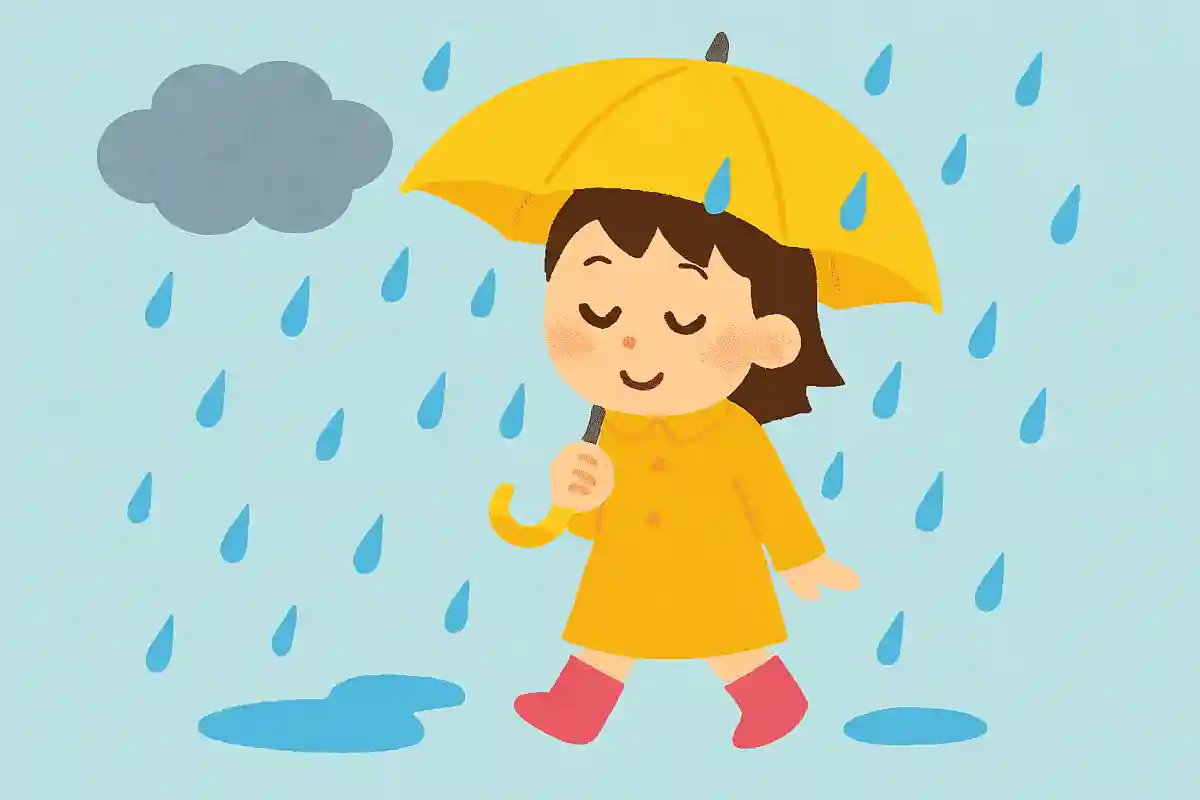
- a light rain is falling
- It looks like it's going to rain, but it hasn't started yet.
- It’s raining heavily.
See the answer
It looks like it's going to rain, but it hasn't started yet.
“Amemoyō” refers to a sky that looks like it’s about to rain, even though it hasn’t actually started raining yet. Its etymology is said to come from “amamotoyo(i)” (literally, ‘to bring on rain’), so “amemoyō” describes a state that portends rain—when it seems likely to start raining.

What is the criterion for the start of the rainy season?
- If it rains all day
- If it rains for three days in a row
- There are no particular criteria.
See the answer
There are no particular criteria.
Weather forecasts often report the start of the rainy season, but strictly speaking, there is no official criterion for declaring it. However, because rain can cause major disasters and significantly affect daily life and the management of crops, meteorological agencies declare the start of the rainy season based on weather trends to raise public awareness.
What shape are raindrops?
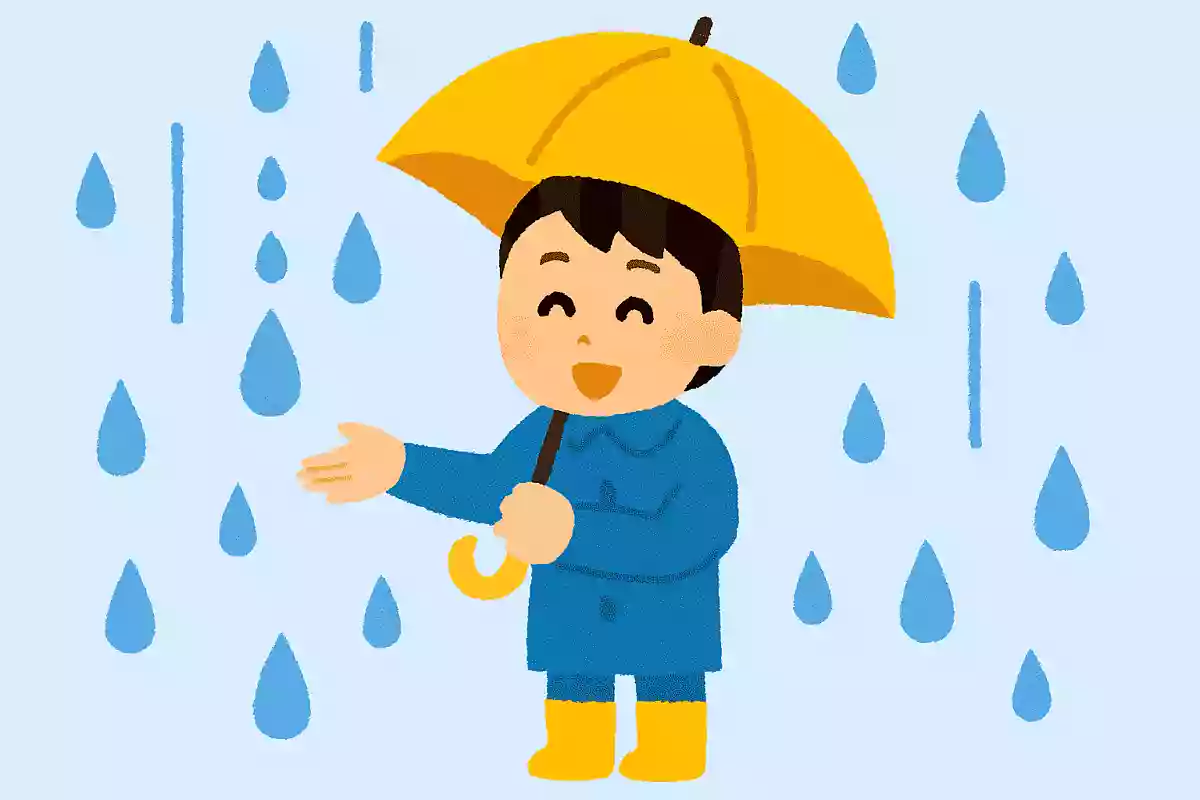
When we think of raindrops, we tend to picture them as “teardrop-shaped,” but their real shape is actually different. As they fall from the sky, air and water resistance give them a distinctive form. So, what shape do raindrops really have? Hint: think of the shape of a water droplet.
- teardrop-shaped
- meat-bun-shaped
- triangle
See the answer
meat-bun-shaped
Real raindrops are not teardrop-shaped; they look more like a steamed bun, with a rounded top and a flattened bottom. This is because air resistance causes the lower part to spread out. Small raindrops are spherical, but as they get larger, they take on the steamed-bun shape.
Learn to Love the Rain! Fun Facts & Trivia Quiz about the Rainy Season for Kids (11–20)
What does it mean when a teru teru bozu is hung upside down?
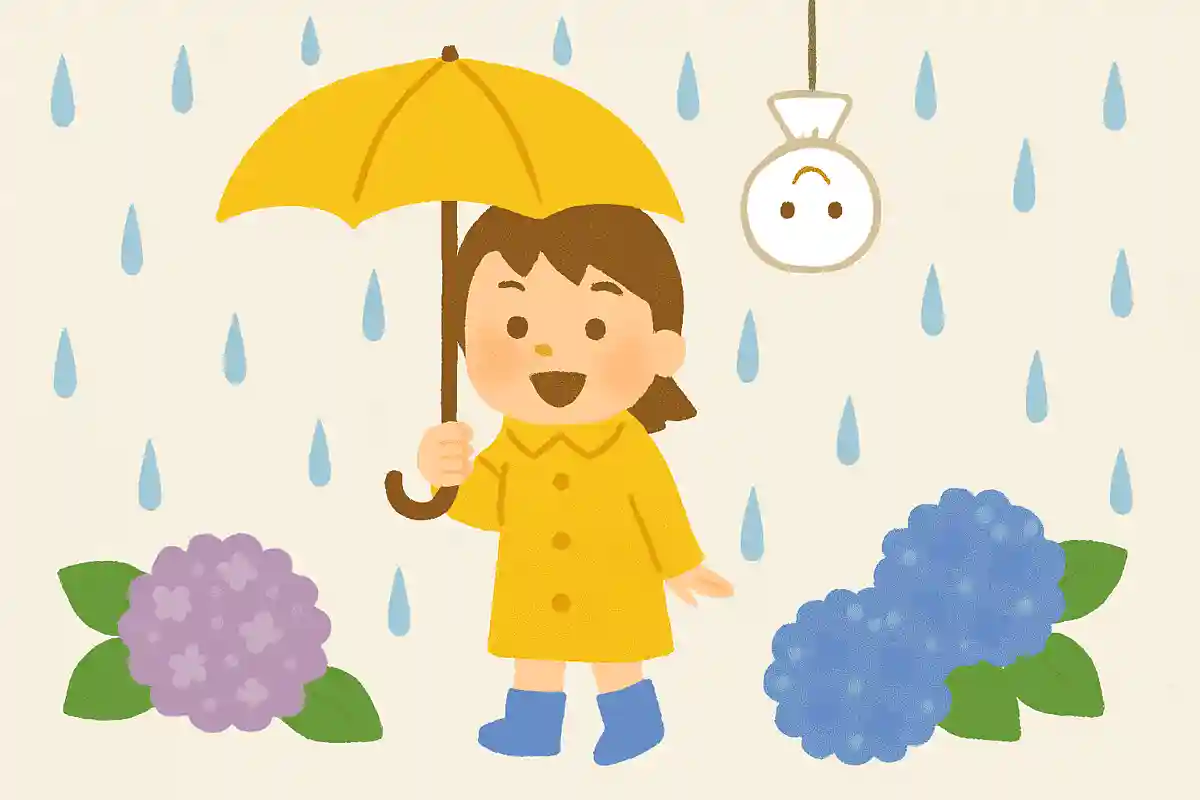
- It means that you want it to rain.
- It means hoping for the sunny weather to continue.
- Meaning of boosting (one's) luck
See the answer
It means that you want it to rain.
A teru teru bozu is something you hang when you wish for clear weather, but if you hang it upside down, it changes to mean “I want it to rain.” An upside-down teru teru bozu is called names like “fure fure bozu” or “ruterute bozu.” Also, a black teru teru bozu is one that wishes for rain.
What is something good to stick on the soles of shoes to make them less slippery on rainy days?
- tissue paper
- wrap
- bandage
See the answer
bandage
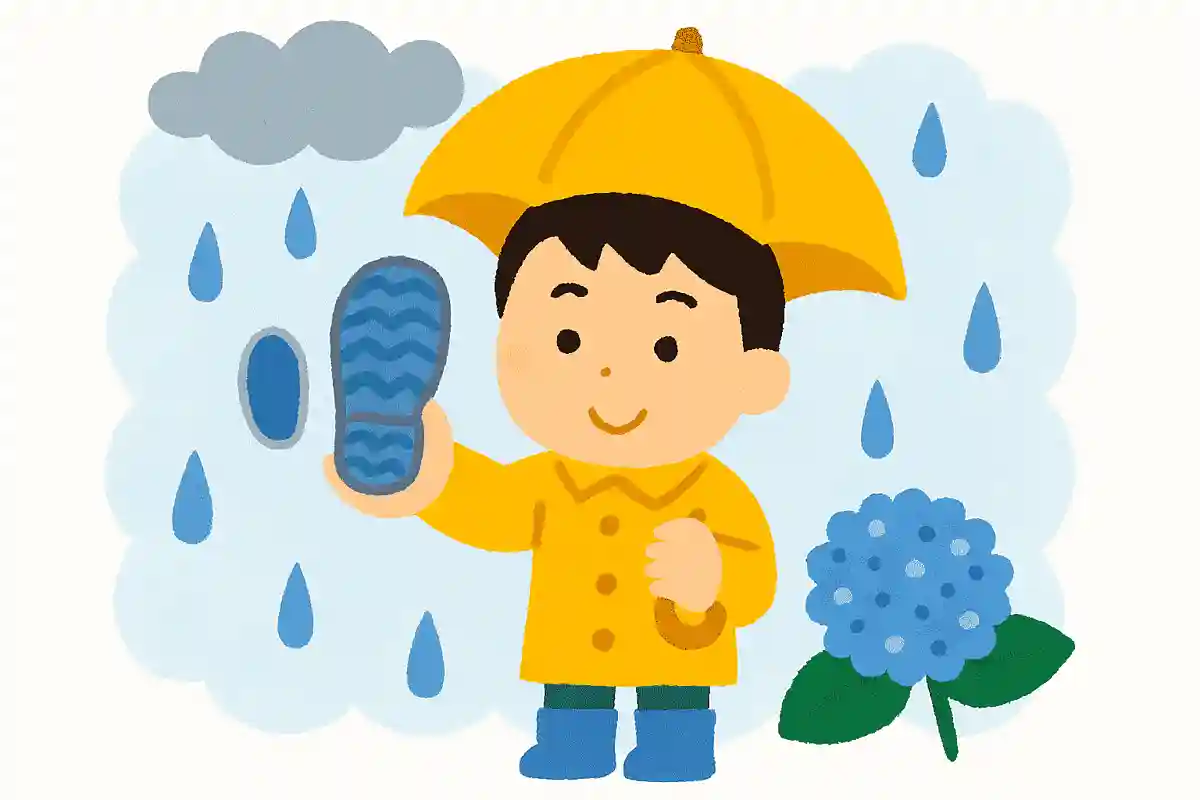
On rainy days, your shoes can get slippery, but sticking bandages on the soles can actually make them less slippery! First, thoroughly remove any dirt and moisture from the soles, then just place one bandage each on the toe and heel areas. Definitely give it a try during the rainy season.
What do you call a rainy season that has officially begun, but during which it hardly rains?
- dry rainy season
- false rainy season
- The rainless rainy season
See the answer
dry rainy season
Even though the rainy season has begun, when there is very little rain, it is called “karatsuyu,” written with the characters for “empty rainy season.” If a karatsuyu occurs and precipitation is low, it can affect the growth of crops and may lead to water shortages in the summer.
Which weather symbol represents rain?

Each weather icon used in the forecast represents specific weather conditions. Which icon indicates a rainy day? Hint: It’s the one with color.
- ●
- 〇
- ◎
See the answer
●
The weather symbol for rain is “●.” A black circle is used as the weather symbol to represent rain. At meteorological observatories, it seems they use weather symbols when recording observations. By the way, 〇 indicates clear skies, and ◎ indicates fair weather. There are other symbols that represent different weather conditions as well, so it’s interesting to look them up!