


The rainy, muggy season of tsuyu.
This time of year arrives before summer, and it’s hard to go out and play, so it’s easy to feel a bit down.
To help you enjoy the rainy season even a little, we’ve prepared a trivia and fun-facts quiz about tsuyu! We’ve gathered quizzes from various angles—mysteries about tsuyu and rain, items that come in handy on rainy days, and more.
Deepen your knowledge about the rainy season and rain, and try enjoying this gloomy time in a different way! Be sure to share what you learn from the quiz with your friends, too.
- [For Kids] Trivia & Fun Facts Quiz About June
- Rainy season trivia roundup: fun facts you'll want to share with someone
- [Trivia] Did You Know? A Collection of Weather Proverb Quizzes!
- Trivia & fun facts about June
- [Trivia] Challenge! Spring General Knowledge Quiz
- Make weather forecasts more fun! Trivia and fun facts about the weather
- September Trivia Quiz & Fun Facts! A Fun Autumn Quiz for Kids
- Become a trivia master with a multiple-choice quiz for elementary schoolers! A fun problem collection that captivates both kids and adults
- [For Elementary School Students] Trivia About April
- Trivia quiz with useful tips to know: fun facts that come in handy at school or at home [for kids]
- [For Kids] Fun Facts & Trivia Quiz about Koinobori (Carp Streamers)
- [For Kids] Enjoy Together as Parent and Child! Demon Slayer Trivia Quiz & Fun Facts Questions
- [For Kids] November Trivia Quiz & Fun Facts: Let’s Learn While Having Fun!
Fall in Love with Rain! Fun Facts and Trivia Quiz about the Rainy Season for Kids (1–10)
Since what era have teru teru bozu existed?
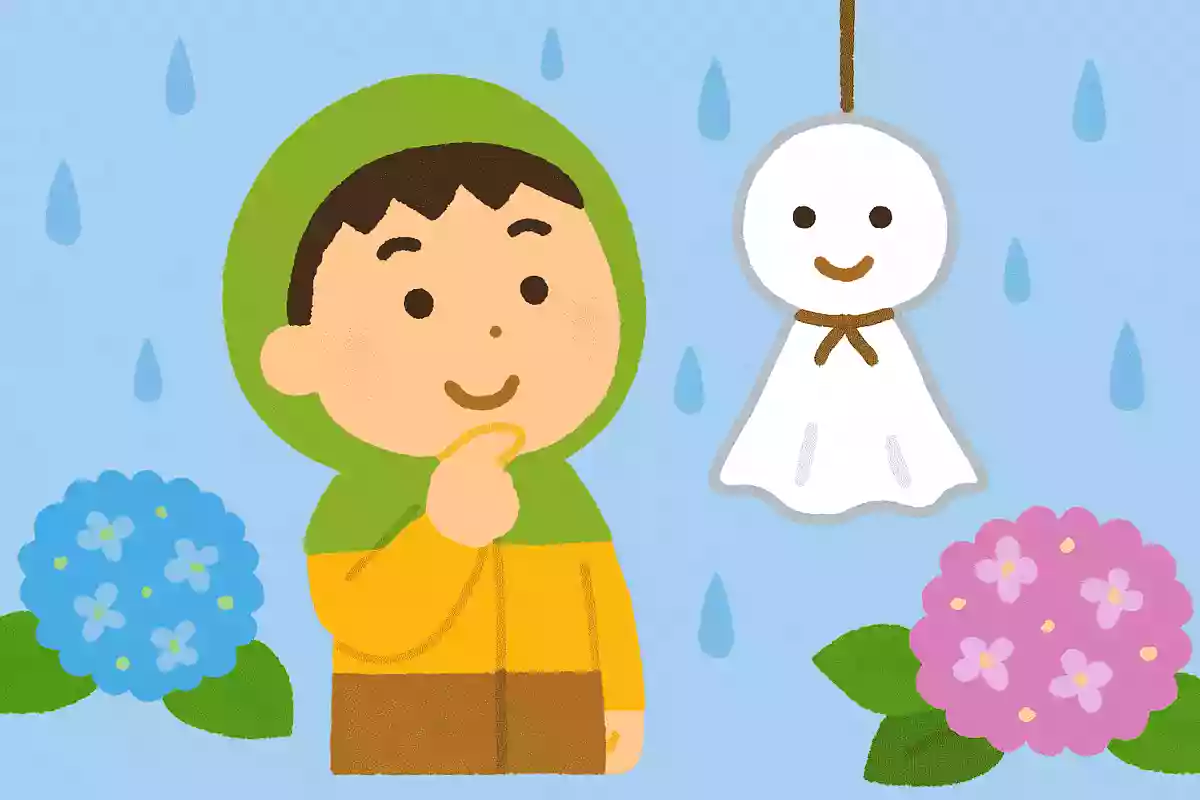
When rainy days continue, people make teru teru bozu to pray for clear skies. So, from which era in Japan did people start making these teru teru bozu? Hint: It was about 400 years ago.
- Heian period
- Kamakura period
- Edo period
See the answer
Edo period
Teru teru bozu began to spread in Japan during the Edo period. It’s thought that before then, they didn’t exist in the form we know today. The custom of wishing for clear weather became common in households during the Edo period.
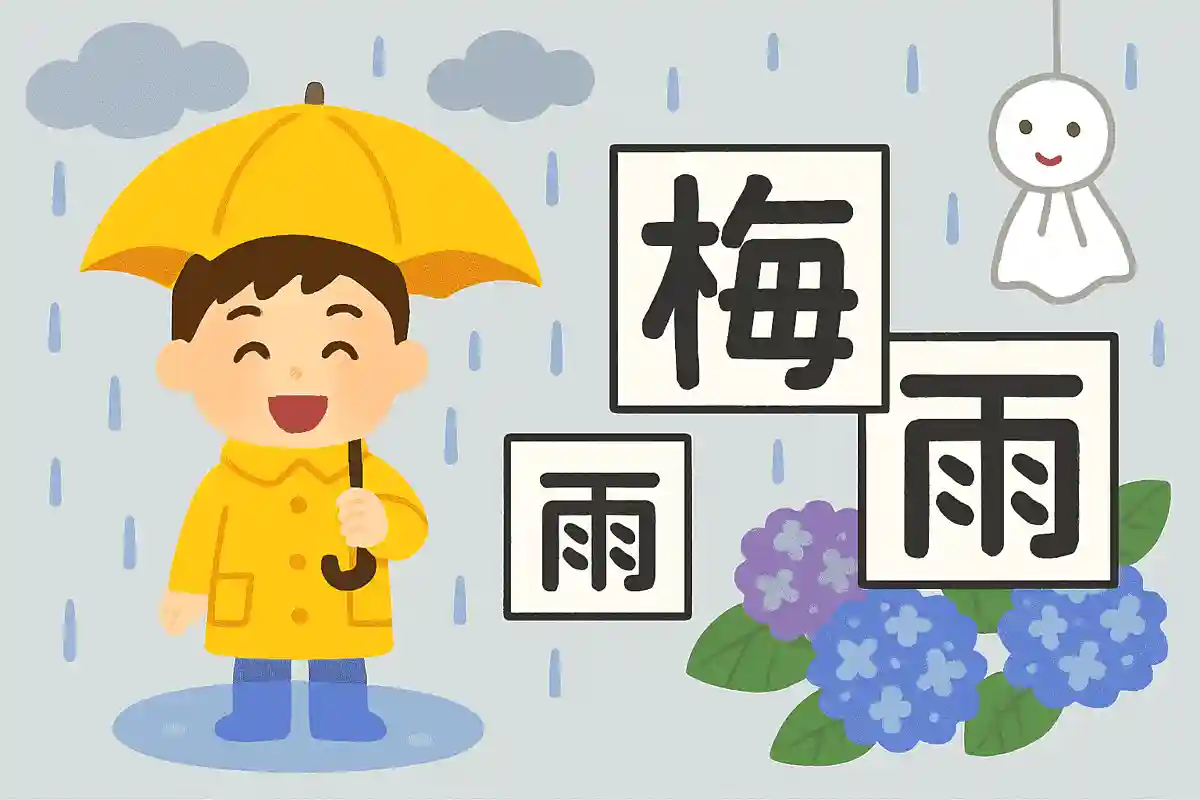
Why does the kanji for “tsuyu” (the rainy season) include the character for “plum”?
- Because plum trees are strong against rain
- Because it’s plum harvest season
- Because the scent of plums becomes stronger when it rains.
See the answer
Because it’s plum harvest season
The word tsuyu uses the character for “plum” (梅) because plum fruits ripen and are harvested during this season. Originally, however, since the dampness from the rain made it a time when mold easily grew, it was written with the character for mold (黴) as 黴雨, pronounced the same as baiu.

What symbol do they use to indicate rain in weather forecasts overseas?
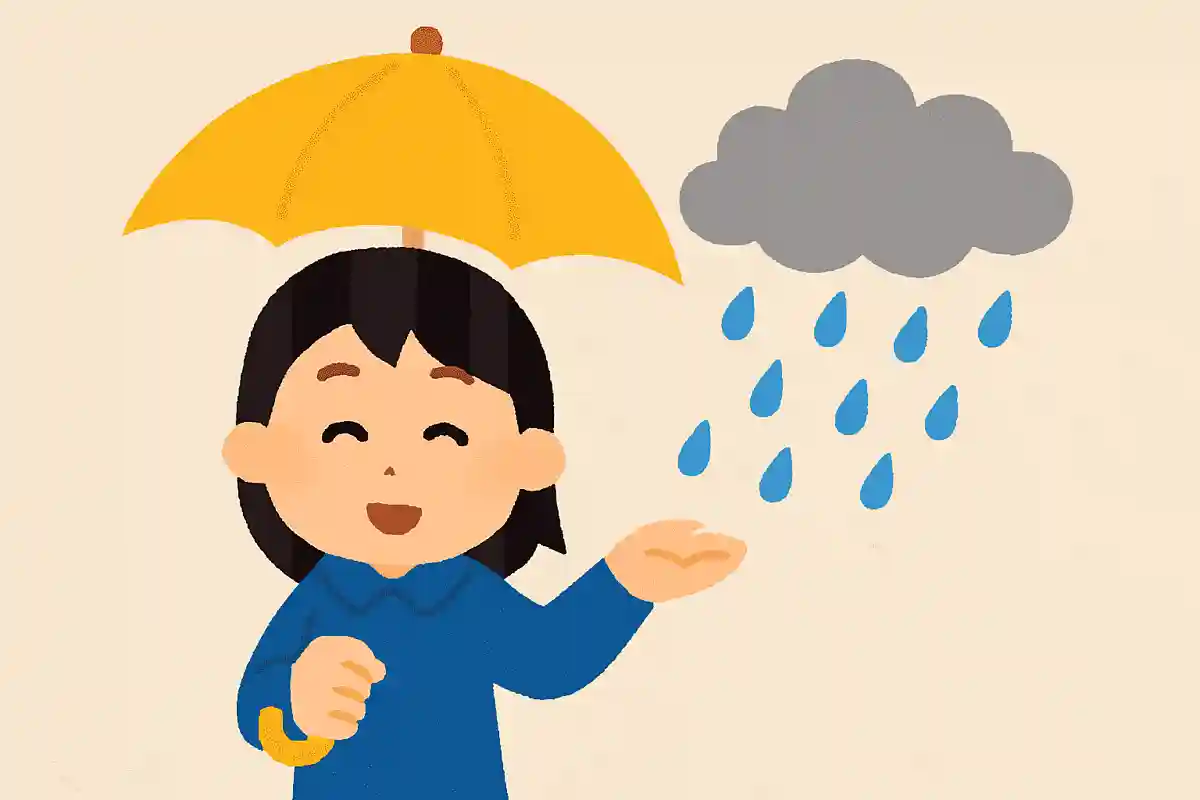
In Japanese weather forecasts, the umbrella icon is often used, but in many countries overseas, different symbols are commonly used. So, when it’s going to rain abroad, what symbol is used in weather forecasts? Hint: It’s something in the sky!
- rain cloud
- rubber boots
- raincoat
See the answer
rain cloud
In weather forecasts overseas, a rain cloud icon is often used instead of an umbrella. The common illustration shows raindrops falling from a cloud, and it clearly conveys how much rain is expected through the cloud’s shape and the number of drops.
Which one provides dehumidifying effects just by being left in place?

- newspaper
- tissue paper
- plastic bag
See the answer
newspaper
Because newspaper absorbs moisture better than other kinds of paper, you can expect a dehumidifying effect just by spreading it out. Simply crumple up some newspaper and spread it under laundry you have to dry indoors because of rain, stuff it inside shoes that got wet, or place it in closets and drawers—that’s all you need!
What do you call the rain that falls during the rainy season?

- drizzle
- Early summer rain
- evening shower
See the answer
Early summer rain
The rain that falls during the rainy season is written as “五月雨” and read “samidare” or “satsuki-ame.” Samidare refers to rain that falls intermittently over a long period and is used as a word symbolizing the rainy season. The reason it uses the character for “May” (五月) is that what is now June corresponds to the fifth month in the lunar calendar.
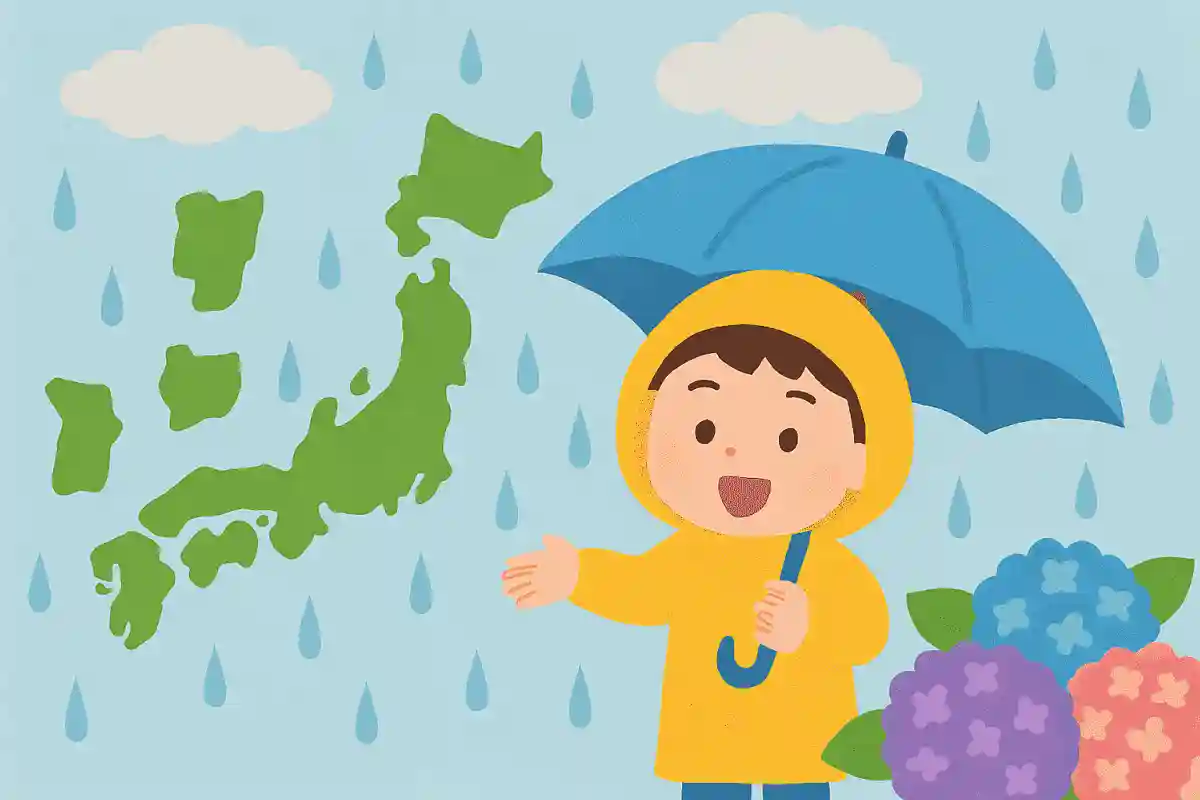
Which prefectures in Japan don’t have a rainy season?
- Hokkaido
- Osaka Prefecture
- Okinawa Prefecture
See the answer
Hokkaido
Like the regions from Honshu down to Okinawa, Hokkaido can experience rain during the typical rainy season. However, by mid to late July, when the seasonal rain front would normally reach Hokkaido in earnest, the higher ambient temperatures weaken and dissipate the front, which is why it’s said that Hokkaido is unaffected by the rainy season.
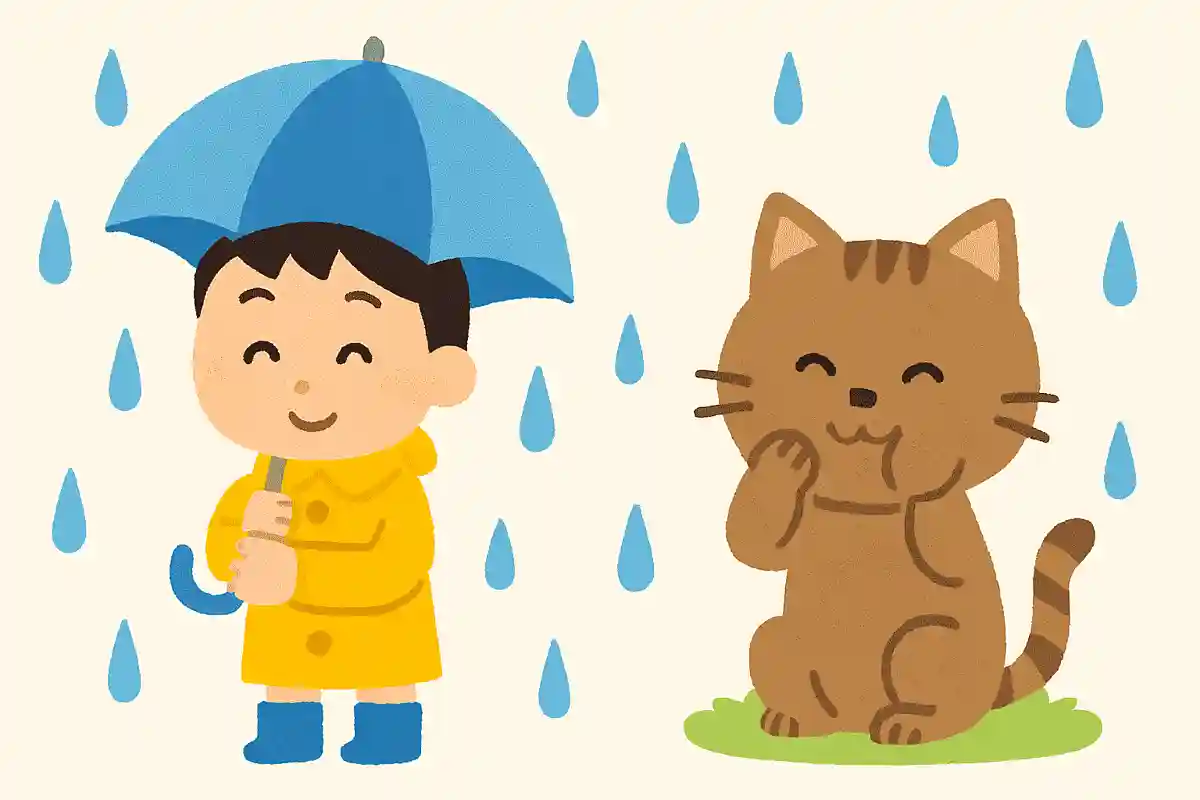
It’s said that when a certain animal washes its face, it will rain—what animal is it?
- cat
- dog
- Frog
See the answer
cat
Although the saying “When a cat washes its face, it will rain” is a proverb, it does have a solid scientific basis. It’s said that cats wash their faces before rain because the fleas on their faces become active and itchy due to humidity, and also to groom their whiskers, which get heavier from the moisture in the air. If you see this behavior, rain might be on the way.