

Beginner to Intermediate: Chopin pieces with relatively low difficulty. Recommended works by Chopin.


Frédéric Chopin, the great Polish composer known as the Poet of the Piano.
Even if you don’t often listen to classical music, you’ve probably heard Chopin’s name and his music at least once.
Chopin, a leading figure of the early Romantic era, created works that are romantic yet somehow simple and familiar.
This time, we’ve selected relatively easy piano pieces by Chopin that we recommend for beginners to intermediate players.
Among the works introduced, some have high difficulty in their original form but are widely available in arrangements that can be played at an elementary to intermediate level.
If you’re interested in Chopin’s music, be sure to check them out!
- Piano Masterpieces: Surprisingly Easy Despite Sounding Difficult!? A Curated Selection Perfect for Recitals
- [Intermediate Level] Cool Piano Pieces You Can Play [Great for Recitals Too]
- [For Elementary School Students] Brilliant, Showy Masterpieces That Sound Impressive at Piano Recitals
- [For Adults] Recommended for Piano Recitals! A Curated Selection of Impressively Sounding Masterpieces
- [For Piano Recitals] Simple yet Cool Classical Pieces
- [Beginner] Recommended Piano Pieces to Play at a Recital
- Lower difficulty: Not as hard as it sounds!? Debussy’s piano pieces
- [Beginner-friendly] Easy Mozart piano pieces. Recommended Mozart works.
- [For Intermediate Players] Challenge Yourself! Recommended Masterpieces That Shine at Piano Recitals
- Beethoven: A selection of gem-like masterpieces that are easy to play on the piano
- [Beginner-friendly] Play right away! A comprehensive introduction to Schumann’s piano works
- [Classical Music] All pieces under 3 minutes! A collection of short and cool piano pieces
- [Low Difficulty] Recommended Tchaikovsky Piano Pieces [Intermediate]
[Beginner–Intermediate] Chopin pieces with relatively low difficulty. Recommended Chopin works (21–30)
Waltz No. 4 in F majorFrederic Chopin

Often called the “Kitten Waltz” for its lively character, the Waltz No.
4 in F major, Op.
34-3 conjures up a playful scene of kittens dashing about.
It’s a charming piece, frequently chosen for recitals and competitions, and is beloved for its strong performance impact.
Play the opening arpeggios boldly and confidently, and render the glittering, intricate right-hand passages with a bright, clear tone.
Keep the left-hand accompaniment light and forward-moving; practice each hand separately with care to achieve that buoyant touch.

Heroic PolonaiseFrederic Chopin

Among Frederic Chopin’s piano works, the Polonaise No.
6 in A-flat major, Op.
53—affectionately known as the “Heroic Polonaise”—is especially popular.
Its chromatic ascending passages and powerful rhythms make a strong impression.
Most distinctive of all is the succession of octaves in the middle section! Because even professional pianists find this passage difficult to execute perfectly, it’s by no means easy.
A good approach is to first enjoy the character of the piece using an arrangement that omits the octave technique, and then, once your technique has developed, challenge yourself with the original version.
Fantaisie-ImpromptuFrederic Chopin

When asked to name a piano piece by Frédéric Chopin, many people probably think of the Fantaisie-Impromptu.
It’s a classic masterpiece recognizable from its very first phrase.
Known for its passionate, romantic character that shines on stage, it’s also not extremely difficult and is often performed at recitals.
The passages employing polyrhythm—six subdivisions in the left hand against eight in the right—do require a certain level of skill, even if advanced techniques aren’t strictly necessary.
For anyone who plays the piano, the Fantaisie-Impromptu is a cherished work—be sure to give it a listen.

Waltz in C-sharp minor, No. 7, Op. 64-2Frederic Chopin
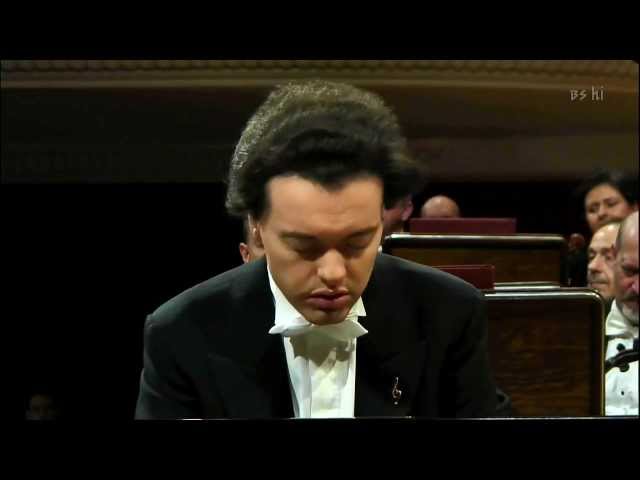
Waltz No.
7, Op.
64-2, composed in 1847, is one of Frédéric Chopin’s late works.
It is said to be a culmination of his compositional technique, featuring a mazurka—Poland’s national dance—as its main theme.
The piece is also known for being relatively accessible in difficulty and is frequently performed at piano recitals.
By clearly expressing the contrast between passages that quietly convey sorrow and those where emotions overflow with movement, you can achieve a performance that is richly expressive, not merely dark.
Waltz No. 2 in A-flat major, “Grand Waltz”Frederic Chopin

Nicknamed the “Brilliant Grande Valse,” Frédéric Chopin’s Waltz No.
2, Op.
34 No.
1 is a piece many people will recognize, as it’s often performed at concerts and recitals and frequently used in commercials.
Composed by Chopin in 1835, this waltz is striking for its dazzling, lively character.
It’s also highly effective in performance and makes a strong impression, so if you have an opportunity to showcase your piano playing, be sure to give it a try.
Impromptu No. 1 in A-flat major, Op. 29Frederic Chopin

Frédéric Chopin, known as a leading composer of the Romantic era, was born in Poland in 1810 and, despite his short life—he died at just 39—left behind numerous masterpieces.
This work, composed in 1837, is notable for its flowing triplets.
The bright resonance of A-flat major and the plaintive expression in the F minor middle section are striking.
Technically, attention is required for the wide left-hand passages, but the piece shines with the delicate sensibility so characteristic of Chopin.
It is a captivating work that lets you feel why he was called the Poet of the Piano.
Nocturne No. 20 in C-sharp minor, Op. posth.Frederic Chopin

Nocturne No.
20 in C-sharp minor, Op.
posth., is marked by a bittersweet yet beautiful melody characteristic of Frédéric Chopin.
It is said to have been composed around 1830, when Chopin was about twenty, as a piece for his elder sister to practice the Piano Concerto No.
2.
If you’re a film lover, you may also remember it from the acclaimed movie The Pianist, where it features prominently.
Interestingly, this piece is also believed to have been written during the time Chopin harbored unrequited feelings for the soprano Konstancja Gładkowska.
The wave-like, undulating melody that conveys passion and melancholy in love may well reflect the emotions of the young Chopin.
