



Frédéric Chopin, the great Polish composer known as the Poet of the Piano.
Even if you don’t often listen to classical music, you’ve probably heard Chopin’s name and his music at least once.
Chopin, a leading figure of the early Romantic era, created works that are romantic yet somehow simple and familiar.
This time, we’ve selected relatively easy piano pieces by Chopin that we recommend for beginners to intermediate players.
Among the works introduced, some have high difficulty in their original form but are widely available in arrangements that can be played at an elementary to intermediate level.
If you’re interested in Chopin’s music, be sure to check them out!
- Piano Masterpieces: Surprisingly Easy Despite Sounding Difficult!? A Curated Selection Perfect for Recitals
- [Intermediate Level] Cool Piano Pieces You Can Play [Great for Recitals Too]
- [For Elementary School Students] Brilliant, Showy Masterpieces That Sound Impressive at Piano Recitals
- [For Adults] Recommended for Piano Recitals! A Curated Selection of Impressively Sounding Masterpieces
- [For Piano Recitals] Simple yet Cool Classical Pieces
- [Beginner] Recommended Piano Pieces to Play at a Recital
- Lower difficulty: Not as hard as it sounds!? Debussy’s piano pieces
- [Beginner-friendly] Easy Mozart piano pieces. Recommended Mozart works.
- [For Intermediate Players] Challenge Yourself! Recommended Masterpieces That Shine at Piano Recitals
- Beethoven: A selection of gem-like masterpieces that are easy to play on the piano
- [Beginner-friendly] Play right away! A comprehensive introduction to Schumann’s piano works
- [Classical Music] All pieces under 3 minutes! A collection of short and cool piano pieces
- [Low Difficulty] Recommended Tchaikovsky Piano Pieces [Intermediate]
[Beginner–Intermediate] Chopin pieces with a relatively low difficulty level. Recommended Chopin works (1–10)
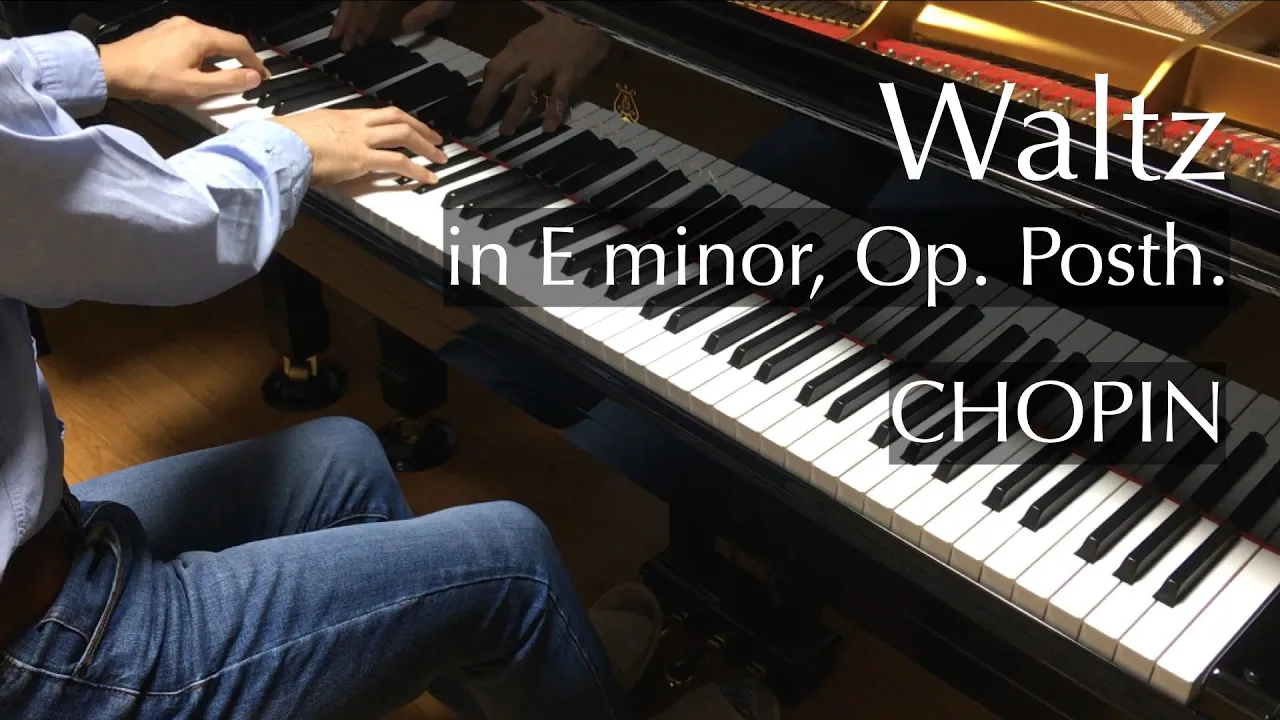
Waltz No. 14 in E minor, Op. posth.Frederic Chopin

This piece is said to have been composed by Frédéric Chopin, the poet of the piano, just before he left Poland at the age of twenty.
Though it runs only about three minutes, it condenses intensity and romantic elements, making it a work that draws out a pianist’s expressive powers.
Written in E minor, it strongly reflects Chopin’s characteristically delicate and poetic style.
It balances intimacy and lightness throughout, offering a work that fully showcases the allure of piano performance.
Nocturne No. 2 in E-flat major, Op. 9 No. 2Frederic Chopin

Among the 21 nocturnes composed by Chopin, this piece is especially famous.
It has been used in numerous films and is also well known for being featured in figure skater Mao Asada’s program.
While its technical difficulty is not particularly high, achieving a good balance between the rich, chordal left-hand accompaniment and the romantic, delicate right-hand melody requires patient, focused practice over some time.
Play with a relaxed tempo, letting the lines sing fully.

Prelude No. 15 “Raindrop”Frederic Chopin

Raindrop-like repeated notes—drip, drop—create a beautiful effect in the piano piece “Raindrop” by the Polish pianist and composer Frédéric Chopin.
Its formal title is Prelude No.
15 from the 24 Preludes, Op.
28.
Structured in an A–B–A form, it moves from the gentle rain of the opening, to the intensifying, forceful downpour in the middle section, and finally to a calm ending as the rain subsides.
Throughout, the persistent repeated A-flat note vividly evokes the beautiful scene of a rainy day.
Though a short work of about five to six minutes, it is a piano piece that superbly captures the sound of falling rain.

Military PolonaiseFrederic Chopin

Known as the “Military Polonaise” for its bright and dignified character, the Polonaise in A major, Op.
40 No.
1 features a stately tone and rhythm that are often said to express the grandeur of Frederic Chopin’s homeland, Poland.
Its straightforward, unembellished structure is part of what makes the piece so approachable.
To sustain power from beginning to end, it’s important to release tension in the arms and shoulders.
Because the succession of chords can easily make the body stiffen, it may be a good idea to start with a slightly simplified arrangement of the score.
Waltz of the PuppiesFrederic Chopin

Known affectionately as the “Minute Waltz,” Waltz No.
6 in D-flat major, Op.
64-1 was composed between 1846 and 1848.
According to tradition, it was written at the request of Chopin’s lover, George Sand, who asked him to depict in music the charming scene of a puppy spinning around as it chases its tail.
Brilliant yet delicate with a simple, unpretentious charm, this piece is a perennial favorite at recitals and concerts.
Try playing it lightly, imagining the puppy’s lively movements.
Prelude No. 6 in B minor, Op. 28-6Frederic Chopin

It’s a short piece imbued with delicacy and wistfulness, yet its rich emotional expression is captivating.
The left-hand melody conveys a sorrow that wells up from deep within, while the right-hand chords resonate like raindrops.
Published in 1839, this work is said to reflect Frédéric Chopin’s inner turmoil.
Since it is performed at a relaxed tempo, it should be approachable even for those who have just started learning the piano.
It’s recommended for anyone interested in Chopin’s music or looking to play a piece rich in emotion.
Through this piece, why not experience the allure of Chopin’s music?
Prelude in A minor, Op. 28 No. 2Frederic Chopin

Starting at a relaxed tempo, this piece is characterized by a heavy, solemn atmosphere.
Its harmonic progression includes distinctive dissonances that, for the time, sounded remarkably innovative.
This creates a mysterious and unstable feeling that leaves a deep impression on listeners.
It is the second piece in a set of 24 preludes, completed in 1838 on the island of Mallorca.
Despite its short duration, it evokes an introspective, wistful mood and is said to express profound sorrow and loneliness.
Rather than technical difficulty, the work demands inner expressiveness and emotional depth.
It is an ideal piece for those interested in classical music or looking to refine the expressive capabilities of their piano playing.