

[Trivia] A quiz to learn about the history of croissants and the origin of their name

Croissants are loved by people all over the world, including in the United States, France, and Japan.
Known for their moist texture and crispy bite, these popular pastries are enjoyed in many situations, such as at breakfast or as a snack.
You might have wondered, “Where do croissants get their name and shape?”
In this article, we’ve prepared a quiz to deepen your knowledge of croissant history and trivia.
We’ll pose questions along with explanations about how croissants came to be and what makes them unique.
Give this quiz a try to uncover the secrets of their deliciousness and pick up some tasty knowledge.
- [Trivia] A quiz to learn about the history of croissants and the origin of their name
- A three-choice quiz about chocolate knowledge and history
- Deepen your knowledge of food! A three-choice trivia quiz
- How Much Do You Know? Food Quiz for Elementary School Students
- [Killing Time] A Collection of Fun Trivia Quizzes You'll Want to Share with Someone
- Coffee Trivia Quiz: A one-stop introduction to lots of fun facts
- [Study] Fun to Know! A Collection of World History Trivia Quizzes
- How many can you solve? Test your spring knowledge with a trivia quiz about March!
- [Trivia] A quiz to deepen your corn knowledge
- How many can you solve? Fascinating history trivia quizzes that spark intellectual curiosity
- Not taught in school! A roundup of historical trivia and fun facts
- [History Quiz] General History Questions You Should Know
- Let’s take on the challenge! A multiple-choice history quiz for elementary school students. Review your history lessons.
[Trivia] Quiz on the history and origin of the name of croissants (1–10)
What is the name of a croissant covered in chocolate?

- pain au chocolat
- eclair
- Tarte au citron
See the answer
pain au chocolat
Pain au chocolat is a type of croissant with bar-shaped chocolate inside. It is very popular in France and beloved at breakfast or snack time. It features a crispy exterior and melty chocolate inside.

What do you call croissants made with margarine?
- Croissant Ordinaire
- Croissant Majestic
- Croissant de Luxe
See the answer
Croissant Ordinaire
“Croissant ordinaire” refers to croissants made with margarine instead of butter. Using margarine keeps costs down, but the flavor differs from that of butter-based croissants. Even so, their distinctive taste can be considered part of their appeal.
What determines the shape of a croissant?

- flour
- sugar
- fats and oils
See the answer
fats and oils
The shape of a croissant is created by its layers of fat. During the folding process, this fat is distributed evenly throughout the dough; when baked, the fat evaporates, causing the dough to expand and forming the characteristic layered structure. Therefore, the shape of a croissant is determined by the properties of the fat and how it is used.
[Trivia] A quiz to learn the history and origin of the name of the croissant (11–20)
What do you call a croissant in Japanese?

- star-shaped bread
- crescent-shaped bread
- sun-shaped bread
See the answer
crescent-shaped bread
As its name suggests, croissant means “crescent” in French. Because the shape of this bread resembles a crescent, it is described in Japanese as “crescent-shaped bread.” The croissant’s flaky texture and buttery aroma are among the reasons it is beloved around the world.
What language is the word “croissant” from?

- France
- Germany
- Italy
See the answer
France
The word “croissant” is of French origin. Although croissants are said to have been invented in Austria, there are various theories. In France, their shape and method of preparation were refined, resulting in the form widely known today.
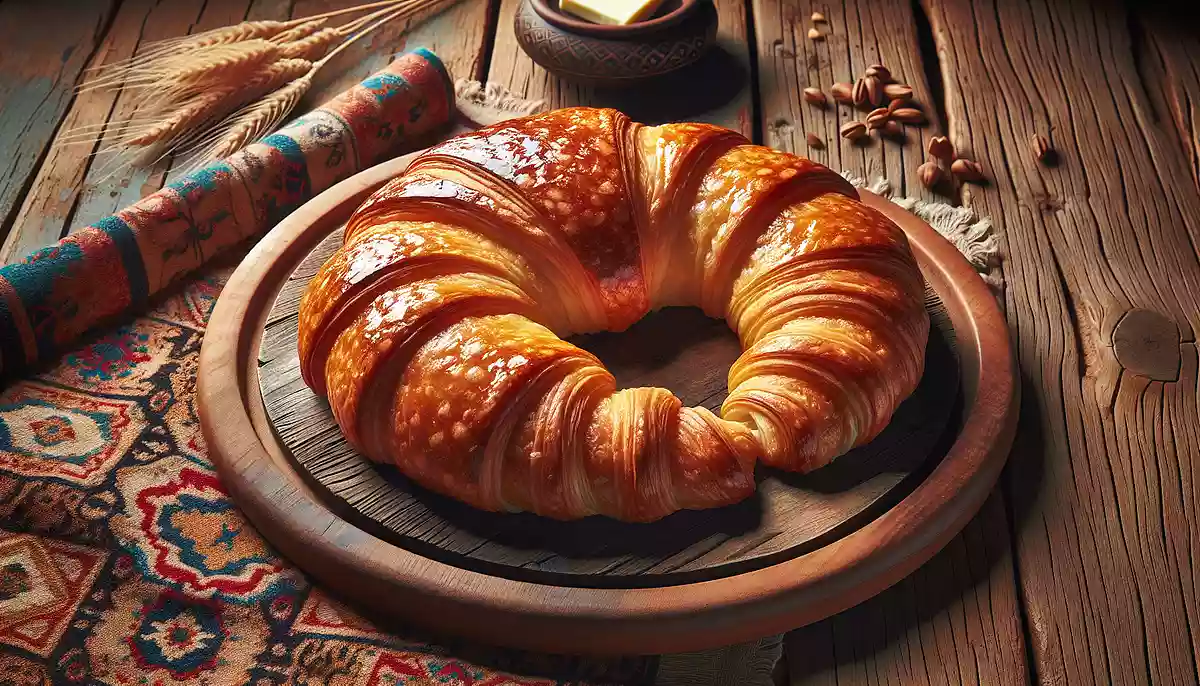
What is the Turkish crescent-shaped bread similar to a croissant?
- Aichorei
- baguette
- Focaccia
See the answer
Aichorei
The answer is ay çöreği. Ay çöreği is a traditional Turkish bread shaped like a crescent, similar to a croissant. It holds an important place in Turkish food culture and is especially enjoyed at breakfast or as a snack. Its flavor and texture have characteristics unique to Turkey, making it popular with many people.
What is the generic term for Viennese-style breads, including croissants?

- baguette
- viennoiserie
- Focaccia
See the answer
viennoiserie
Viennoiserie means “Viennese style” and is a general term for soft, butter-rich baked pastries, including croissants. Techniques that developed in Vienna in the 19th century were brought to France and further refined there, which led to this name becoming established. Among them, the croissant is particularly famous and can be considered the quintessential example of viennoiserie.