

[School Culture Festival] Handmade Planetarium Ideas

A planetarium that’s popular with everyone, from kids to adults.
It’s perfect for a school festival project, isn’t it? Here, we’re introducing ideas for making your own planetarium.
You can build a dome using cardboard and fabric, paint stars on the ceiling, or try one of the many planetarium kits now available—highly recommended.
Make the most of tools available at school, enjoy crafting it by hand, and liven up your school festival! If everyone observes together, it’s sure to be a wonderful experience.
- [Craft] Handmade Planetarium Idea Book
- [For High School Students] A roundup of recommended attractions for the school festival
- [School Festival] Ideas for gimmicks to incorporate into a haunted house
- Unusual attractions you can do in a classroom for a cultural or school festival
- Ideas for exhibits recommended for school culture festivals. Film screenings, too.
- [School Festival] Let's build a roller coaster!
- [Non-food] Cultural festival attractions: from classroom exhibits to stage events
- Recommended photo spots for the school festival. Create a photogenic space.
- Games that rival street festivals and variety shows!? Crowd-pleasers for school cultural festivals
- [Indoor Activities] A Collection of Craft Ideas Recommended for Elementary School Students
- [By Genre] Cultural Festival / School Festival Booth Catalog [2026]
- Recommended ideas for student council projects at a school festival, such as recreational activities and stage events.
- Recommended crafts for cultural festival exhibits. Ideas that are also perfect for venue decorations.
[School Festival] Handmade Planetarium Ideas (1–10)
Planetarium with paper cups

Here’s how to make a planetarium using a paper cup.
Cover the paper cup completely with black colored tape so there are no gaps.
Cut out star-shaped holes with a craft knife, then attach colored cellophane over them.
Using vibrant colors like red and green will make it look even more festive.
Once the paper cup piece is finished, shine a light from the inside to project the planetarium onto the ceiling.
It’s also recommended to cut out shapes you’d like to float in the night sky—like the moon or animals—and try those too.

Komaba Festival Planetarium
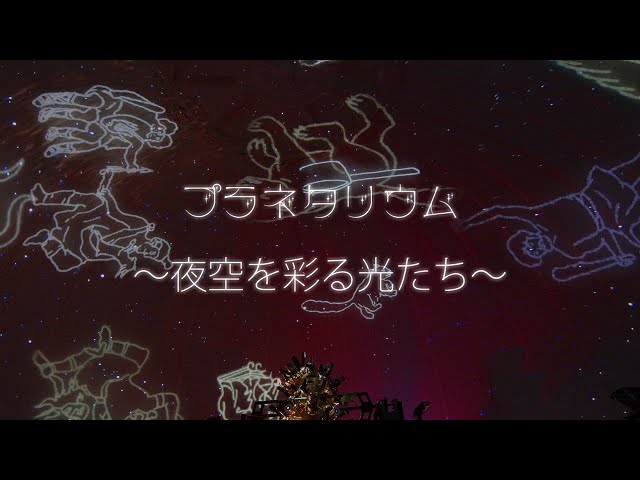
To get people to experience a planetarium, nothing is more important than getting them to visit the dome.
While the content itself matters, focusing on promotional videos and the dome’s appearance could also help attract visitors.
It might be effective to create a story leading up to the visit to the planetarium and design the program so that audiences can relive that journey.
This approach lets you convey the worldbuilding in advance and clearly communicate the attention to detail in the planetarium’s content, which I think is crucial.

Planetarium BGM
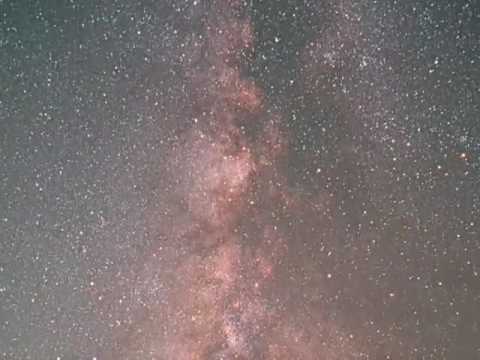
When you think of a planetarium, it’s a program where the starry sky is projected onto a dome and explained, right? Crafting the style of narration and building a romantic atmosphere are important points, aren’t they? To emphasize that kind of world, BGM that highlights the gentle light of the stars and the soft narration is also essential.
It’s standard to choose music with a gentle mood, and I think it could be interesting to create a progression where, as the music swells, the sparkle of the stars gradually grows brighter.
[School Festival] Handmade Planetarium Ideas (11–20)
A planetarium inside a cardboard box
@tidako_13 What unfolds inside the cardboard box is... ✨#TikTokXmas#tiktok classroomHandmadePlanetariumHandmade PlanetariumRecommendation#fyp
♬ Mikrokosmos – BTS
It’s a planetarium where, when you hold a cardboard box up to the light and look through a hole, a starry sky spreads out inside.
First, cut out one face of the cardboard box, and on the opposite side make a hole large enough to look through.
Line the inside with black construction paper to absorb light, then cover the cut-out side with aluminum foil perforated with a star pattern and attach it—done.
Ensuring that no light leaks in from anywhere other than the holes in the aluminum foil—such as by adjusting the size of the viewing hole and the inner construction paper—is a key point for creating a beautiful starry sky.
Planetarium with color balls

It’s a planetarium that represents a night-lamp shade using colored balls.
After inserting bamboo skewers into the colored balls and attaching them with a hot glue gun, mix UV resin with a colorant and apply it to the balls.
The key here is to leave some space around each skewer.
Change the resin colors to create a gradient as you paint, then cure the resin.
Once cured, remove the skewers and take out the colored balls.
Apply resin to the inside of the dome and nail polish to the outside.
Finally, coat the dome with clear resin, decorate it with charms and metal parts, and place it over the night lamp to complete the piece.
A planetarium made with plastic cups and sheet material

This is an idea where you place a black-painted plastic cup over a board-mounted light so that the light leaking from the cup looks like a starry sky.
It’s a planetarium that prioritizes beauty over accurately projecting star positions, so let’s create it while thinking about what shapes to cast onto the ceiling.
Freely draw patterns such as stars, the moon, or simple circles on the cup, then paint the surrounding areas black, leaving those designs unpainted.
A key point is to paint the black thoroughly so the illustrations are clearly projected.
Arrange the illustrations as you like and create your ideal starry sky.
Planetarium craft kit

It’s an easy-to-make planetarium: just punch holes to match the constellations drawn on the unfolded template, assemble it, and place it on a light.
Not only the star positions and constellation shapes, but also their names are clearly labeled, so you can learn the shapes and names as you punch the holes.
There are many versions available, such as ones that project seasonal constellations or rotate to show all seasons, so it sounds fun to start by finding your favorite.
Because it’s simple, you can also get creative—like increasing the number of stars beyond the sample, or adding cellophane to make a colorful night sky.