

![[School Culture Festival] Handmade Planetarium Ideas](https://i.ytimg.com/vi_webp/nBS9VT5VL6s/maxresdefault.webp)
[School Culture Festival] Handmade Planetarium Ideas


A planetarium that’s popular with everyone, from kids to adults.
It’s perfect for a school festival project, isn’t it? Here, we’re introducing ideas for making your own planetarium.
You can build a dome using cardboard and fabric, paint stars on the ceiling, or try one of the many planetarium kits now available—highly recommended.
Make the most of tools available at school, enjoy crafting it by hand, and liven up your school festival! If everyone observes together, it’s sure to be a wonderful experience.
[School Festival] Handmade Planetarium Ideas (1–10)
cardboard dome
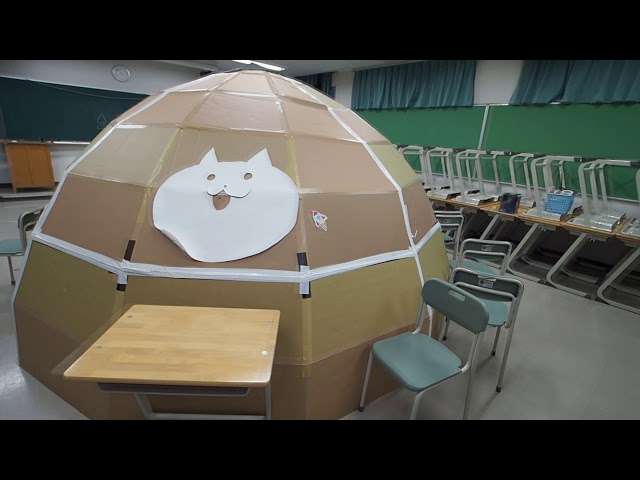
Speaking of planetariums, the tools that project the light of constellations are important, but the projection surface is also a key point.
By casting light onto a dome-shaped space, you create a three-dimensional planetarium that conveys the expanse of the sky.
For building a dome in a rectangular classroom at a school festival, a cardboard dome is recommended.
You can make cardboard parts like segments of a hemisphere and then assemble them into the final dome.
The capacity at one time will be limited, but considering the strength of cardboard, it seems best to make a dome that can accommodate a few people.

A dome made of cardboard and fabric

At a school festival, it’s important to make effective use of the limited space of a classroom.
Since a planetarium requires projecting light onto a dome-shaped surface, think carefully about how to construct a dome within the classroom.
A clear procedure might be to stack chairs and desks to secure the dome’s height, build a frame with supports there, and then drape blackout curtains over it to complete the dome.
Using blackout curtains is also crucial so that the projected light appears clearly.
Although the capacity will be limited, making a smaller dome can make it easier to construct an accurate dome and deliver a presentation with a strong sense of three-dimensionality.
air dome

It describes blowing air into something like a large bag so that, once inflated, it forms a dome shape.
A key point is that when no air is inside, it can be folded for easy storage, and with thorough inspections it can continue to be used afterward.
Since the material is a soft fabric, it’s also noteworthy that a large planetarium can be deployed safely.
Its soft appearance from the outside conveys a welcoming feeling to visitors to the planetarium.
I think it’s important to adjust the balance of how the air is introduced and how it’s unfolded to create a beautiful dome.
[Paper Craft] Let’s Make a Planetarium!
![[Paper Craft] Let's Make a Planetarium!](https://i.ytimg.com/vi/Wrq48Gc-QCg/sddefault.jpg)
When people think of planetariums, they often have a strong image of them as an academic experience—projecting the real night sky and providing explanations.
Why not step away from that formal image and focus on the light projections of a planetarium, using them as interior decoration? You can make a polyhedron out of thick paper, punch star-inspired holes in it, and place a light source at the center to project light around the room.
By adding touches like attaching film on the inside over the holes, you can create a colorful look and transform the space into something even more vibrant and festive.
Home-use planetarium ‘Home Star’

To present a planetarium at a school festival, I believe having the capability to accurately reproduce starlight is essential.
Commercial planetarium machines contain recordings of precise night skies and come in various types, so using one of these seems like a good way to ensure quality.
Each machine specifies the appropriate space based on its output, so prepare a dome that matches those requirements and proceed with the planetarium accordingly.
Precisely because you’re using a commercially available system, adding explanations about which night sky is being projected could further enhance the quality of the program.
[Astronomy Club] Original Planetarium Footage
![[Astronomy Club] Original Planetarium Footage](https://i.ytimg.com/vi/u1WX6axvdFg/sddefault.jpg)
For the planetarium we’ll showcase at the school festival, it’s important to focus on quality, but the fact that we made it ourselves is also a key point.
Gathering materials and editing them into a video—letting the audience see the effort within the program—can be moving, don’t you think? With some ingenuity in the projector and camera lenses, you can create three-dimensional images, but it’s crucial to proceed while considering how they will appear.
The classic approach of adding narration to the footage is fine, but I think it would also be interesting to include an explanation of how the video was made.
How to Make a Pinhole Planetarium (Otona no Kagaku Magazine)

A planetarium projects lights in the shapes of constellations onto a dome-shaped venue, right? The way the light is projected changes how the expanse of the night sky is presented and alters the atmosphere of the space, so it’s important to be particular about the equipment.
It may be easiest to imagine a light source, such as a small bulb, placed at the center and enclosed by a material that lets a faint amount of light pass through.
If you use a film-like material printed with a starry sky and shine light through it, it should convey the sense of sky more effectively.
The brightness of the central light source also changes the brilliance of the stars and the impression they create, so deciding how strong the light should be is a key point.