

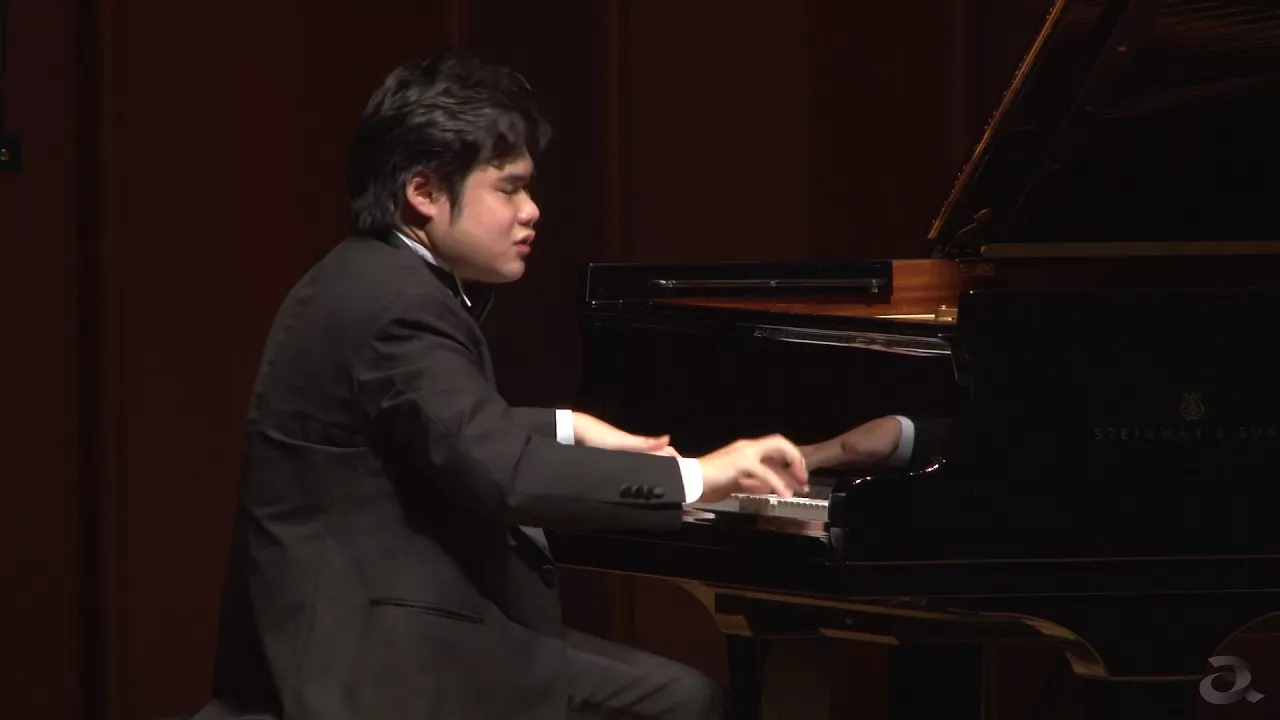
Difficult Piano Pieces | Even Pros Can't Play Them!? Classical Works Requiring Virtuosic Technique

There are countless classical piano pieces in the world that boast a level of difficulty that seems almost unplayable.
Their difficulty is downright diabolical!
Some works are said to be playable by only a tiny handful of even professional pianists.
This time, we’ve picked out famous masterpieces from among these most challenging piano pieces—works renowned for requiring transcendental virtuosity.
We’ll introduce them along with videos that showcase pianists’ superhuman fingerwork, so please enjoy them with both your ears and your eyes.
Difficult Piano Pieces | Even Pros Can't Play Them!? Classical Works Requiring Extreme Virtuosity (1–10)
IslameyMily Balakirev

Islamey by the Russian composer Mily Balakirev is almost invariably cited among the most difficult piano pieces.
In terms of expression in particular, it is extremely challenging: you have to play intricate melodies at pianissimo, and at the most difficult passage it even brings in an ossia.
Personally, I think it is far more difficult than Franz Liszt’s Mazeppa, which is also considered top-tier in difficulty, so if you’re confident in your skills, I encourage you to give it a try.

Transcendental Études No. 4 “Mazeppa”Franz Liszt

Franz Liszt, a composer who wrote numerous highly challenging pieces and has long vexed many performers.
When asked to name a composer known for difficult works, most people probably think of Liszt, don’t they? Among his output, one piece in particular is famed for its difficulty: Transcendental Étude No.
4, “Mazeppa.” While the piece isn’t uniformly difficult in every aspect, its octaves and double notes are extraordinarily demanding.
The difficulty spikes dramatically from the Allegro deciso, so in practice, focus above all on taking positions with precision.
Etude ‘Railway’ Op.27bCharles Valentin Alkan

Charles-Valentin Alkan, one of the leading composers of French Romanticism.
His Étude “Le Chemin de fer” (The Iron Road) Op.
27b is considered one of his most difficult works.
The key feature of this piece is, above all, its dramatic shifts in tempo.
Right from the opening, rapid passages evoking a steam locomotive burst in.
Written largely in sixteenth notes, it keeps the right hand relentlessly busy and demands exceptional finger speed.
It’s a straightforwardly high-difficulty piece, so if you’re confident in your fingerwork, be sure to check it out.
La CampanellaFranz Liszt

La Campanella, crafted by Franz Liszt—known as the magician of the piano—is regarded as one of the most challenging works even among pieces that demand transcendental technique.
Based on a motif from Paganini’s violin concerto, Liszt composed it at the age of 21.
Characterized by a succession of bell-like high notes, it is packed with elements that test a pianist’s skill, such as wide leaps and rapid trills.
Composed in 1832, the piece stands as evidence of Liszt’s resolve to become the “Paganini of the piano,” pushing his own technique to the utmost limits.
Beyond its virtuosity, it also possesses poetic beauty, and as a masterpiece that expanded the possibilities of piano music, it continues to captivate many listeners to this day.
Transcendental Étude No. 5 “Will-o’-the-Wisp”Franz Liszt

Franz Liszt’s piano collection Transcendental Études consists of twelve pieces of extreme difficulty.
Among them, No.
5, “Feux follets” (Will-o’-the-Wisps), is considered one of the most challenging.
To master this piece—which demands fingerwork so agile it’s almost impossible to follow with the eye—honing your technique is paramount.
Comprehensive technical practice is required, including light, nimble finger movements and relaxed arms.
It’s a formidable work that can’t be conquered with ordinary effort, but it’s well worth the challenge.
Take your time and practice it thoroughly!

Spanish Rhapsody, S.254Franz Liszt

Among the many works by Franz Liszt—who left behind a wealth of pieces requiring supreme virtuosity—Spanish Rhapsody is regarded as one of the most technically demanding.
It is frequently performed at international competitions, yet is said to be a formidable piece that not many pianists can fully master.
The score is packed with elements that contribute to its difficulty, such as rapid scales, powerful chords, and relentless octaves, and the arpeggios that appear throughout are one such challenge.
From fiery arpeggios to softly shimmering ones, the piece offers a variety of textures within a single work, making it a richly satisfying listen.

Gaspard de la nuit, No. 3: ScarboMaurice Ravel

Among Ravel’s works, the piece said to boast one of the highest levels of difficulty is “Gaspard de la nuit, No.
3: Scarbo.” Although Ravel pioneered avant-garde expression, his individuality is on full display here as well: amid a barrage of rapid passages and demanding octaves, the performer must still achieve refined nuances.
In terms of sheer technical difficulty, it may be outmatched by some other formidable pieces; however, if you are playing at the limits of your ability, shaping the fine details becomes exceedingly challenging.
If you are confident in your expressive powers, by all means give it a try.