

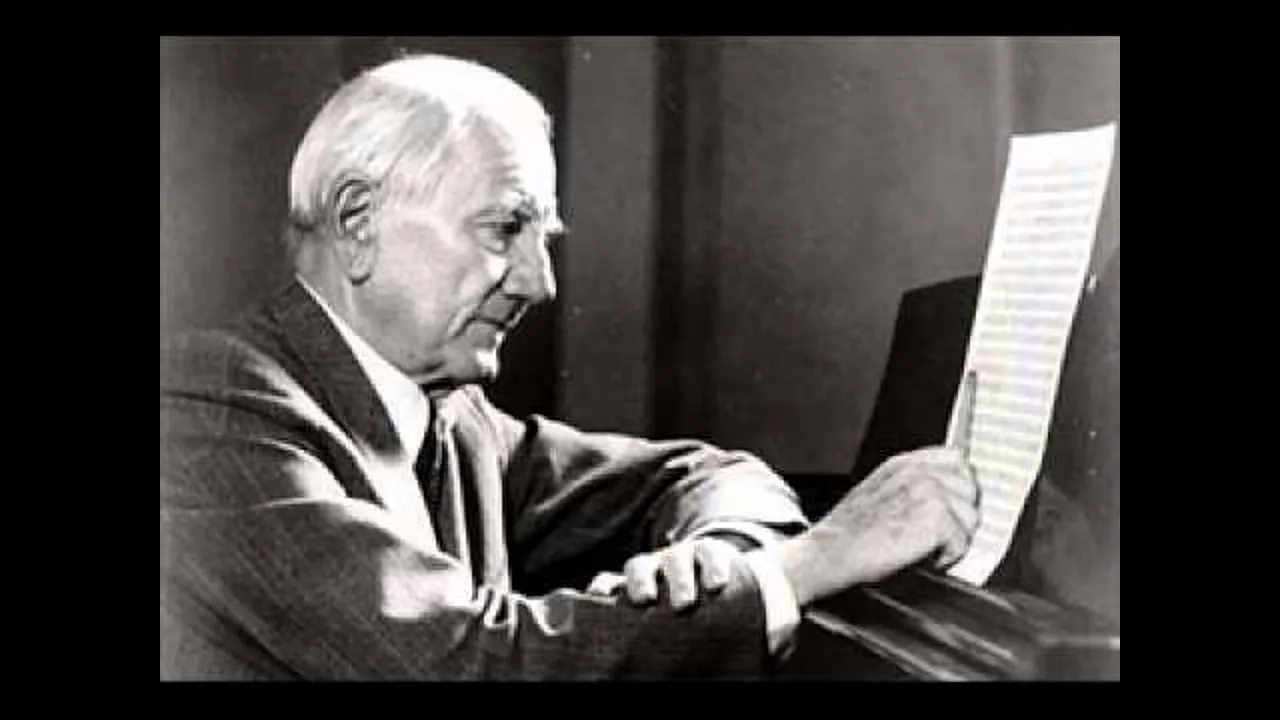

Ernő Dohnányi, born in Hungary in 1877, was a composer who, while leading an extremely busy life as a conductor, pianist, music educator, and school administrator, continued to compose with great energy.
A superb pianist, Dohnányi is also known for publishing a method book on piano technique.
The text he left behind is now widely appreciated as a set of finger exercises suitable for piano learners of any level.
This time, we will introduce works by Dohnányi from among his piano solo pieces and compositions that include the piano in their instrumentation!
- [Czerny’s Piano Pieces] A curated selection of diverse piano works left by the king of etudes
- Hindemith’s Piano Works: Sparkling Masterpieces by a Composer Who Mastered Numerous Instruments
- Séverac’s Piano Pieces: Masterworks by the Genius Composer Recognized by Debussy
- Piano Masterpieces: Music you’ll want to listen to and play—beloved classic works
- [Albeniz’s Piano Pieces] A selection of masterpieces left by the passionate Spanish composer
- Ginomasteira’s Piano Works: A Curated Selection of Masterpieces by a Leading Latin American Composer
- [Franck’s Piano Works] A curated selection of gem-like masterpieces by the Father of Modern Music
- [Piano Variations] A comprehensive showcase of gem-like masterpieces crafted by great composers!
- Innovator of Hungarian Music: A Summary of Béla Bartók’s Piano Works
- Dvořák’s Piano Works: A Curated Selection of Masterpieces Filled with Love for His Homeland, Czechia
- Haydn’s Piano Works: Exquisite Piano Pieces Crafted by the Father of the Symphony
- Hummel’s Piano Pieces: A curated selection of beloved masterpieces, well-known from recitals and competitions
- Janáček’s Piano Works: Sparkling Masterpieces Reflecting National Pride
Dohnányi’s Piano Works: A Complete Introduction to Masterpieces by a Hungarian Prodigy (1–10)
Six Piano Pieces, Op. 41: No. 1 “Impromptu”Dohnányi Ernő

Ernő Dohnányi, a central figure in Hungarian musical life who also served as conductor of the Budapest Philharmonic, displayed exceptional talent as a pianist as well.
His representative collection of piano miniatures, Six Piano Pieces, Op.
41, was composed in 1945, just after the end of World War II.
The set includes pieces deeply imbued with grief and a sense of loss, such as Bells, reportedly written shortly after the death of his son.
By contrast, the opening Impromptu interweaves freewheeling, improvisatory elements with a refined character reminiscent of Baroque dance.
This work, which can be regarded as part of Dohnányi’s mature musical legacy, is a collection ideally suited to pianists who possess not only advanced technical skill but also a rich musical sensibility.
Concert Etudes in Six Pieces, Op. 28 No. 1Dohnányi Ernő
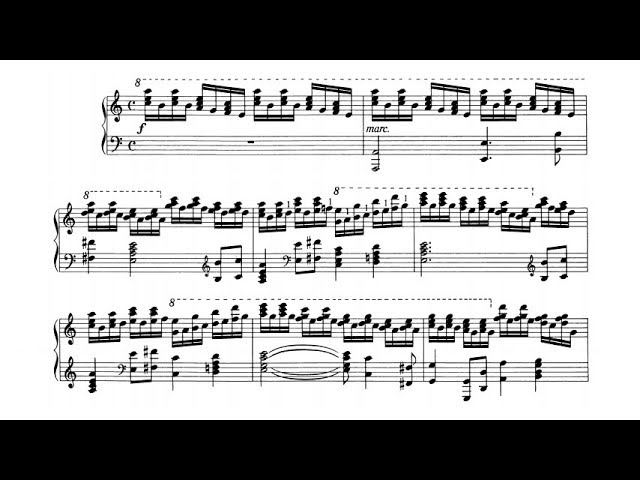
Ernő Dohnányi, a genius pianist, composer, and highly influential music educator born in Hungary.
His Six Concert Etudes, Op.
28, completed in 1916, go beyond mere technical studies to form a set of six pieces endowed with the musical depth worthy of the concert stage.
No.
1 is distinguished by its brilliant shimmer of sixteenth notes and harmonies reminiscent of Brahms.
Alongside the virtuosity evocative of Liszt’s Transcendental Études—works Dohnányi revered—the remaining five pieces also demand a wide range of expression and advanced technique.
Highly recommended for advanced players seeking to refine their pianistic skills.
Four Rhapsodies, Op. 11 No. 2 in F-sharp minorDohnányi Ernő

Ernő Dohnányi, a composer who stands as a leading figure in Hungarian music, was a multifaceted talent—conductor, pianist, and music educator.
He served as principal conductor of the Budapest Philharmonic and was also active as music director for Hungarian Radio.
His Four Rhapsodies are works in which his pianistic technique and expressive power are fully displayed.
The second, in F-sharp minor, is a rhapsody that demonstrates profound musicality and a high level of compositional mastery, underscoring Dohnányi’s position as a successor to Liszt.
Influenced by the post-Romantic tradition yet imbued with his own distinctive musical substance and expression, this piece is a masterpiece especially recommended for pianists with advanced technical skills.
Four Rhapsodies, Op. 11: No. 3 in C majorDohnányi Ernő

Ernő Dohnányi, a Hungarian composer who was also active as a pianist and conductor, is known as a representative figure of late Romantic music.
One of his notable works, Four Rhapsodies, is a captivating piece that blends the influence of Johannes Brahms with a distinctly Hungarian flavor.
Among them, No.
3 is particularly striking for its scherzo-like brightness and energetic atmosphere.
While it demands advanced technique and expressive depth, it is a work that showcases Dohnányi’s wide-ranging musicality, and one that advanced pianists are highly encouraged to play.
Hungarian Pastoral, Op. 32a No. 1Dohnányi Ernő

Ernő Dohnányi, who studied at the Royal National Hungarian Academy of Music in Budapest and was recognized at a young age by Brahms, revealed his talents early on.
While influenced by the late Romantic tradition, he forged a distinctive style that also incorporates elements of Hungarian folk music.
Hungarian Pastorale evokes a bucolic atmosphere that recalls the nature and landscapes of his homeland.
Consisting of seven movements, each is colored by unique music based on a different folk song.
With its transparent sonorities and refined pianism, this lyrical and richly nuanced work is an ideal introduction to Dohnányi’s Romantic-tinged musical world.
Piano Quintet No. 1 in C minor, Op. 1Dohnányi Ernő

Ernő Dohnányi, known as a versatile composer, received high praise from Brahms for his first published work, the Piano Quintet No.
1 in C minor, Op.
1, which he wrote at the young age of eighteen.
While rooted in the traditions of Romantic music, the piece overflows with rich musicality and passion.
The first movement is an Allegro with the character of a dark march; the second is a scherzo full of humor; the third is an Adagio with a beautiful melody.
The fourth movement is a sonata-form rondo in an unusual 5/4 meter, which recalls the theme of the first movement in C major and brings the work to a joyous conclusion.
This is a highly recommended piece for those who want to fully savor a masterpiece among piano quintets.
Rondo of Winter, Op. 13Dohnányi Ernő

Ernő Dohnányi, a composer born in Hungary in 1877, remained faithful to the tradition of 19th-century Romantic music.
His Winter Rondo, Op.
13 is a piano collection consisting of ten pieces, including Dedication and Charming Waltz.
The set ranges from pieces with sweet, song-like melodies to more pianistic works, showcasing throughout the talents of Dohnányi, who was both a composer and an outstanding pianist.