

Piano Masterpieces: Surprisingly Easy Despite Sounding Difficult!? A Curated Selection Perfect for Recitals
Many people probably think, “It would be so cool and fun if I could play the piano!” I usually teach piano at home, and I have many adult students who come to me asking, “Is it still possible for me to learn to play from now?” So this time, I’ll introduce piano pieces that may look difficult but are surprisingly approachable on the piano, focusing on classical music! Perfectly pursuing the essence of a piece does require considerable technique, but in some cases there are published scores with simple arrangements that even beginners can play shortly after starting.
If you’re thinking about starting the piano, or if you’re hoping to perform at a recital someday, I hope you’ll find this helpful!
Playlist
| Piano Masterpieces: Surprisingly Easy Despite Sounding Difficult!? A Curated Selection Perfect for Recitals | |||
|---|---|---|---|
| show_chart | Title | Playlist | Review |
| 1east | Etude in A-flat major, Op. 25 No. 1 “Aeolian Harp”Frederic Chopin |  play_arrow play_arrow | Chopin’s Etude. The timbre of an Aeolian harp is striking. |
| 2east | Five Pieces (The Trees Suite), Op. 75: No. 5, “The Spruce”Jean Sibelius |  play_arrow play_arrow | Sibelius’s Tree Suite, depicting the firs of a snowy mountain |
| 3east | Daylight saving timeGeorge Gershwin |  play_arrow play_arrow | A composition by Gershwin that fuses jazz and classical music |
| 4east | Maiden’s PrayerTekla Bądarzewska |  play_arrow play_arrow | A luscious piano piece by a Polish composer |
| 5east | Piano Sonata No. 14 in C-sharp minor, Op. 27 No. 2 “Moonlight,” First MovementLudwig van Beethoven |  play_arrow play_arrow | Beethoven's Moonlight Sonata |
| 6east | Songs Without Words, Book IV, Op. 53, No. 3: “Presto agitato (Foreboding)”Felix Mendelssohn |  play_arrow play_arrow | A passionate piano piece composed by Mendelssohn |
| 7east | Three Concert Études, S.144/R.5, No. 3 “Un sospiro”Franz Liszt |  play_arrow play_arrow | Liszt's technically demanding and beautiful piano piece |
| 8east | Peer Gynt Suite No. 1, Op. 46: I. MorningEdvard Grieg |  play_arrow play_arrow | Grieg's masterpiece Peer Gynt: Morning Mood |
| 9east | Waltz No. 6 in D-flat major, Op. 64 No. 1 “Minute Waltz”Frederic Chopin |  play_arrow play_arrow | Chopin’s dog chasing its tail turned into a musical piece |
| 10east | Prelude No. 15 in D-flat major, Op. 28-15 “Raindrop”Frederic Chopin |  play_arrow play_arrow | Tips for performing Chopin’s “Raindrop” |
| 11east | Adeline by the SeasideRichard Clayderman |  play_arrow play_arrow | Richard Clayderman's smash hit Ballade pour Adeline |
| 12east | Two Arabesques No. 1 in E majorClaude Debussy |  play_arrow play_arrow | Program notes on Debussy’s beautiful melodies |
| 13east | Piano Sonata No. 8 “Pathétique,” Second MovementLudwig van Beethoven |  play_arrow play_arrow | The beautiful melody of Beethoven’s Pathétique Sonata |
| 14east | Pachelbel’s CanonJohann Pachelbel |  play_arrow play_arrow | The beauty of Pachelbel's Canon |
| 15east | Tufted puffinHakasé Tarō |  play_arrow play_arrow | Tips for Playing Taro Hakase’s “Etupirka” on the Piano |
| 16east | Fantaisie-ImpromptuFrederic Chopin |  play_arrow play_arrow | The contrast between rapid passages and silence in Chopin's works |
| 17east | Gymnopédie No. 1Erik Satie |  play_arrow play_arrow | Satie’s piano pieces, masterpieces with a healing effect |
| 18east | Für EliseLudwig van Beethoven |  play_arrow play_arrow | Für Elise for Beginners |
| 19east | Liebestraum (Dream of Love)Franz Liszt |  play_arrow play_arrow | Liszt's beautifully difficult piano piece |
| 20east | Amazing GraceSakkyokusha fumei |  play_arrow play_arrow | How to play Amazing Grace |
| 21east | Air on the G StringJ.S.Bach |  play_arrow play_arrow | Air on the G String for Beginners |
| 22east | Piano Sonata No. 16 in C major, K. 545, No. 3Wolfgang Amadeus Mozart |  play_arrow play_arrow | An elegant piano piece by Mozart |
| 23east | Carnaval, Op. 9 No. 12 – ChopinRobert Schumann |  | Schumann’s masterpiece filled with love for Chopin |
| 24east | Pavane for a Newborn PrincessCharles-Henry |  play_arrow play_arrow | A piano piece celebrating the birth of a princess |
| 25east | Children’s Corner No. 2: Lullaby of the ElephantClaude Debussy |  play_arrow play_arrow | A lullaby Debussy dedicated to his beloved daughter’s stuffed toy |
| 26east | Minuet in G major, BWV Anh. 114J.S.Bach |  play_arrow play_arrow | The Minuet attributed to Bach was actually composed by Petzold and is suitable for beginners. |
| 27east | Suite bergamasque, No. 3: Clair de LuneClaude Debussy |  play_arrow play_arrow | Debussy 'Clair de Lune' performance expression techniques |
| 28east | Sicilienne, Op. 78Gabriel Fauré |  play_arrow play_arrow | Fauré’s Sicilienne is a beginner-friendly piece that sounds impressive. |
| 29east | Flower SongGustav Lange |  play_arrow play_arrow | Introducing practice methods for Lange’s lively piano piece “Blumenlied” (“Flower Song”) |
| 30east | Armand in A major, WoO 81Ludwig van Beethoven |  play_arrow play_arrow | 4/4 time, the allure of a splendid dance |
| 31east | Masquerade Ball ‘Waltz’Aram Khachaturian |  play_arrow play_arrow | Waltz. Used in a movie and the Olympics. |
| 32east | Seven Character Pieces, No. 5 in A major, “Earnestly, with increasing liveliness (Ernst und mit steigender Lebhaftigkeit),” Fugue, MWV U 60Felix Mendelssohn |  play_arrow play_arrow | A calm, sunrise-like warmth and a sophisticated composition |
| 33east | Eight Pieces, Op. 84: No. 3, FugueGabriel Fauré |  play_arrow play_arrow | Elegant musical expression of French music |
| 34east | Passion ContinentHakasé Tarō |  play_arrow play_arrow | The theme song of Jonetsu Tairiku composed by Taro Hakase |
| 35east | Impromptu No. 1 in A-flat major, Op. 29Frederic Chopin |  play_arrow play_arrow | Characteristics and performance techniques of Chopin’s Impromptu No. 1 |
| 36east | Boys’ Merry-Go-RoundNiels Wilhelm Gade |  play_arrow play_arrow | A lively and beautiful piano piece for children |
| 37east | Piano Sonata No. 8 “Pathétique,” 3rd movementLudwig van Beethoven |  play_arrow play_arrow | The allure of powerful, passionate music |
| 38east | Turkish MarchLudwig van Beethoven |  play_arrow play_arrow | An explanation of Beethoven’s famous piece “Turkish March.” |
| 39east | Sonatina, 3rd MovementWilliam Gillock |  play_arrow play_arrow | An appealing sonata piece infused with a modern sensibility |
| 40east | Piano Sonata No. 16, K. 545Wolfgang Amadeus Mozart |  play_arrow play_arrow | Performance Techniques and Expression in Mozart’s Piano Sonata K. 545 |
| 41east | Gypsy Dance (Dance of the Gypsies)Heinrich Lichner |  play_arrow play_arrow | Romani music-influenced, passionate short piece |
| 42east | Album for the Young, Op. 39-20: “Baba-Yaga (The Witch)”Pyotr Tchaikovsky |  play_arrow play_arrow | A song themed on Baba Yaga, the witch from Russian folklore |
| 43east | Scenes from Childhood, Op. 15 No. 7 “Träumerei”Robert Schumann |  play_arrow play_arrow | The appeal and performance of Schumann’s representative piece, Träumerei |
| 44east | Waltz No. 4 in F major, Op. 34-3 “Minute Waltz”Frederic Chopin |  play_arrow play_arrow | Play the Minute Waltz brightly and lightly |
| 45east | Six Variations on ‘A Vacant Heart’, WoO 70Ludwig van Beethoven |  play_arrow play_arrow | Beethoven’s variations. Portraying thoughts of a beloved through nature. |
| 46east | Peer Gynt Suite No. 1, Op. 46: No. 3 “Anitra’s Dance”Edvard Grieg |  play_arrow play_arrow | A piece from Grieg’s Peer Gynt Suite |
| 47east | The Confectionery World, No. 14: “Demon Arare”Yuyama Akira |  play_arrow play_arrow | Fuse Japanese and Western music in a short piece |
| 48east | Songs Without Words, Book VII, Op. 85 No. 4 “Elegy”Felix Mendelssohn |  play_arrow play_arrow | Composed by Mendelssohn, play the ornaments quietly |
| 49east | Children’s Corner No. 6: “Golliwogg’s Cakewalk”Claude Debussy |  play_arrow play_arrow | A piece where a lively melody overlays a cakewalk rhythm |
| 50east | Detective Conan Main ThemeŌno Katsuo |  play_arrow play_arrow | Play the Conan theme on piano |
| 51east | Waltz No. 15, Op. 39-15 “Waltz of Love”Johannes Brahms |  play_arrow play_arrow | Waltz No. 15 has difficult chords |
| 52east | Alliance de David, Dance Collection No. 18, Non presto, C major — not fastRobert Schumann |  play_arrow play_arrow | A serene, small piece by Schumann brimming with poetic sentiment |
| 53east | Wiener MarchCarl Czerny |  play_arrow play_arrow | Charming piano pieces of Austria |
| 54east | castanetWilliam Gillock |  play_arrow play_arrow | An Exotic Performance of Gillock’s “Castanets” |
| 55east | A Doll’s Dream and AwakeningTheodor Oesten |  play_arrow play_arrow | Composition and features of The Doll’s Dream and Awakening |
| 56east | Songs Without Words, Book 8, Op. 102, No. 4, Zephyr (Breeze)Felix Mendelssohn |  play_arrow play_arrow | Intermediate piano pieces from Mendelssohn's Songs Without Words |
| 57east | Bergamasque Suite No. 4: PassepiedClaude Debussy |  play_arrow play_arrow | An elegant piano piece based on a passepied |
| 58east | Piano Sonata No. 25, Op. 79, Second MovementLudwig van Beethoven |  play_arrow play_arrow | An elegant movement with a Russian-style melody |
| 59east | Children’s Corner No. 1: “Doctor Gradus ad Parnassum”Claude Debussy |  play_arrow play_arrow | A piece depicting Debussy’s beloved daughter practicing |
| 60east | golden wedding anniversaryGabriel Marie |  play_arrow play_arrow | Mari composed elegant and brilliant short pieces for cello and piano |
| 61east | ParadeMaurice Ravel |  play_arrow play_arrow | Toshio Horiuchi’s grand, dramatic wind ensemble work |
| 62east | Waltz No. 9 in A-flat major, Op. 69 No. 1 “Farewell”Frederic Chopin |  play_arrow play_arrow | Chopin’s Waltz No. 9 is a peaceful piece suitable for beginners. |
| 63east | Barcarolle No. 4 in E-flat major, Op. 36Gabriel Fauré | 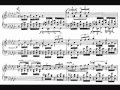 play_arrow play_arrow | Fauré’s elegant and delicate, beautiful works |
| 64east | Burgmüller 25 Easy and Progressive Studies, Op. 100 No. 15 “Ballade”Johann Burgmüller |  play_arrow play_arrow | Burgmüller’s narrative and elegant piano pieces |
| 65east | Dance and SongNakata Yoshinao |  play_arrow play_arrow | An enchanting piano solo piece with a Japanese-style rhythm |
| 66east | Etude Allegro: A Duet Collection for ChildrenNakata Yoshinao |  play_arrow play_arrow | Nurturing children's musicality with a C major duet piece |
| 67east | Nocturne No. 1 in B-flat minor, Op. 9 No. 1Frederic Chopin |  play_arrow play_arrow | Explanation of Chopin’s Nocturne No. 1 |
| 68east | Album for the Young, Op. 68 No. 2: “Soldiers’ March”Robert Schumann |  play_arrow play_arrow | Soldiers’ march, characterized by chords and dotted rhythms |
| 69east | Barcarolle from The Tales of HoffmannJacques Offenbach |  play_arrow play_arrow | An aria from Offenbach’s The Tales of Hoffmann |
| 70east | Nocturne No. 2, Op. 9-2Frederic Chopin |  play_arrow play_arrow | Chopin pieces are doable for beginners with practice. |
| 71east | Etude Op. 10 No. 3 “Farewell”Frederic Chopin |  play_arrow play_arrow | Chopin’s Farewell Waltz, highly popular for its beautiful melody |
| 72east | Album for the Young, Op. 68 No. 10 “The Merry Farmer”Robert Schumann |  play_arrow play_arrow | Schumann’s Analysis of The Merry Peasant |
| 73east | Stilienne – Burgmüller 25 Études, Op. 100 No. 14Johann Burgmüller |  play_arrow play_arrow | A triple-meter piece inspired by traditional Alpine dance music |
| 74east | Fantasia in D minor, K. 397Wolfgang Amadeus Mozart |  play_arrow play_arrow | Expressiveness is important in Mozart's Fantasia. |
| 75east | Bergamasque Suite No. 1: PreludeClaude Debussy |  play_arrow play_arrow | Debussy’s works with approachable melodies |
| 76east | Passacaglia Harpsichord Suite No. 7 (HWV 432)Georg Friedrich Händel |  play_arrow play_arrow | A masterpiece that distills the charm of Baroque music |
| 77east | Children’s Album, Volume 1: “Album of My Boyhood,” No. 5: EtudeAram Khachaturian |  play_arrow play_arrow | A lively piano piece of Armenian traditional music |
| 78east | Turkish RondoJohann Burgmüller |  play_arrow play_arrow | A brilliant modulation piece from A minor to A major |
| 79east | Sonatina No. 7, First MovementMuzio Clementi |  play_arrow play_arrow | An elegant and technically skillful piano piece, brilliant and bright. |
| 80east | French Suite No. 2, BWV 813 – CouranteJ.S.Bach |  play_arrow play_arrow | Elegant dance works of Baroque music |
| 81east | Scenes from Childhood, Op. 15-1: ‘Of Foreign Lands and Peoples’Robert Schumann |  play_arrow play_arrow | Schumann’s Exotic Piano Piece |
| 82east | Prelude in E major, Op. 28 No. 9Frederic Chopin |  play_arrow play_arrow | Introducing Preludes by a Polish composer |
| 83east | Tarantella, Op. 77 No. 6Moritz Moszkowski |  play_arrow play_arrow | Moszkowski’s cheerful and flamboyant piano piece |
| 84east | Six Ecossaises, WoO 83Ludwig van Beethoven |  play_arrow play_arrow | Beethoven’s Écossaises, known for their light, lively rhythm |
| 85east | Dance of the SwineherdBartók Béla |  play_arrow play_arrow | An enchanting piece of Hungarian folk dance music |
| 86east | French Suite No. 2, BWV 813: GigueJ.S.Bach |  play_arrow play_arrow | A light 3/8-time dance by Bach |
| 87east | “Butterflies,” Op. 2, No. 12: “Final Scene and the Returning Brothers”Robert Schumann | 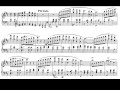 play_arrow play_arrow | Schumann’s Butterfly finale depicts the end of a ball |
| 88east | Babayaga Op. 39-20Pyotr Tchaikovsky |  play_arrow play_arrow | A famous piece for children that depicts a witch's tale through music |
| 89east | Sonatina Op. 13-1, First MovementDimitri Kabalevsky |  play_arrow play_arrow | You can hone your performance technique with a bright three-movement musical piece |
| 90east | Burgmüller 25 Progressive Pieces, Op. 100 No. 2 “The Hunt”Johann Burgmüller |  play_arrow play_arrow | A brilliant march inspired by Islamic art |
| 91east | Overture from The Magic FluteWolfgang Amadeus Mozart |  play_arrow play_arrow | Play the overture to The Magic Flute on the piano |
| 92east | Sonatina in A minor, Op. 27 No. 18Dmitri Kabalevsky |  play_arrow play_arrow | A short piece by Kabalevsky that requires deeply moving expressiveness |
| 93east | Children’s Album, Volume 1, “Picture Book of Boyhood”: No. 7, Hobbyhorse (Cavalry)Aram Khachaturian |  play_arrow play_arrow | A piano miniature depicting children's play |
| 94east | Invention No. 8, BWV 779J.S.Bach |  play_arrow play_arrow | A lively, upbeat piece perfect for improving your technique. |
| 95east | To That SummerHisaishi Joe |  play_arrow play_arrow | Let's play 'One Summer's Day' on the piano |
| 96east | Variations on ‘Twinkle, Twinkle, Little Star’Wolfgang Amadeus Mozart |  play_arrow play_arrow | Twinkle, Twinkle, Little Star becomes progressively more difficult from beginner to advanced levels. |
| 97east | Amazing Gracesanbika |  play_arrow play_arrow | The charm of the beautiful melody of Amazing Grace |
| 98east | French Suite No. 1, BWV 812: Minuet IIJ.S.Bach |  play_arrow play_arrow | Bach’s elegant dances, performed at home |
| 99east | small black personClaude Debussy |  play_arrow play_arrow | A piano piece based on cakewalk |
| 100east | Burgmüller 25 Easy and Progressive Studies, Op. 100 No. 20 “Tarantella”Johann Burgmüller |  play_arrow play_arrow | A passionate piece inspired by Southern Italian dances. |
| 101east | Sonatine No. 8, Movement IMuzio Clementi |  play_arrow play_arrow | The charm of piano pieces: brilliant and powerful |
| 102east | energy flowSakamoto Ryuichi |  play_arrow play_arrow | Ryuichi Sakamoto’s masterpiece “Energy Flow” |
| 103east | Waltz No. 18 in E-flat major, Op. posth. “Sostenuto”Frederic Chopin |  play_arrow play_arrow | Chopin’s posthumous waltz: simplicity puts expressiveness to the test |
| 104east | SummerHisaishi Joe |  play_arrow play_arrow | The allure of Joe Hisaishi’s masterpiece “Summer” and how to perform it |
| 105east | Piano Sonata No. 8 in C minor, Op. 13 “Pathétique,” Second MovementLudwig van Beethoven |  play_arrow play_arrow | Hone your expressiveness with Beethoven’s sonatas |
| 106east | Piano Sonata No. 11 in A major, Op. 311, Third Movement “Turkish March”Wolfgang Amadeus Mozart |  play_arrow play_arrow | Mozart’s Turkish March is a difficult piece, but it’s rewarding to master. |
| 107east | Piano Sonata No. 12 in F major, K. 332 (K6 300k), No. 1Wolfgang Amadeus Mozart |  play_arrow play_arrow | Elegant melodies and beautiful music of the Classical era |
| 108east | Minuet in F major, K. 5, from Nannerl’s Music BookWolfgang Amadeus Mozart |  play_arrow play_arrow | A work by six-year-old Mozart for his sister |
| 109east | Waltz EtudeWilliam Gillock |  play_arrow play_arrow | The enchanting melody of a glamorous waltz |
| 110east | Carrying YouHisaishi Joe |  play_arrow play_arrow | Let's play the Laputa theme song on the piano |
| 111east | Lacrimosa — from “Requiem”Wolfgang Amadeus Mozart |  play_arrow play_arrow | Play Mozart’s masterpiece “Lacrimosa.” |
| 112east | French Suite No. 6, BWV 817 – GavotteJ.S.Bach |  play_arrow play_arrow | An educational masterpiece of Baroque suites for beginners |
| 113east | Burgmüller 25 Progressive Pieces, Op. 100 No. 2, ArabesqueJohann Burgmüller |  play_arrow play_arrow | Burgmüller “Arabesque” Left-Hand Melody Practice |
| 114east | Burgmüller 25 Etudes, Op. 100 No. 25 “La chevaleresque” (The Lady’s Ride)Johann Burgmüller |  play_arrow play_arrow | A dazzling étude that expresses knightliness |
| 115east | Ave MariaCharles Gounod |  play_arrow play_arrow | How to perform Gounod’s Ave Maria |
| 116east | Merry Christmas Mr.LawrenceSakamoto Ryuichi |  play_arrow play_arrow | Introduce Ryuichi Sakamoto’s signature song “Merry Christmas.” |
| 117east | 25 Etudes, Op. 100 No. 20 “Tarantella”Johann Burgmüller |  play_arrow play_arrow | Performance techniques for No. 20 “Tarantella” from Burgmüller’s 25 (Études) |