

An encouraging song we want people in their 80s to hear. A cheer song from the Showa era.

Music has the power to support the hearts of those who listen, doesn’t it?
I’m sure many people have gained energy and courage from listening to music, or found the motivation to keep going.
And that holds true across generations—there are surely many people in their 80s who have also been empowered by music.
In this article, we’ll introduce uplifting songs we’d love people in their 80s to listen to again.
If you’re reading this, please consider sharing the songs we introduce with the 80-somethings in your life.
Cheering songs we want people in their 80s to listen to. Encouragement songs from the Showa era (1–10)
Today is the youngest you’ll ever be!Da Kāpo

This is a song included on the album “A Gift for the Future ~Today Is the Youngest You’ll Ever Be!~,” released in 2023 to mark the 50th anniversary of their debut.
It’s filled with hope for a life that shines brighter with age, making it an anthem of encouragement for the senior generation.
The uplifting lyrics set to a simple melody really resonate.
In this so-called era of 100-year lifespans, a message like this is sure to speak to people in their eighties.
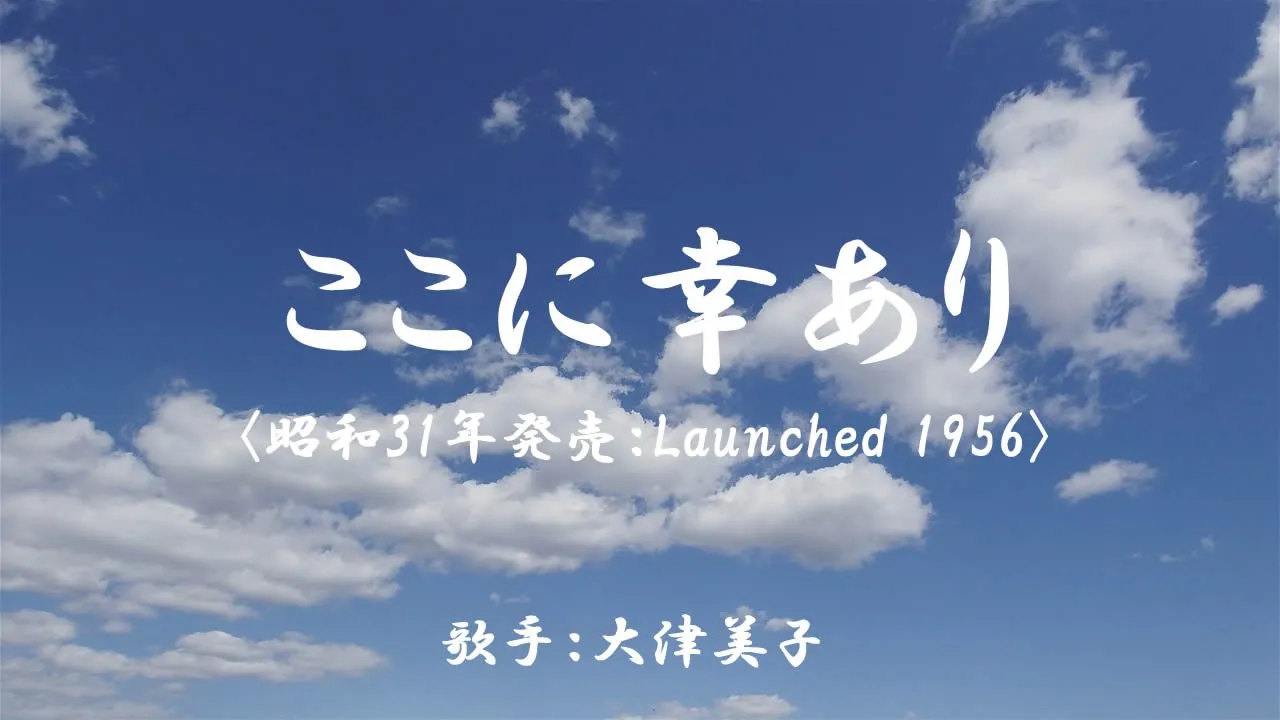
Happiness is here.NEW!ōtsu yoshiko

Let us introduce one of Yumiko Ōtsu’s signature songs, which has colored the popular tunes of the Showa era with a powerful yet warm singing voice.
This masterpiece carries a forward-looking theme: overcoming life’s storms and hardships to find the hope and joy that lie beyond.
Ōtsu’s lustrous, steadfast vocals lend the melody a deep, lingering richness.
Released as the theme song for a film of the same title in 1956, it became a major hit and remains beloved to this day.
It’s perfect as gentle background music when spending quiet time indoors during the rainy season, or for a relaxed sing-along recreation with everyone.
Cherished as a wedding classic and considered an auspicious song, it will softly resonate with older listeners and inspire brighter days.
Please enjoy it together!
March of 365 StepsSuizenji Kiyoko

Kiyoko Suizenji’s “March of 365 Steps,” released in 1969, is a moving classic.
It carries a positive message that the accumulation of small daily steps leads to great results.
After its release, it was chosen for NHK’s Kōhaku Uta Gassen and as the entrance march for the National High School Baseball Invitational Tournament, and it also became a familiar TV drama theme song.
In 1991, Suizenji’s own self-cover became a hit, and the song has been beloved for many years.
It’s a track that gives courage and energy to live fully in the present, while bringing back memories of the Shōwa era for those who spent their youth then.
Please enjoy it together with someone special.
Being young is wonderful.Maki Michiru

Michiru Maki’s “Wakai tte Subarashii” (“Youth Is Wonderful”) is a song that celebrates the brilliance and hope of youth.
Even if there are times of worry and hardship in the future, those wonderful days filled with dreams and love will surely give you a powerful push forward.
Released on March 5, 1966, the song was a favorite of its composer, Hiroshi Miyagawa, and found success in many areas, including being used in commercials.
It’s a perfect track for people in their eighties to listen to as they fondly recall their youthful days.
Standing at a milestone in life, enjoying the present while reflecting on the future—this is a pep song that inspires such a positive mindset.
threadNakajima Miyuki

Miyuki Nakajima’s “Ito” is a masterpiece that portrays the meaning brought by encounters and connections in life.
Although it was released in 1992, it initially went largely unnoticed, but it became widely known after being used as the theme song for the 1998 TV drama “Seija no Koshin” (March of the Saints).
Following the 2011 Great East Japan Earthquake, it once again drew attention in the affected areas, and in 2020 it was even adapted into a film.
It’s a song that has continued to be loved by many for a long time.
It’s a heartfelt, encouraging anthem that we especially hope people in their 80s will listen to.
Life’s journeyMisora Hibari

Hibari Misora’s “Jinsei Ichiro” is a single released in January 1970.
Its powerful lyrics, praising strong will and indomitable spirit, leave a lasting impression.
Life is full of hardships and trials, but this song gives you the courage to never give up and to walk the path you believe in.
It served as the theme song for “Hana to Namida to Honoo” by Hibari Misora and Shinichi Mori, and was also performed at her 1988 concert at the Tokyo Dome.
You can feel Hibari’s spirit, always facing forward and continuing to take on challenges.
It’s the perfect anthem to push you forward when you feel you might be overwhelmed by life’s rough seas.
Please give me wingsakai tori

“Tsubasa wo Kudasai” is a 1971 song by Akai Tori, a moving classic that expresses the desire to live like a bird flying freely.
It was created for a Yamaha contest and has since been loved by many.
Used at the 1998 Nagano Olympics and the 2021 Tokyo Olympics, it’s a timeless anthem that encourages us, reminding us of the importance of holding on to our dreams and hopes.
It’s a song I wholeheartedly recommend to anyone—regardless of age or background—who longs for freedom.