

[Traditional Performing Arts of Okinawa] A special feature on classic Eisa songs that make you want to dance

We’re introducing songs that make you want to dance—both lively picks and timeless classics—perfect for Eisa, the traditional Okinawan summer performance.
Eisa is said to have begun as a dance to see off and welcome ancestral spirits during the Obon season, and nowadays events are held not only in Okinawa but elsewhere as well.
Each song captures the spirit and character of Okinawa, lifting you into a bright, joyful mood.
Give them a listen not only when choosing music for Eisa, but also whenever you want to savor powerful, radiant Okinawan songs that fit beautifully in those settings.
- [Eisa] A roundup of classic and popular songs—perfect for sports day!
- A classic song in the Okinawan dialect, Uchinaaguchi
- From J-pop to folk songs! Popular and classic Okinawan tunes
- [Tearjerker] Songs that make your heart tremble with tears & moving tracks with lyrics that touch the soul
- [A Life-Affirming Anthem] An Encouraging Song to Cheer You On
- [Make Your Summer Pop] A High-Energy J-POP Playlist to Boost Your Mood! [2026]
- “Song of War”: A classic that sings of the tragedy and folly of war
- [Let's Enjoy Japanese Festival Songs!] Songs about festivals. Famous songs related to festivals.
- [For Seniors] Recommended Summer Songs for August [2026]
- Get fired up for the hot season! Summer songs recommended for Gen Z
- [For Seniors] Popular Summer Songs: Selections That Liven Up Karaoke
- Songs that Teach the Value of Life | A Collection of Masterpieces Celebrating the Wonder of Living
- [Ryukyuan Music] Folk and Classical Music of the Ryukyu Islands
[Traditional Performing Arts of Okinawa] Eisa’s Classic Songs: A Collection of Irresistibly Danceable Tunes (1–10)
ShinkanuchaaNEW!THE BOOM

This single, created by THE BOOM—a band that left a unique mark on Japan’s music scene—was released exclusively in Okinawa in January 2012.
It was later included on albums such as “The Most Beautiful Island in the World.” It was selected as the set piece for the World Eisa Festival 2011 and as a support song for the 5th Worldwide Uchinanchu Festival.
Filled with a warm message that embraces everyone who holds Okinawa in their hearts as comrades, it’s a festive number packed with the dynamism of Eisa and the heat of the festival.
The powerful sounds of the sanshin and drums naturally get your body moving and brighten the atmosphere across the entire venue.
It’s perfect for a school sports day where everyone dances in sync, isn’t it? Highly recommended for moments when you want to deepen bonds—both dancers and spectators can get excited together.
Acchame Elementary SchoolNEW!

When it comes to classic Okinawan folk songs that send banquets and festivals in Okinawa into an explosive frenzy, this is the one! Its appeal lies in the torrent of groove created by rapid sanshin picking, drums, and finger whistling in perfect unison.
Said to be named after the way it’s danced while walking, it celebrates the joy of people gathering to sing and dance.
Seijin Noborikawa’s bold, masterful rendition is famous, leaving a strong impression when performed in the final wedding reception scene of the film “Nabbie’s Love.” It is also included on the album “Seijin Noborikawa & Sadao China,” released in April 2004.
Brimming with heat and energy, this piece is perfect for wrapping up Eisa or Kachāshī at a school sports day.
It’s highly recommended when you want everyone moving with smiles and to instantly lift the venue’s energy!
Nakazun Nagare

“Nuchijunnaagari” is pronounced “Chunjun Nagari,” and it’s a traditional Okinawan folk song often used in Eisa performances.
Its appeal lies in an energetic vibe that gradually lifts your spirits as you listen.
The melody employs the distinctive tonal character of Okinawan folk music, giving it an oriental atmosphere you won’t find in other regions.
If you listen to it on a clear day while gazing at the distant sky, the surrounding scenery and the imagery of the song are likely to match beautifully!

[Okinawan Traditional Performing Arts] Eisa Classics: A Special Feature on Songs That Make You Want to Dance (11–20)
Irayoi Tsukiyo BeachNEW!BEGIN

BEGIN is a band that beautifully fuses Okinawa’s traditional rhythms with pop, beloved across generations.
First included on the album “USED,” released in October 1995, and re-recorded for the July 2000 album “Begin no Shimauta ~Omoto Takeo~,” this song remains enduringly popular.
It paints a beautiful scene of waves and moonlight, inviting listeners to a warm island festival.
With a mantra-like repeating rhythm that feels good and gets your body moving naturally, the track carries an uplifting energy that makes you want to dance in a circle with everyone.
It’s perfect for Eisa performances at school sports days and athletic festivals.
How about clapping along and having a great time together?
play yardMaekawa Morikata

Mamoru Maekawa is a singer who specializes in Okinawan folk music.
His 1988 release “Asibinaa” is an easy-to-listen-to track with a light, lively rhythm.
By the way, the title is pronounced “ashibinaa.” Its approachable arrangement, which also resonates with modern pop, makes it a great recommendation even for people who don’t usually listen to Okinawan folk.
I’ve heard it’s popular in karaoke boxes in Okinawa as well, showing how its friendly melody is loved by many.
Since it’s so well-known, it also seems like a good choice for dancing Eisa!
Thank youNEW!

Kana Sandō, produced by Okinawan folk singer Morikata Maekawa, is a single released in 1983.
Its striking title, which in the Okinawan language conveys a strong feeling of “beloved,” expresses a love that continues to think deeply of the other person.
Characterized by an approachable melody and the resonance of Uchinaaguchi, the song has been cherished by many for years and was also chosen as a promotional track for a film of the same name set for release in 2025.
It’s a highly recommended choice for those seeking a piece that is both traditional and popularly appealing for Eisa performances at school sports festivals.
Golden FlowerNEW!Nēnēzu
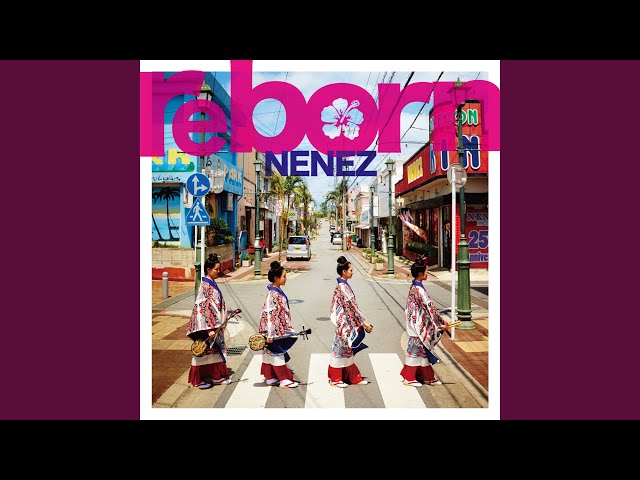
Golden Flower, a single released in August 1994 by NENEZ, a female chorus group representing Okinawan music, was widely loved nationwide after being chosen as the ending theme for TBS’s news program Tetsuya Chikushi NEWS23.
With lyrics by Osami Okamoto and music by Sadao China, the song carries a quiet message that portrays people leaving their hometowns in search of a better life and questions what true prosperity means.
Its gentle, full-bodied vocals and the soothing melodies of Okinawan folk music make it perfect for calming moments, such as the unhurried Eisa performances or a school sports day closing ceremony.
Why not let its profound lyrics and beautiful harmonies envelop you and feel the breeze of Okinawa?