

![[Traditional Performing Arts of Okinawa] A special feature on classic Eisa songs that make you want to dance](https://i.ytimg.com/vi/R0_UvKL1nbw/sddefault.jpg)
[Traditional Performing Arts of Okinawa] A special feature on classic Eisa songs that make you want to dance

We’re introducing songs that make you want to dance—both lively picks and timeless classics—perfect for Eisa, the traditional Okinawan summer performance.
Eisa is said to have begun as a dance to see off and welcome ancestral spirits during the Obon season, and nowadays events are held not only in Okinawa but elsewhere as well.
Each song captures the spirit and character of Okinawa, lifting you into a bright, joyful mood.
Give them a listen not only when choosing music for Eisa, but also whenever you want to savor powerful, radiant Okinawan songs that fit beautifully in those settings.
[Traditional Performing Arts of Okinawa] Eisa’s Classic Songs: A Collection of Irresistibly Danceable Tunes (1–10)
Tōfun Doi
There’s a famous Ryukyuan folk song that serves as the music for “kachaashii,” a dance where you quickly shake your wrists left and right.
The piece I’m introducing today, “Tōshin Doi,” is essentially the quintessential kachaashii song.
It has also long been loved as a celebratory song performed as the finale in Eisa.
The lyrics, which tell a little story—something like, “Even though a ship has arrived from Tang (China), there’s an older man who doesn’t immediately set off running…”—are a particularly charming aspect of the piece.

Dynamic RyukyuIkuma Akira

Akira Ikuma is a singer-songwriter from Fukuoka.
His song “Dynamic Ryukyu” was released in 2008 as a single in the unusual format of an Okinawa-only release.
With Okinawan calls like “Ii-yā sā sā” and the sound of drums evoking a distinctly folk-music atmosphere, it’s also uniquely punctuated by an electric guitar solo.
Its avant-garde sound makes you want to start dancing as you listen—truly a perfect track for Eisa.
Heartbeat of DreamsNEW!Ikuma Akira

A dance tune brimming with festive exhilaration, crafted by Akira Ikuma.
Chosen as the Orion Beer 2015 summer gift campaign CM song, this track was included as the opening number on the album “SPIRIT OF CARNIVAL,” released the same year.
Packed with life-affirming motifs like Okinawan drums, wind, and the sun, it fires up listeners’ spirits.
Fusing the traditional resonance of Eisa with modern beats, this piece is perfect for school sports days and festival performances.
Dance to its dynamic rhythm and the entire venue is sure to surge as one! Highly recommended for anyone seeking the energy to push powerfully forward.
Kudaka Manju-shu

Among the Okinawan folk songs sung in Eisa, “Kudaka Manjushu” is especially catchy.
Its call-and-response of “Kuudakaa” and “Surisaa-saa” is distinctive, and once you hear it, that part will stick with you! By the way, the band Parsha Club, known for performing Okinawan music, has a famous band-arranged cover of this song as well.
Its acoustic arrangement without electronic sounds is very pleasant, so give it a listen if you can!
Bountiful Harvest Dance

Hounen Ondo has an upbeat ondo rhythm that feels great.
This song is a Ryukyuan folk tune in the “kachaashii” genre, meant to be danced at a fast tempo while shaking your wrists side to side.
Along with Tinsagu nu Hana’s famous counterpart “Tōshin Dōi,” it’s extremely popular in Okinawa! The drum phrases that emphasize the off-beats here and there are striking, giving it a vibe like a rock ’n’ roll version of Okinawan folk music.
It’ll make you want to jump into an Eisa dance!
New Eisa SongNEW!Yonaha Tetsu
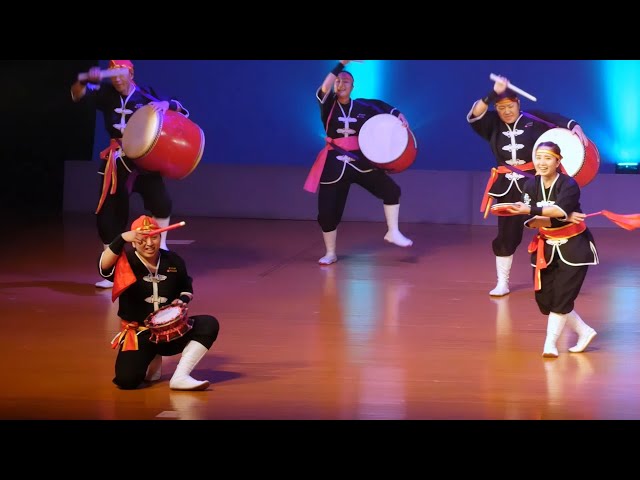
This is a track by Toru Yonaha, who is also active as a bearer of tradition in the world of Ryukyu classical music and island songs.
It was included on the album “Ko no Kata ~Polaris~,” released in February 2015, and is a piece that has been continuously adopted as a performance number and teaching material by Eisa groups.
While honoring the melodic inflections of traditional Okinawan folk songs, the arrangement layers in a rock-like dynamism that’s incredibly cool.
The powerful tone of the sanshin and the beat of the drums unite the hearts of dancers and audience alike.
Brimming with the unique exhilaration of Eisa, it’s perfect for moments when you want to deliver a thrilling performance at a school sports day or festival.
How about riding the rhythm of this piece and creating a space overflowing with excitement together?
Suri East-bushi

“Suri Higashi-bushi” is a bright, upbeat piece that’s perfect for Eisa.
“Suri” is a kind of interjection used in Okinawan music, appearing in many traditional songs.
While the tune has a cheerful feel, the lyrics are mysterious and open to various interpretations, giving the song surprising depth.
Incidentally, the character for “east” is read as “agari,” and the title of the song is taken directly from its opening lyrics.
This format is common in Okinawan folk songs, so if you get the chance, try looking for other examples too.