

[For Seniors] Crowd-Pleasers! A Collection of Classic Karaoke Songs

Karaoke is one of the most popular recreational activities at senior facilities such as day service centers.
Many people probably enjoy karaoke as a hobby, too.
In this article, we’ll introduce lively karaoke songs recommended for older adults!
We’ve gathered classic enka and kayōkyoku favorites, as well as songs loved across generations.
We hope you’ll find a favorite among the many selections.
Even if you don’t know the lyrics, it’s also great to simply listen and enjoy tunes whose melodies you like.
Sing the songs you love and have fun doing karaoke together!
- [For Seniors] Popular Karaoke Songs That Everyone Can Enjoy Together
- Ranking of popular songs for senior citizens
- [For Seniors] Songs Everyone Can Sing Together! A Roundup of Recommended Crowd-Pleasers
- [For Seniors] Let’s Have Fun Together! Introducing Uplifting, Energizing Songs
- [For Seniors] Winter songs you'll want to hum along to. A collection of classic tunes recommended for BGM and recreational activities
- Easy-to-sing songs recommended for women in their 70s: A collection of classic hits perfect for karaoke
- Easy-to-sing songs recommended for women in their 80s: a reference for choosing karaoke tracks!
- [For Seniors] Beloved songs to sing in December: heartwarming moments with nostalgic kayōkyoku and children’s songs
- [Sing for your health!] Popular songs among seniors. Also recommended for recreational activities.
- [For Seniors] Introducing recommended songs to give on Respect for the Aged Day
- Karaoke songs you’ll want to sing for men in their 70s: Enka and nostalgic Showa-era pop
- [For Seniors] Autumn Songs That Touch the Heart: From Nostalgic Children’s Songs and School Songs to Showa-Era Kayōkyoku
- [For Seniors] Spring Songs You'll Want to Hum: Feel the Season with Nostalgic Classics
[For Seniors] Beloved! A Collection of Classic Karaoke Songs (41–50)
Tokyo Boogie-WoogieKasaogi Shizuko

Alongside songs like “Blue Mountain Range” and “The Apple Song,” “Tokyo Boogie-Woogie” is often cited as a tune that energized postwar Japan.
It was performed by Shizuko Kasagi, who took the nation by storm as the “Queen of Boogie.” An NHK morning drama series modeled after her, “Boogie Woogie,” has also been greenlit! The song is sure to be back in the spotlight.
Many seniors must have drawn energy and courage from it, too.
Why not sway to its distinctive melody and sing it with a liberating feeling?

What a nice bath.Za Dorifutāzu

A perfect song to sing in the cold winter! It’s a hit by The Drifters, who were stars on variety shows like “Dorifu Daibakushō” and “It’s 8 O’Clock! Everyone Gather!,” and it was included on their 1967 single “Zukkoke-chan.” You may already know this, but this song is actually a cover—the original comes from one of the tracks in Duke Aces’ “Nihon no Uta” series.
I bet some of you find that melody naturally playing in your heads while soaking in the bath.
Warm your body and soul by singing it at karaoke!

dogwood (flowering dogwood)Hitoto Yo

Hanamizuki, which can be considered Yo Hitoto’s signature song, was created in response to the 9/11 attacks in the United States.
Along with its beautiful lyrics and vocals, it carries a heartfelt wish for peace.
It’s also known as the most-sung karaoke song of the Heisei era! With its simple melody line, it’s easy to sing—why not savor the soul-cleansing lyrics as you perform it? If you’re singing it at a karaoke activity in a day-service setting, doing it as a duet would be lovely too!
Watarase BridgeMoritaka Chisato

This is one of Chisato Moritaka’s signature songs, a track that portrays a bittersweet love.
The lyrics mention specific places like the riverbank of the Watarase River and Yakumo Shrine.
For older listeners, these references may evoke nostalgic scenes.
Released as a single in January 1993, it was also used as the ending theme for the TV program “Ii Tabi, Yume Kibun.” It’s best enjoyed at a relaxed pace while being captivated by Moritaka’s clear, pure vocals—and it can be a wonderful trigger for seniors to reminisce about the past.
Boat SongYashiro Aki

Since its release in 1979, this hit song by Aki Yashiro has been sung for many years.
It’s a classic enka tune known not only by older listeners but also by younger people, and it’s popular in karaoke as well.
The melody is slow-tempo, with a few tricky melodic turns in the middle and toward the end.
The key is to sing it tenderly and expressively.
It’s an enka number that really builds and excites.
Tsugaru Strait – Winter SceneIshikawa Sayuri
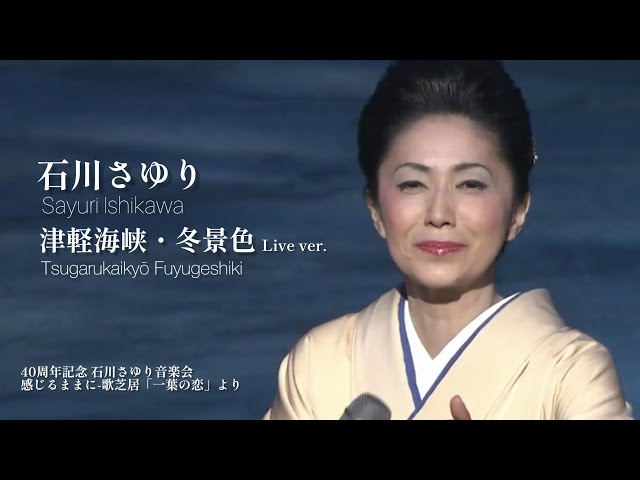
Released as a single in 1977, this masterpiece became the breakthrough for Sayuri Ishikawa.
Among her many hit songs, it’s one of the most popular choices for karaoke.
Its high recognition across generations—from older listeners to younger people—makes it a guaranteed crowd-pleaser.
Highly recommended if you have an event where you’ll be performing karaoke.
Practice a little and show it off at karaoke!
Jindo MonogatariTendō Yoshimi

A phenomenon known as a “sea parting,” where the tide goes out and connects the mainland to an island.
How about the poignant enka song Jindo Monogatari, which takes the sea parting of Korea’s Jindo Island as its theme? It’s one of the signature songs of Yoshimi Tendo, an enka singer loved by a wide range of generations, released in 1996 as her 28th single.
With this song, Tendo achieved her first million-seller.
The lyrics, which believe in being reunited with a loved one, are perfectly matched by her strong, resonant voice, tightening your heart.
If you sing it, someone is sure to come to mind for you, too.