

[For Seniors] Looks readable but you can't read it! Fish Kanji Quiz


There are many kanji characters that represent fish, and a lot of them are pretty difficult, aren’t they?
Do you know which kanji are used for the fish you usually eat, like sushi, sashimi, or grilled fish?
Unless you’re a real fish enthusiast, there are probably some you don’t know.
In this article, we present a kanji quiz about fish.
We’ve gathered kanji for a variety of fish, starting with familiar ones you often see at the dining table.
Of course, the goal is to get the answers right, but what’s really important in a quiz is the thinking process!
It’s perfect for older adults.
It also works as brain training, so have fun and give it a try!
- Recommended for seniors’ brain training! Kanji quiz workbook of fish names
- [For Seniors] Challenging but Exciting! Kanji Quiz
- [For Seniors] How many can you read? A comprehensive showcase of difficult food kanji
- [For Seniors] Liven Things Up! Fun Fish Trivia Quiz
- [For Seniors] Difficult Country Names Kanji Quiz
- [For Seniors] Fun and Lively! Recommended Quiz Questions
- [For Seniors] Today’s recommended quiz. Daily brain-training quiz!
- [For Seniors] Have Fun with Wordplay Characters! A Collection of Funny Puzzles
- [For Seniors] Introducing Trivia Quizzes and Fun Facts About December
- [For Seniors] Lateral Thinking Game! Brain Training
- [For Seniors] Recommended Trivia Quizzes & Fun Facts for November
- [For Seniors] Looks readable but you can't read it! Fish Kanji Quiz
- [For Seniors] January Trivia Quiz & Fun Facts. Brain training with quizzes about New Year and winter.
[For Seniors] Looks Readable but You Can’t Read It! Fish Kanji Quiz (21–30)
How do you read the word “鰯”?

- sardine
- mackerel
- Skipjack tuna
See the answer
sardine
“鰯” is read as iwashi, meaning sardine. There’s a theory that because sardines quickly weaken and die when brought ashore, the word yowashi (weak one) became iwashi, and that this is also the origin of the kanji that uses the fish radical with the character for “weak.” There’s also a theory that it became iwashi from iyashii, meaning “base” or “vulgar,” because it wasn’t considered food for aristocrats.

How do you read the character “鱚”?
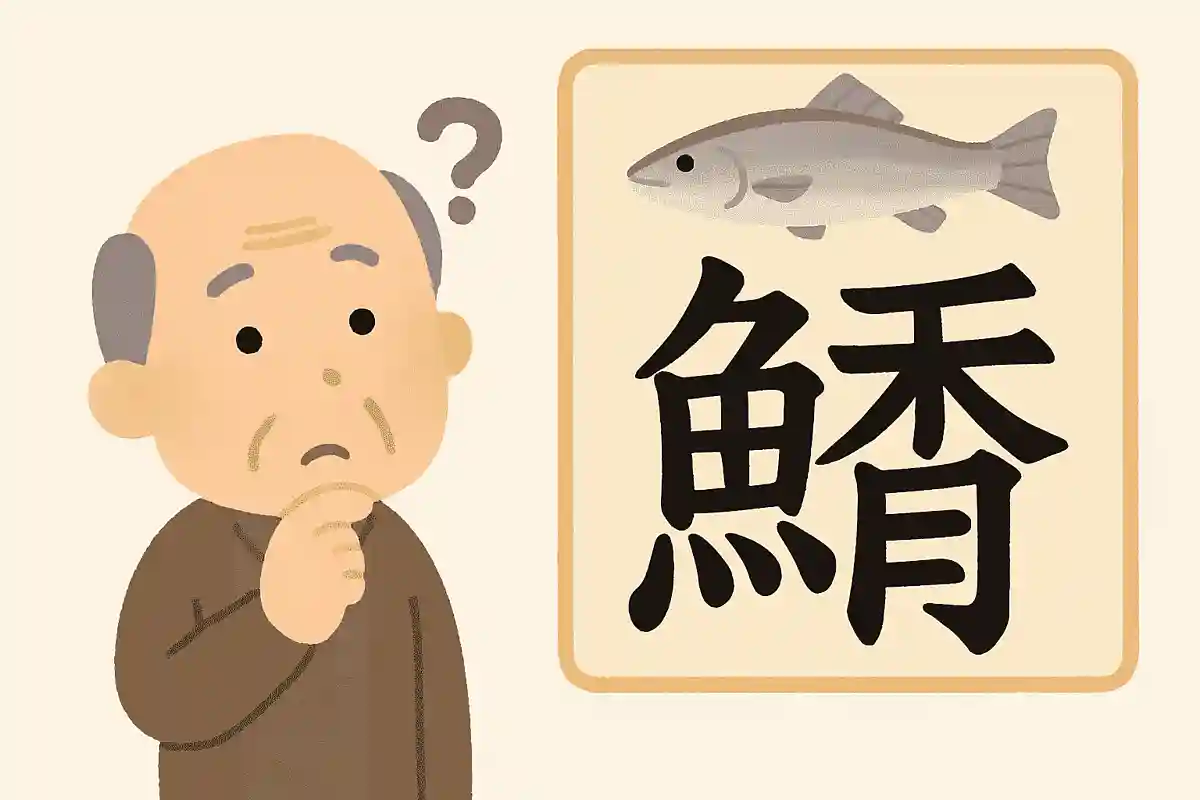
- kiss
- Atka mackerel
- horse mackerel
See the answer
kiss
The character 「鱚」 is read as “kisu” (Japanese whiting). There are several theories about the origin of this kanji, but one view is that because the fish often lives near the shore (kishi), the word “kishi” evolved into “kisu.” It’s a fish especially familiar in dishes like tempura and is popular as food.
[For Seniors] Looks Readable but You Can’t Read It! Fish Kanji Quiz (31–40)
How do you read “黍魚子”?

- thread-sail filefish
- banded blue sprat
- Halfbeak
See the answer
banded blue sprat
“黍魚子” is read as “kibinago.” It can also be written as “吉備女子,” “吉備奈仔,” or “黍女子.” They grow to about 10 centimeters in length, and are characterized by their slender bodies with silver longitudinal stripes. This fish lives and dies by its freshness—once taken out of the water, it’s so delicate that it dies almost immediately.
In conclusion
We gave seniors a fish kanji quiz to try—how many did you get right? You might have discovered something new, like how the fish you often eat or used to catch in the sea or river is written in kanji. Be sure to share the kanji you learned in the quiz with your family and grandchildren next time!