

![[For Seniors] Interesting Four-Character Idioms: Introducing four-character idioms whose appearance, words, or meanings are uniquely entertaining](https://i.ytimg.com/vi_webp/OB5QrKHdTNs/maxresdefault.webp)

Four-character idioms are packed with the wisdom and lessons of life.
They’re also often used when setting New Year’s resolutions and goals.
Among them, do you know any four-character idioms so humorous they make you smile? From those with amusing appearances like “津津浦浦” and “已己巳己,” to ones that use quirky expressions like “変態” and “馬耳,” and even words with wildly exaggerated meanings like “抱腹絶倒,” weaving them into conversation can naturally liven up chats with older adults.
This time, we’ll introduce some delightful four-character idioms that you’ll be itching to share with someone.
- For Seniors: A Collection of Four-Character Idioms with Cool Meanings and Stylish Look—Great as Personal Mottos Too
- Four-Character Idioms for Seniors as New Year’s Resolutions: A Collection of Uplifting, Heartfelt Words
- [For Seniors] Recommended for Kakizome! Introducing Popular Four-Character Idioms and Their Meanings
- [For Seniors] Beautiful four-character idioms: Introducing words whose appearance and meanings are elegant, expressed with rich nuance
- [For Seniors] Uplifting four-character idioms: Introducing beautiful, heart-touching words
- [For Seniors] Beautifully Resonant and Memorable! Popular and Stylish Four-Character Idioms
- [For Seniors] Four-character idioms that wish for happiness: auspicious, lovely words to gift to someone special
- Four-character idioms for seniors that express goals, effort, and aspirations: words that stir the heart
- Four-Character Idiom Slogans That Resonate with Seniors: A Collection of Beloved Quotes for Facilities and Communities
- Four-character idioms expressing the spirit of perseverance for seniors: encouraging words that give you a gentle push forward
- [For Seniors] Four-character idioms that include numbers. How many do you know?
- For seniors: A four-character idiom quiz perfect for brain training. A collection of problems that will refresh both mind and spirit.
- [For Seniors] Fun and Exciting! Difficult Kanji Quiz
[For Seniors] Interesting Four-Character Idioms: Introducing uniquely quirky idioms in form, words, and meaning (1–10)
Gokuraku-tonbo (carefree person; lit. “paradise dragonfly”)

Some people might be reminded of a certain comedian by how it sounds, but in fact it’s a bona fide four-character idiom.
It means “a person who lives carefree, playing around without thinking about the future.” Combining the image of a dragonfly flitting about and the word “paradise,” it has come to symbolize a laid-back, optimistic personality.
It can be used to tease someone with a touch of irony, but it also carries an endearing charm that keeps it from feeling mean.
Older folks may feel nostalgic, thinking, “We used to use this expression a lot back in the day.”

countless peculiar variations; numerous eccentric manifestations
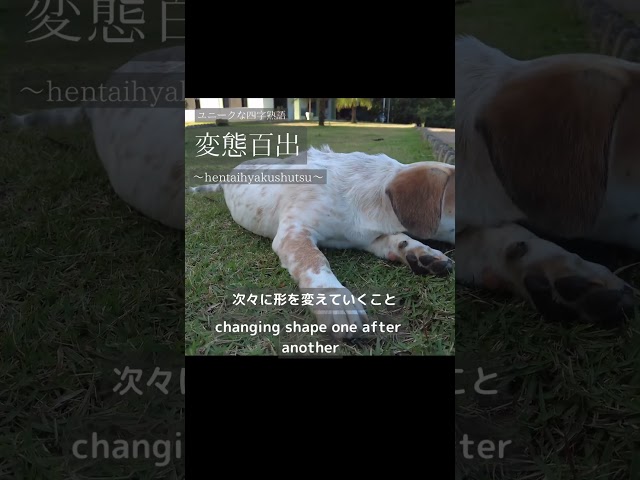
By today’s standards, the word “hentai” might make you do a double take, but its original meaning is completely different from what you might imagine.
It originally meant “to change one’s form or appearance in various ways, appearing one after another,” and by extension took on a positive sense of “new ideas and inventions continually emerging.” It can be used to describe the shifting of the natural world, as well as to praise human ingenuity.
The striking look of the characters contrasted with the depth of the meaning makes that gap intriguing, and even older generations might feel, “Wordplay from the old days was truly stylish.”
bizarre; mysterious; strange and uncanny (kiki-kaikai)
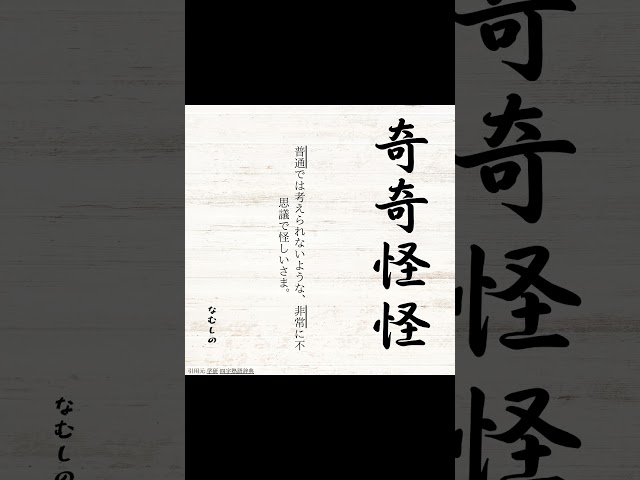
A four-character idiom meaning “something very strange and beyond ordinary understanding,” it has long been used to refer to ghost stories and mysterious happenings.
Many older people will naturally have heard it.
With a catchy rhythm that even children want to imitate, it’s friendly on the surface, yet its content is a bit eerie and mysterious.
It carries a nostalgic ring that recalls ghost-story programs and storytelling shows from the Showa era.
Used in daily life, it’s a handy word that can liven up a conversation with a touch of humor.
Ikonikimi

It’s a four-character idiom with a striking, powerful visual impact.
All the characters look similar, so people seeing it for the first time might do a double-take.
It means “there’s no real difference between the two; they’re much the same.” It’s used, for example, to refer to people whose personalities or behavior are very similar, or to things that hardly differ.
Both the forms of the characters and their meaning are unique, leaving an unforgettable impression once you learn it.
It’s also a fun conversation piece and a bit of mental exercise for older folks—turning it into a quiz like “How do you read this?” or using it as an icebreaker would likely liven up the conversation.
rolling on the floor laughing; sidesplitting laughter

Its literal meaning is “to laugh so hard you clutch your stomach and fall over,” making it a perfect four-character idiom for conveying humor or comical scenes.
It has been used in old writings to recount funny stories and humorous episodes.
Combining a sense of force with a rhythmic sound, the expression itself seems to invite laughter, and it may even evoke scenes from traditional rakugo or manzai for some people.
Used in conversation, it can enhance the joy of sharing humor.
Quite literally, it’s a four-character idiom that’s invaluable for conveying laughter.
every nook and cranny

Among four-character idioms, some have a sound that just makes you want to say them out loud.
This expression is one of them.
It means “all over the country, everywhere,” but don’t its humorous look and catchy rhythm feel strangely appealing? It has a light, song-like bounce to it, making it exceptionally easy to remember.
Since ancient times it has been used in waka and haiku, cherished as a handy phrase to denote the broader world.
Today it also appears in news and advertising, often used to emphasize geographic breadth.
endlessly and continuously; unbroken and lingering

Pronounced “ruru menmen.” The characters may look unfamiliar, but the softness of the sound makes this four-character idiom especially memorable.
It means “for something to continue unbroken, like a fine thread that goes on and on.” It originally described the image of slender threads connected without interruption, and by extension is used to liken feelings that endure over time or bonds that remain unsevered.
You won’t often hear it in everyday conversation today, but for older generations it can be enjoyed as an example that conveys the richness of traditional language.