

[For Seniors] Challenge Your Brain with a Halloween Quiz! Fun Trivia Questions to Learn and Enjoy


Halloween is a wonderful event that people of all ages—from children to seniors—can enjoy.
This time, we’ll introduce trivia about Halloween and quizzes related to sweets.
It’s packed with little-known facts, like the origins of costumes and traditional customs! For example, we’ll answer questions such as the true meaning of “trick or treat,” the proper way to respond to it, and why we dress up in costumes.
Let’s train our brains by thinking through these topics together with seniors! It’s a great way to feel the season of October and spark conversation, too.
How about spending a delightful autumn moment by enjoying some quizzes?
- [For Seniors] Fun and Lively! Recommended Quiz Questions
- [For Seniors] Fun Halloween Games: Ideas to Enjoy with Ghosts, Mummies, and Spiderwebs
- [For Seniors] Recreation Games Related to October Events
- [For Seniors] Handmade Halloween Treats to Enjoy: Fun Ideas with Pumpkins and Ghosts
- [For Seniors] Fun Brain Training! Quizzes Recommended for October
- [For Seniors] Let’s have fun with October trivia and fun facts quizzes!
- [For Seniors] Fun Trivia Quiz with Autumn Foods! A Collection of Little-Known Facts
- [For Seniors] Introducing Scary Trivia Quizzes & Fun Facts!
- [For Seniors] Let's have fun with an autumn-themed quiz!
- Fun Halloween recreation activities at a nursing care facility
- Recommended for seniors! Liven up your event with a Respect-for-the-Aged Day quiz!
- [For Seniors] Enjoy Brain Training with English Trivia Quizzes and Fun Facts
- For Seniors: Useful Trivia Questions! Introducing Fun Facts Quizzes You'll Want to Share
[For Seniors] Try Brain Training with a Halloween Quiz! Fun Trivia Questions (21–30)
Apple bobbing involves floating apples in a tub of water and retrieving them not with your hands, but using a part of your body. It’s a traditional Halloween game—but which body part is it?
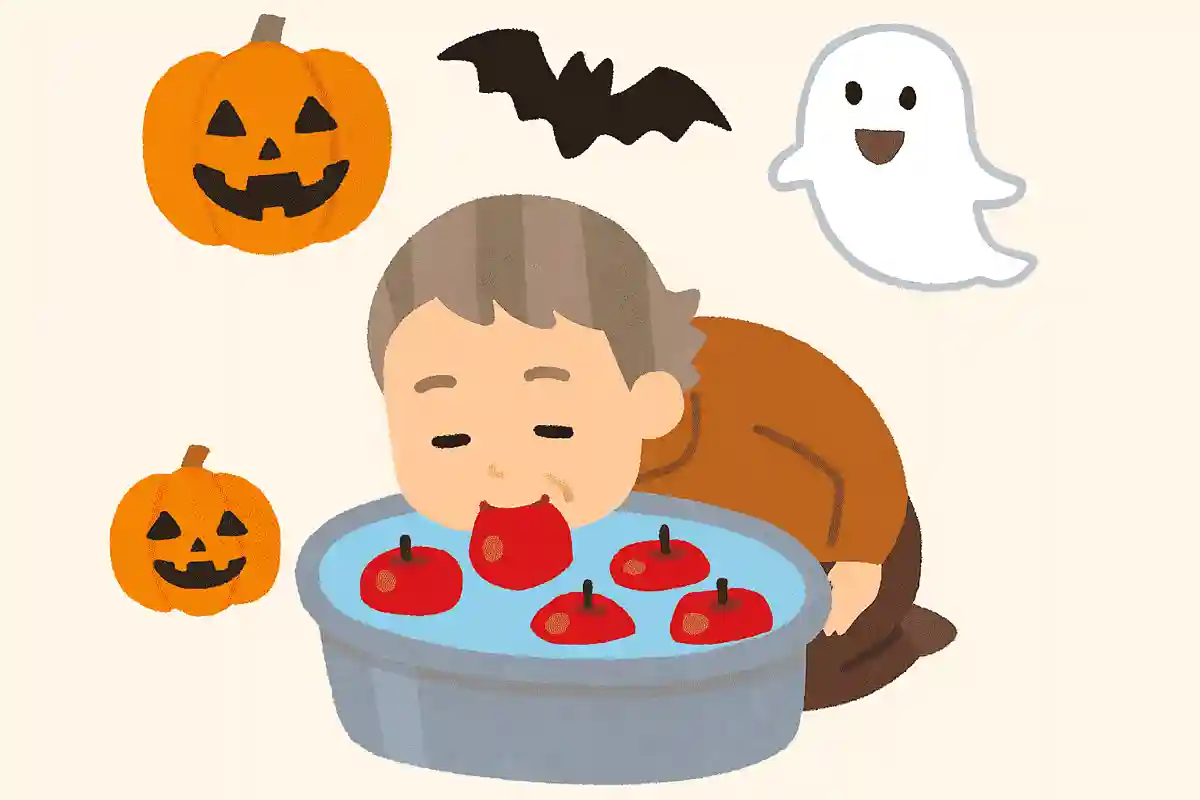
As a harvest celebration, Halloween parties sometimes include games.
A classic Halloween game is apple bobbing.
In this game, apples float in a tub of water, and you have to grab an apple using a part of your body other than your hands.
Which part is used? If you think about a place that makes it harder to grab an apple than with your hands, you can probably guess.
The answer is “the mouth.” Just watching people open their mouths wide and try to catch the apples creates a comical, festive atmosphere.

What day does Halloween correspond to in Japan?
Halloween is often associated with events and festivals, but it was originally important in the calendar as well.
So what day in Japan would Halloween correspond to? It comes from the fact that in ancient Celtic Druidism, the day after Halloween—November 1—was considered the beginning of winter.
Thinking about it as a change of seasons and a celebration of that year’s harvest leads us to the answer.
The answer is “New Year’s Eve.” Because the start of winter was regarded as the start of the new year, it became established as an occasion to look back on the year’s harvest.
What kind of shop in Japan started celebrating Halloween the earliest?
As an event involving costumes and sweets, Halloween has taken root in Japan as well.
So where was the place that first embraced Halloween in Japan and helped spark the spread of the culture? Thinking about locations related to a classic Halloween scene—children going from place to place in search of candy—may bring you closer to the answer.
The answer is a toy store.
It’s said that in the 1970s, Kiddy Land Harajuku sold Halloween-related goods and held a Halloween parade as part of a sales promotion.
On Halloween, we decorate with lanterns made from a certain vegetable. What vegetable is it?
When it comes to events in October, Halloween comes to mind.
Halloween originated in Ireland, but it has now spread to many countries.
In Japan, too, you often see people in costumes out on the streets on Halloween night.
Here’s a quiz: on Halloween, people decorate with lanterns made from a certain vegetable.
What is that vegetable? The answer is “pumpkin.” These are called jack-o’-lanterns and are popular as Halloween decorations.
They’re said to be placed to ward off evil spirits, so why not try making one for Halloween?

There is an insect that, overseas, is not allowed to be killed on Halloween. What insect is it?
Bugs that appear not only in autumn but in any season can be a big headache, right? You probably try various ways to avoid or exterminate them, but there’s one bug that you’re not allowed to get rid of specifically around Halloween.
What could it be? The hint is that it shows up year-round and is related to Halloween—you’ll likely figure it out if you imagine Halloween decorations.
The answer is “spiders.” The shape of spiderwebs is sometimes used in decorations, making them a motif that helps create an eerie atmosphere.
What is the ghost that turns into an animal when it sees a full moon, which also appears on Halloween?
Halloween is an event with a strong spooky image, filled with various monsters that bring its world to life.
Among the monsters that appear at Halloween, which one is known for transforming into an animal when it sees the full moon? It turns into the animal strongly associated with howling at the full moon, and you might also recognize it as a character in board games.
The answer is the “werewolf,” also known as the Wolf Man or jinrō, a monster whose legend dates back to ancient times.
Halloween became recognized due to an event held at a certain place in Japan. Where was that place?
Halloween has become a major event in Japan, but there is a specific place that sparked its spread and recognition.
Which place is said to have been the catalyst for Halloween, an overseas tradition, to catch on in Japan? It’s a spot loved by people of all ages that embraces international culture—and just going there feels like an event in itself.
The answer is Tokyo Disneyland.
Starting in the late 1990s, events such as Disney’s Halloween were held there, which helped establish the image of Halloween parades in Japan.