

[For Seniors] Fun for Everyone! A Quiz about Hinamatsuri (Girls' Day)

March 3rd is Hinamatsuri, a traditional festival that wishes for girls’ health and happiness.
In this article, we present a quiz about Hinamatsuri designed for older adults!
You might discover something new, like “So that’s what it means!”
It’s even more fun when everyone thinks together—at quiz contests in day-service or other care facilities, or at home with your grandchildren!
This quiz is enjoyable for a wide range of ages, from adults to children, so please give it a try with everyone!
- [For Seniors] Hina Matsuri (Girls’ Day) Trivia Quiz & Fun Facts. Recommended for Dementia Prevention Activities
- [For Seniors] Introducing March Trivia!
- [For Seniors] Hinamatsuri Recreation: Fun Ideas for Games, Crafts, and Snack Making
- [For Seniors] Spring-themed quizzes: Fun trivia questions that help prevent dementia while you solve them
- [For Seniors] Haiku for March: Enjoying a Spring Moment with Famous Verses
- Spring Event Quiz for Seniors to Enjoy in March
- [Day Service] Excited for Hinamatsuri! Craft ideas to brighten up your room
- [For Seniors] Nostalgic quizzes that bring back memories! Showa-era entertainment and sports questions
- [For Seniors] Spring Haiku. Spring Activity
- Fun Quiz Questions That Will Liven Up Any Party [2026]
- [For Seniors] Take on the Setsubun Quiz! A comprehensive collection of diverse quizzes, including trivia, true-or-false, and spot-the-difference.
- [For Seniors] Conversation Starters! A Collection of Trivia and Quizzes About Cherry Blossoms
- [For Seniors] Summer Festival Trivia Quiz & Fun Facts. Enjoyable Quizzes That Boost Your Knowledge
[For Seniors] Fun for Everyone! Quiz About Hinamatsuri (1–10)
Why does one of the three court ladies have no eyebrows and blackened teeth?
- Because I'm the leader
- Because I'm single
- Because (he/she/they) are married.
See the answer
Because (he/she/they) are married.
In the Heian period, it was customary to blacken one’s teeth and shave off the eyebrows upon marriage.
Who are the models for the Emperor and the Empress dolls?
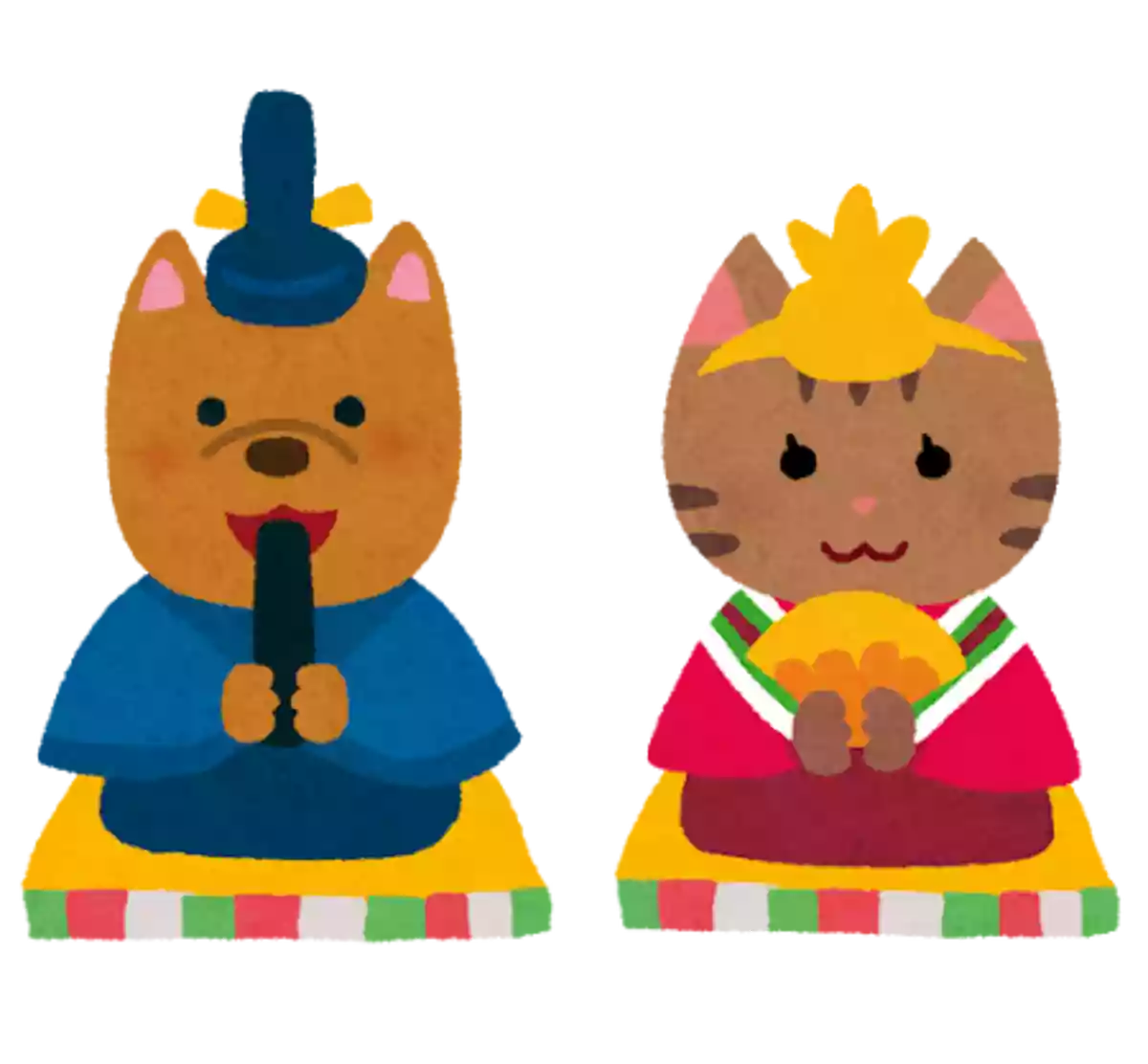
1.bp.blogspot.com
- a married couple in an ordinary household
- The Emperor and Empress
- The Prime Minister and his wife
See the answer
The Emperor and Empress
It is said to express a wish for a happy marriage, like that of Their Majesties the Emperor and Empress.
What do the red, green, white, and yellow colors of hina-arare represent?
- the four seasons
- joy, anger, sorrow, and pleasure
- Life on Earth
See the answer
the four seasons
Each type of hina-arare represents spring, summer, autumn, and winter, embodying wishes for a child’s health and happiness throughout the four seasons.
[For Seniors] Fun for Everyone! Quiz about Hinamatsuri (11–20)
What ingredients are put into the clear soup made for Hinamatsuri?
- scallop
- clam
- clam (hamaguri)
See the answer
clam (hamaguri)
The clam, a bivalve, symbolizes a close, harmonious married couple because only the two halves from the same individual fit together perfectly.
What is the gender of the five court musicians?
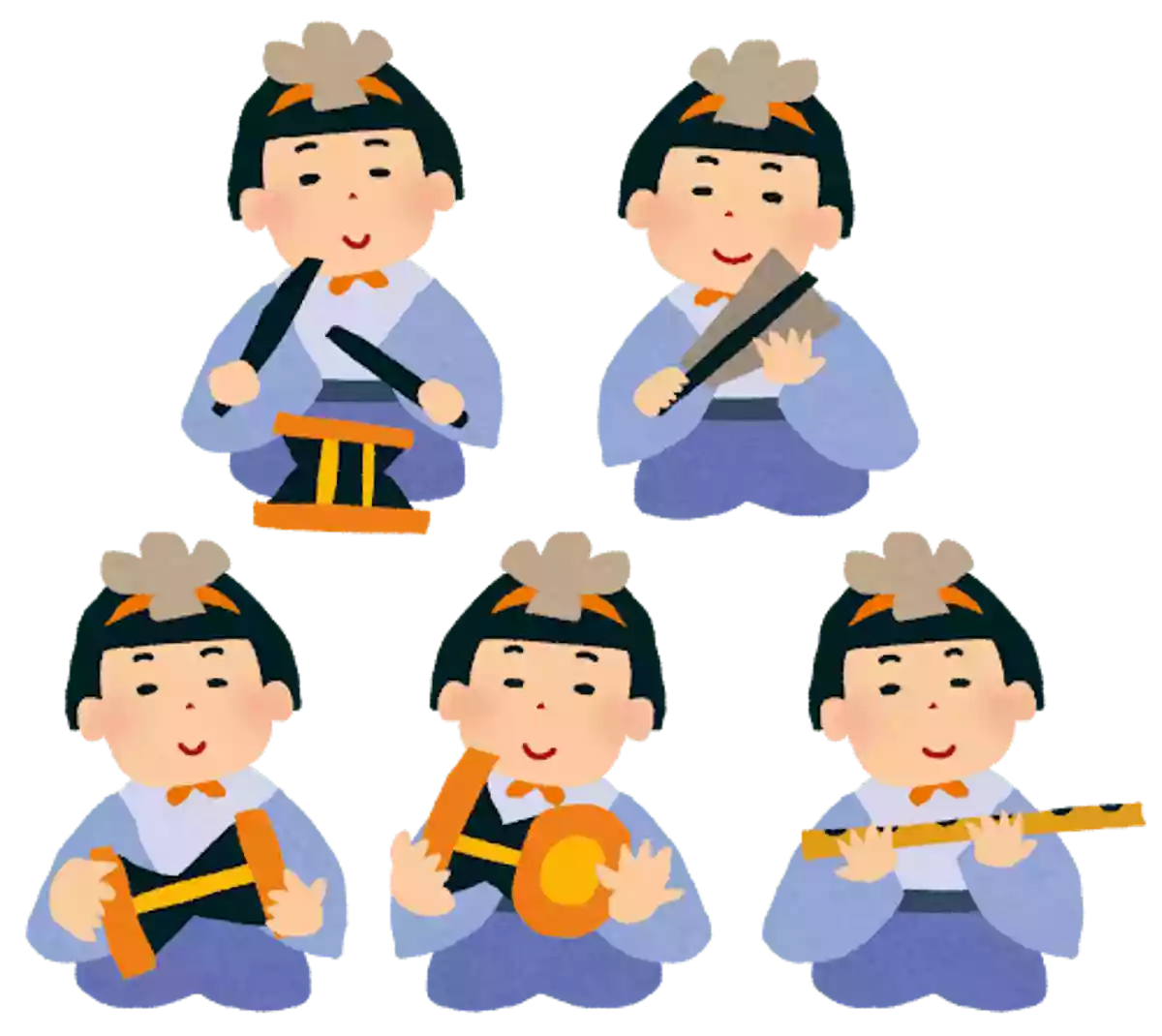
3.bp.blogspot.com
- All of them are boys
- All are adult men.
- All girls
See the answer
All of them are boys
It depicts boys aged 11 to 16, modeled on those before their coming-of-age ceremony (genpuku).
In the Edo period, what kind of Hina dolls would families that were not wealthy make and display?
- Hanging Hina (traditional hanging Hina doll decorations)
- Origami Hina (paper Hina dolls)
- Little chick
See the answer
Hanging Hina (traditional hanging Hina doll decorations)
Relatives and neighbors made small dolls for households where a baby girl was born, and they hung them up as decorations.
What is the name of the event in Ito City, Shizuoka Prefecture, where many hina dolls are displayed using the long staircase leading up to the shrine grounds?

2.bp.blogspot.com
- Magari-hina
- stairs hina doll display
- mass production chicks
See the answer
Magari-hina
Originally, it was called “Magari-bina” from the phrase meaning “to hunt demons,” but because they are also displayed on curved staircases, they are also referred to as “Magari-bina” meaning “curved hina dolls.”