

![[For Seniors] Introducing March Trivia!](https://i.ytimg.com/vi_webp/L-PKK5IedfQ/maxresdefault.webp)
[For Seniors] Introducing March Trivia!

March gradually ushers in spring, and while the sunshine grows warmer, mornings and evenings can still be quite chilly.
It’s a season to look after your health while eagerly awaiting the full arrival of spring.
You might still feel like staying indoors.
However, if you stay inside all the time, some of you may feel like you’ve got nothing to talk about with others.
This time, we’ll introduce some trivia about March.
It’s full of seasonal topics and practical knowledge for daily life—perfect conversation starters.
By all means, feel free to make use of them at day-service centers and long-term care facilities as well.
[For Seniors] Introducing March Trivia! (1–10)
Difficult-to-read kanji related to spring

Spring is a season when we feel warmth, and many people strongly associate it with plants and animals becoming active.
This is a quiz that challenges you to read kanji related to spring, including springtime plants and animals.
It can be hard to give the reading from the kanji alone, so it may be easier if you use the kanji used and the season to make an educated guess.
You might find that there are words you know in speech but have never had a chance to write in kanji, so this quiz could lead to new discoveries.

Quiz about cherry blossoms

Cherry blossoms, which can be said to represent Japan, are so familiar and ever-present that we rarely have chances to learn much about them.
How about picking up various trivia about sakura through a quiz and renewing your sense of closeness to these flowers around you? Because they are such a traditional motif, they appear in many kinds of design, so questions that focus on that aspect are also recommended.
By appreciating not only the cherry blossoms themselves but also the surrounding knowledge, you’ll come to see just how important sakura are to the Japanese people.
Hina-arare is made by crushing hishi-mochi.
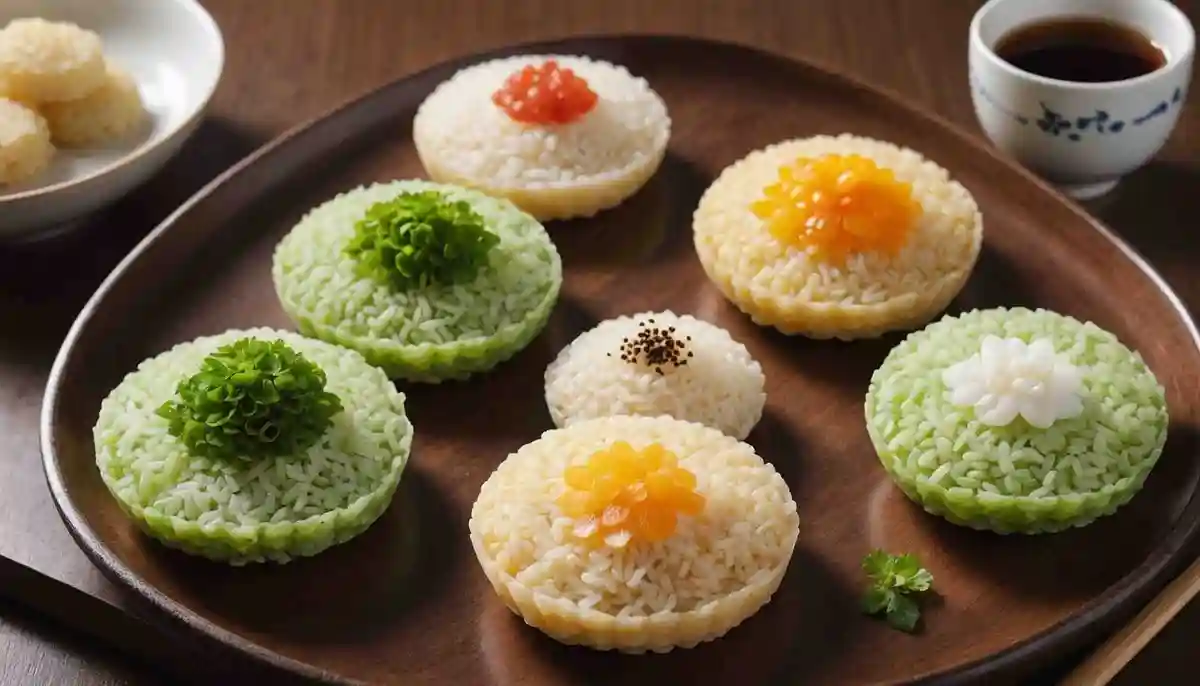
In March, during the Peach Festival (Hinamatsuri), many places likely display Hina dolls and hold events.
For Hinamatsuri, the dolls are sometimes displayed together with hina-arare (sweet rice puffs) and hishi-mochi (diamond-shaped rice cakes).
There are various reasons for displaying them together, but a prominent theory says that hina-arare originated from crushing hishi-mochi.
This is closely connected to an Edo-period custom called hina no kunimise.
In hina no kunimise, people would take the Hina dolls outdoors—to fields, hills, or riverbanks—and enjoy the spring scenery with them.
They are said to have brought along crushed hishi-mochi at that time, which became the origin of hina-arare.
Indeed, the colors of hishi-mochi and hina-arare are similar, aren’t they?

Flying Insect Quiz

Here’s a quiz where you guess which insects can fly.
The premise itself is interesting, right? Three insects appear at a time, but there isn’t always just one correct answer, and it’s fascinating that some unexpected insects can or can’t fly.
Plus, the English names of the insects are shown, so you can learn those at the same time, which seems like great brain training.
If any unfamiliar insect names or behaviors catch your interest, it’s also recommended to look them up.
It’s a very informative quiz, isn’t it?

The model for the children’s song “Spring Brook” was Tokyo’s Kōbotsu River.

The children’s song “Haru no Ogawa” (Spring Brook) is something almost every Japanese person knows, as it’s taught in elementary school.
In fact, it is said to have a model brook.
That model is believed to be the Kotsubogawa, a stream that once flowed along today’s Odakyu Line in Tokyo.
One reason for this belief is that the lyricist, Tatsuyuki Takano, is said to have lived near the Kotsubogawa.
Although land development led to the stream being buried underground and repurposed as part of the sewer system—so we can no longer see it—the fact that such a river once existed in Tokyo, now lined with skyscrapers, will likely continue to be passed down along with this song.

Rape blossoms have cancer-preventive effects.

In spring, we see more and more fields—and these days even riverbanks—covered with blooming rapeseed flowers.
Rapeseed blossoms are known for their cute, small yellow petals, and it’s said they may help prevent cancer.
In fact, “nanohana” refers to the flowers of cruciferous vegetables such as leaf mustard, daikon radish, and cabbage.
Cruciferous vegetables contain compounds called isothiocyanates, which have antioxidant properties.
Isothiocyanates are believed to suppress cancer cells and may be effective in cancer prevention.
Rapeseed flowers evoke the image of “spring,” don’t they? Even older adults might enjoy talking about rapeseed blossoms as a way to feel the season.
Mugwort can be used as a hemostatic agent.

Did you know that yomogi (Japanese mugwort), known as an ingredient in kusa-mochi, can stop bleeding? Yomogi is in season from around March to May, when the weather starts to feel warmer.
It contains tannins, which have hemostatic (bleeding-stopping) properties.
If you wash a wound well with water and then rub yomogi leaves and apply them to the wound, it’s said to help stop the bleeding.
By the way, when using yomogi as food, we eat the young leaves.
That’s because while yomogi survives through the winter, the leaves become tough and are not suitable for eating.
It’s also called the “queen of herbs” because it contains components that promote relaxation and help prevent anemia.
Since it’s a familiar plant for many older adults, some may be surprised by its unexpected properties.