

![[For Seniors] Never Run Out of Conversation Starters! A Collection of Fun Facts About April and Spring](https://media.ragnet.co.jp/img/1200__png__https://www.studiorag.com/files/2025/04/262a23194ba37b5377db67d8595e61f7.webp)
[For Seniors] Never Run Out of Conversation Starters! A Collection of Fun Facts About April and Spring


Spring gradually gets warmer, which means more chances to go out, doesn’t it?
Some older adults who took a break during the cold season may start going to day services or senior facilities again.
At such times, you might worry about running out of conversation topics.
In this article, we’ll introduce trivia related to April.
By weaving spring-themed trivia into your conversations, you can enjoy more lively and engaging communication with older adults.
It also helps with brain training, so be sure to incorporate it actively!
For Seniors: Never Run Out of Conversation Starters! Trivia About April and Spring (1–10)
Not only the first spring storm exists, but there are also the second and third.
Personally, I have the impression that strong gusts often blow in spring—how about you? The so-called “haru-ichiban” is something I vaguely think of as “a strong wind that blows in spring,” but borrowing the Japan Meteorological Agency’s wording, it’s defined as “a warm, somewhat strong southerly wind observed over a wide area between the beginning of spring (Risshun) and the spring equinox.” In fact, this haru-ichiban is sometimes followed by what people call haru-niban, haru-sanban, and so on.
However, these aren’t official JMA terms; they’re more at the level of expressions used on news programs.
I mean, if someone said “haru-gojuuban (spring number 50),” you’d be like… really?
Strawberries are actually vegetables.

When I was a kid, every summer there was that rumor going around like “watermelon isn’t a fruit, it’s a vegetable.” Looking back, it’s kind of cute and charming how it came up year after year.
Come to think of it, strawberries are also classified as vegetables by Japan’s Ministry of Agriculture, Forestry and Fisheries.
It feels odd to call something that sweet and delicious a vegetable, doesn’t it? Surprisingly, bananas and pineapples are also categorized as vegetables.
That said, these are nowadays sometimes referred to as “fruit-type vegetables,” and are treated a bit differently from ordinary vegetables.
If it’s a sweet, tasty fruit, I just want to call them all fruit already.
On April Fool’s Day, you’re only allowed to tell lies in the morning.

The term “Shigatsu-baka” (April fool) is even a kigo—a seasonal word—in haiku, which feels amusingly mismatched with the generally serious tone of haiku.
Speaking of April Fools’ incidents, Orson Welles’s “The War of the Worlds” broadcast in the U.S.
is famous, and ever since then, alien-related hoaxes have become an April Fools’ staple.
Do you all tell lies too? But apparently, even on April Fools’ Day, you’re only allowed to tell lies in the morning.
Maybe the idea is that you take them back in the afternoon? If you’re curious, be sure to look it up!
Tokyo’s cherry blossom opening is declared based on the blossoms at Yasukuni Shrine.
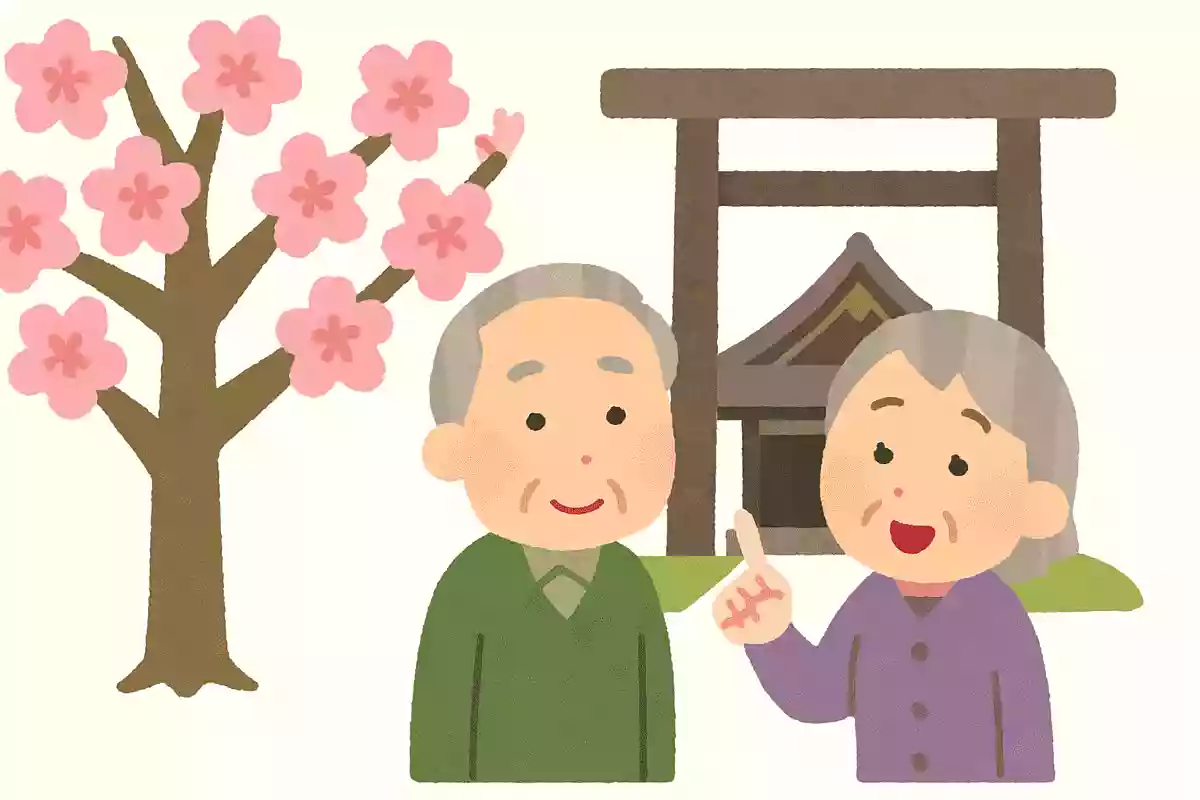
When you think of spring, what’s the first thing that comes to mind? Graduation ceremonies, company entrance ceremonies, the Doll Festival, Golden Week—but isn’t cherry-blossom viewing the number one event? In Japan, where there are fewer parties compared to the West, it’s a precious party occasion.
But how is the official cherry blossom “blooming declaration” decided? In fact, Tokyo’s declaration is based on a specific cherry tree at Yasukuni Shrine.
Each prefecture has a designated “standard tree,” and officials judge the bloom status by visually inspecting these trees.
Apparently, if about five or six blossoms open, it’s considered to have bloomed.
Surprisingly few, right?
Asparagus was originally used for ornamental purposes.
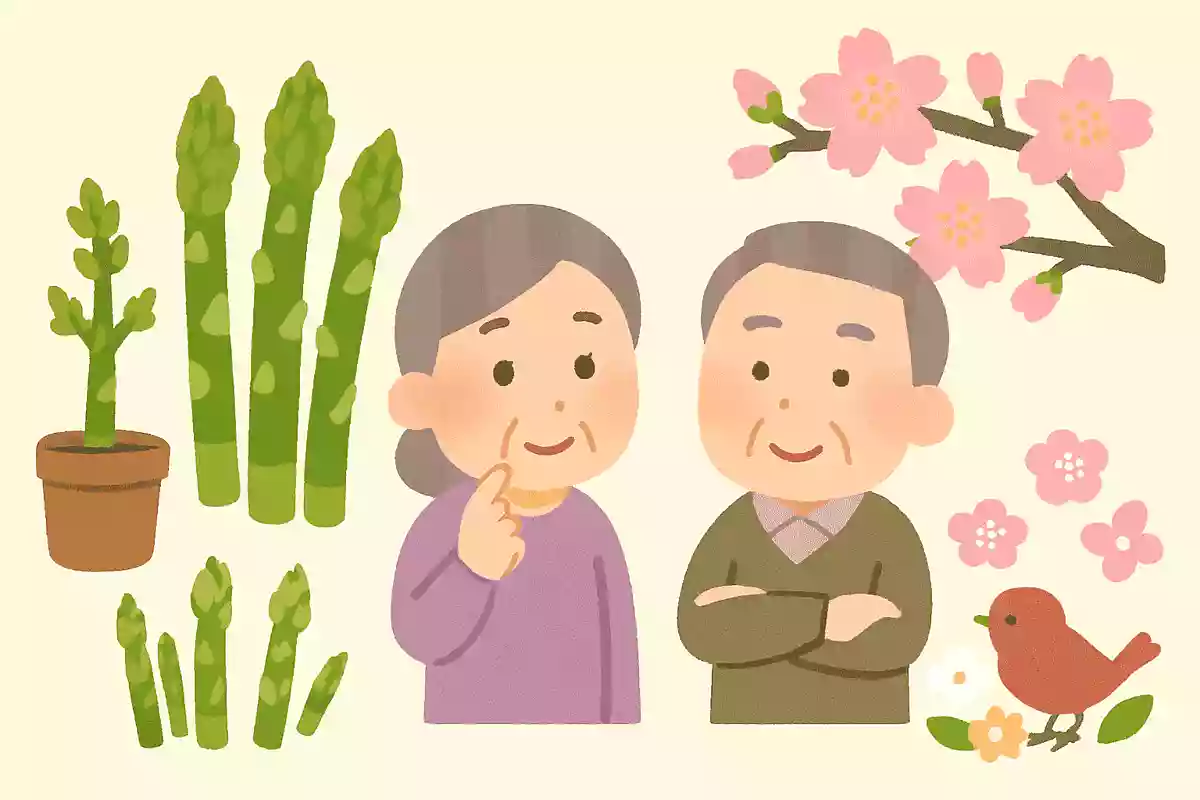
Asparagus has a slightly different form compared to other vegetables.
I’ve heard it takes at least three years from sowing the seeds to harvesting.
I’ve tried growing it a few times myself, but I never made it to harvest…
If you manage it properly, you can keep harvesting for about ten years.
Interestingly, asparagus was originally imported as an ornamental plant and only later became a food.
The curiosity of the person who thought, “Maybe I’ll try eating that plant that looks like a horsetail,” is pretty incredible, isn’t it?
There are nine colors of tulips that reach their peak viewing season in April.

Tulips are famous as spring flowers.
Thanks to a well-known children’s song, they’re likely a flower recognized by everyone from kids to adults.
Here’s a bit of trivia focusing on tulip colors.
When we think of tulips, we often picture red, white, and yellow, but tulips that are at their best in April are said to come in about nine different colors.
There are tulips in orange, green, purple, black, and many other hues.
If you have a chance to go out in spring, try looking for tulips in unusual colors.

A bamboo shoot can grow about 30 centimeters in a single day.
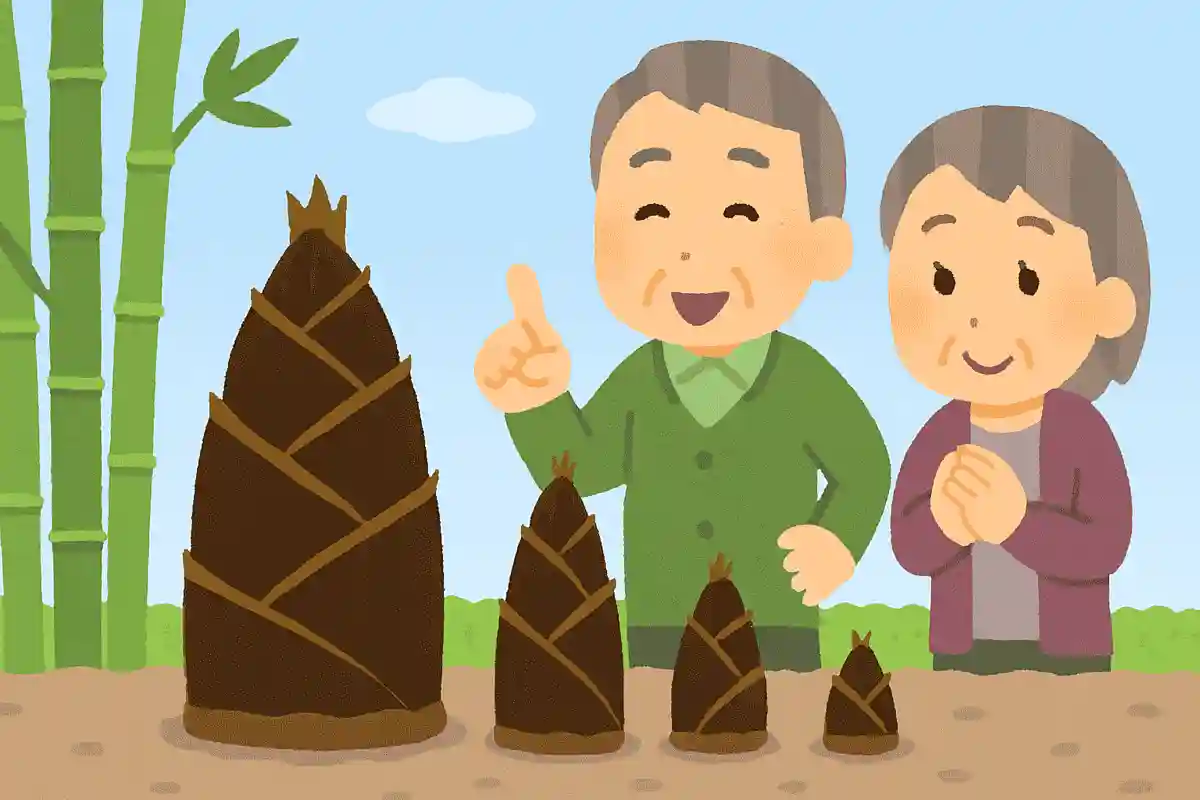
Bamboo shoots are in season in spring.
Some older people may even have experience digging them up.
Did you know how fast bamboo shoots grow? In fact, they can grow as much as 30 centimeters in a single day.
Of course, it depends on the season and temperature, but it’s surprising, isn’t it? By the way, because they mature in as little as ten days, they’re said to become inedible after that.
How about enjoying some springtime bamboo shoot dishes and feeling the arrival of spring?
