

[For Seniors] Never Run Out of Conversation Starters! A Collection of Fun Facts About April and Spring


Spring gradually gets warmer, which means more chances to go out, doesn’t it?
Some older adults who took a break during the cold season may start going to day services or senior facilities again.
At such times, you might worry about running out of conversation topics.
In this article, we’ll introduce trivia related to April.
By weaving spring-themed trivia into your conversations, you can enjoy more lively and engaging communication with older adults.
It also helps with brain training, so be sure to incorporate it actively!
- [For Seniors] Fun and Informative! Trivia and Quizzes Introduced
- [For Seniors] Quizzes related to April. Perfect for brain training.
- [For Seniors] February Trivia: Useful Knowledge
- [For Seniors] Introducing March Trivia!
- [For Seniors] Spring-themed quizzes: Fun trivia questions that help prevent dementia while you solve them
- [For Seniors] Enjoy a Warm Spring! April Health Topics Roundup
- [For Seniors] Haiku for March: Enjoying a Spring Moment with Famous Verses
- [For Seniors] Make an April Calendar: Fun Ideas to Brighten Your Mood
- [For Seniors] Making a March Calendar: Introducing Spring-Themed Motifs and Arrangements
- [For Seniors] Trivia Multiple-Choice Quiz
- [For Seniors] Introducing trivia related to May!
- [3-Choice Quiz] Cherry Blossom Trivia You'll Want to Share with Someone
- [For Seniors] Classic spring songs to sing in April: A heartwarming moment with nostalgic children’s songs and kayōkyoku (Japanese popular songs)
For Seniors: Never Run Out of Conversation Starters! Trivia About April and Spring (21–30)
Spring Riddles 2

How about enjoying some riddles that are perfect for spring and can even help with brain training and dementia prevention? These are riddles whose answers are spring-themed.
So if you can’t come up with an answer, it might help to give yourself the hint that it’s something related to spring.
Example riddles include: “It’s a ‘kaba’ (hippo), but what ‘kaba’ appears in spring?” and “What do you get when you gather ten ‘kabu’ (turnips)?” It could also be fun to create your own quiz using the spring theme as a constraint.

Difficult-to-read kanji of spring

This is a quiz that presents items commonly seen in spring—such as foods and animals—written in kanji, and asks you to think of their readings.
Even if you know the words, you might not often see them in kanji, and some may be more strongly associated with being written in katakana or hiragana.
The fact that they’re related to spring is a major hint, so you might find the answer by picturing springtime scenes.
It may help to consider the meanings of each kanji used and think of things associated with spring that fit those meanings.

[For Seniors] Never Run Out of Conversation Topics! A Collection of Trivia About April and Spring (31–40)
How much honey does a single honeybee collect over the course of its lifetime?

Fascinating trivia that makes you want to know the answer! Here’s a trivia quiz: How much nectar does a single honeybee collect over its lifetime? We know that honeybees gather nectar, but many of us have probably never thought about how much they actually collect.
The answer is said to be about one teaspoon.
Given that a honeybee’s lifespan is about one month, it’s believed they spend roughly two weeks of that time foraging outside.
When you think about how carefully each bee brings back its nectar, it really renews your sense of gratitude for the food we eat.
Difficult-to-read kanji related to spring

Spring is a season when we feel warmth, and many people strongly associate it with plants and animals becoming active.
This is a quiz that challenges you to read kanji related to spring, including springtime plants and animals.
It can be hard to give the reading from the kanji alone, so it may be easier if you use the kanji used and the season to make an educated guess.
You might find that there are words you know in speech but have never had a chance to write in kanji, so this quiz could lead to new discoveries.
The meaning of rose flowers changes depending on their color and the number you give.
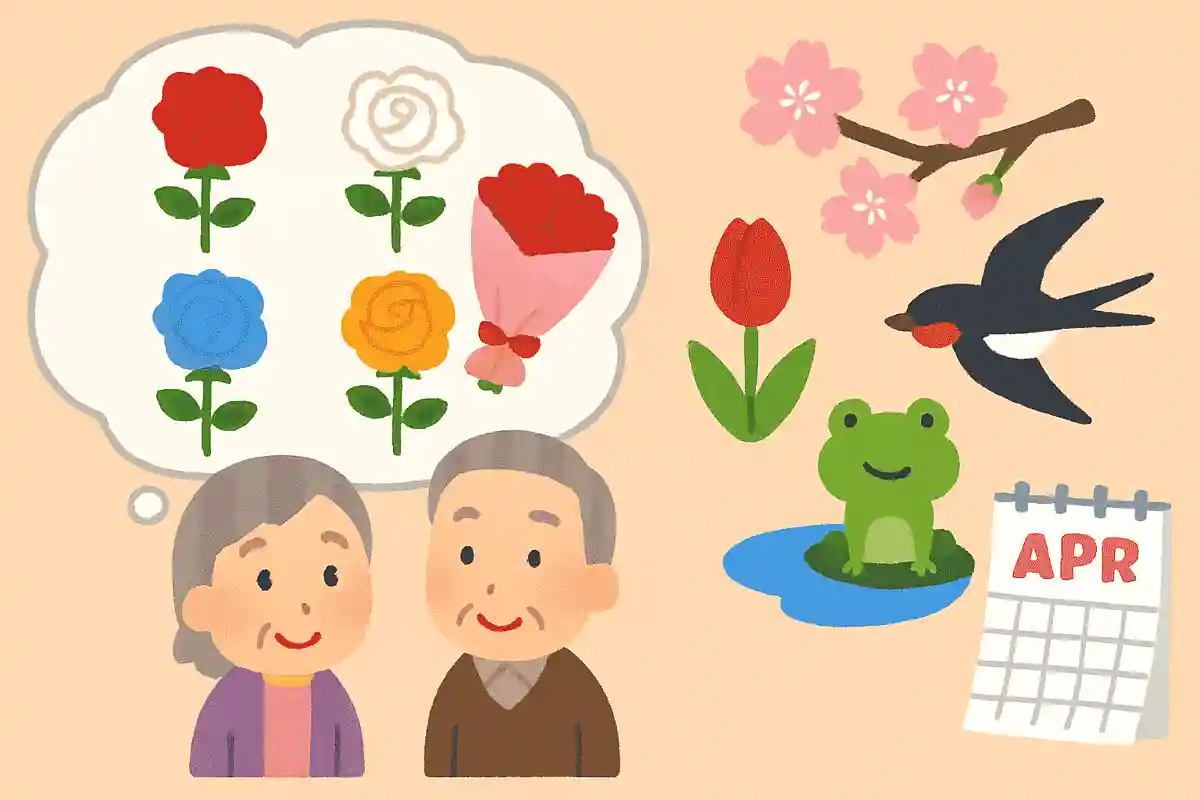
It seems that some roses are at their best from May to June.
Among older adults who enjoy gardening, some may even have rose bushes in their gardens.
Roses come in vivid colors like red, yellow, and white.
Interestingly, the meaning of roses in the language of flowers changes depending on their color and the number you give.
People often give roses on special occasions such as birthdays, anniversaries, or proposals.
When you give them, be sure to check both the color and the number.
By the way, 108 roses are said to be suitable for a proposal, conveying a message of an eternal vow to your beloved.

The model for the children’s song “Spring Brook” was Tokyo’s Kōbotsu River.
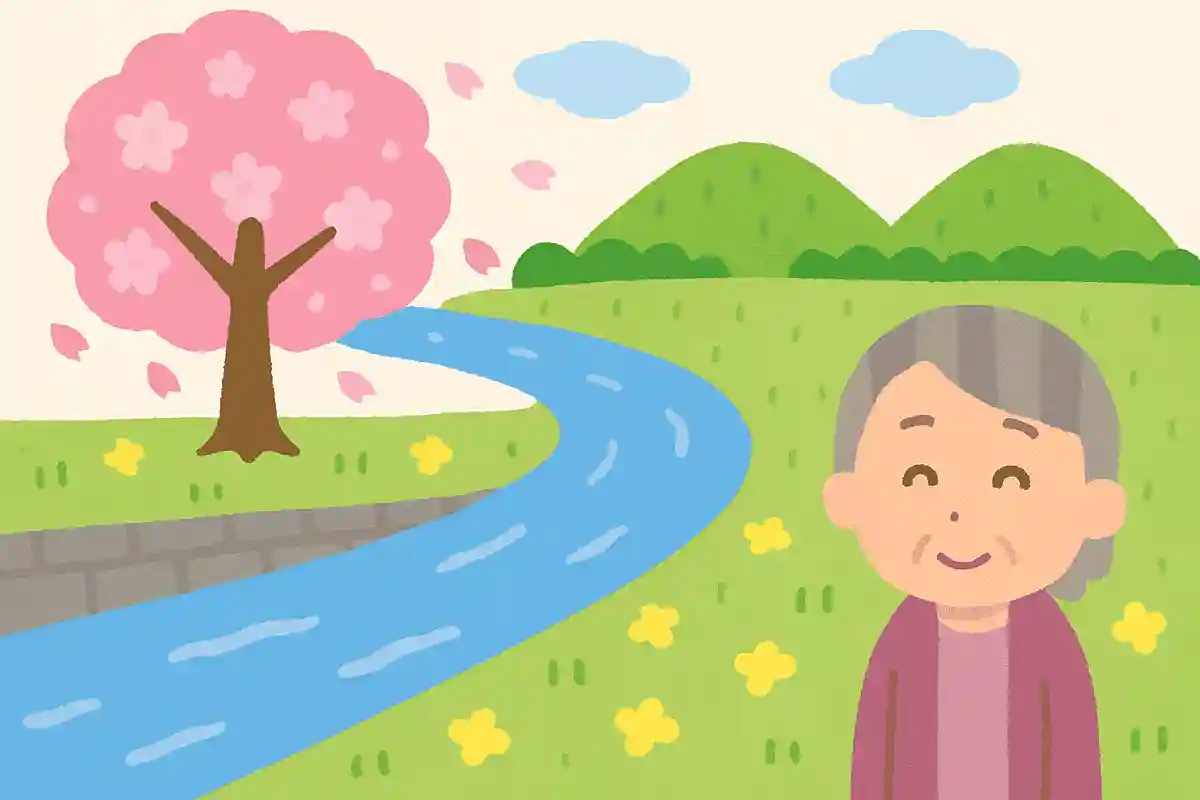
The children’s song “Haru no Ogawa” (Spring Brook) is something almost every Japanese person knows, as it’s taught in elementary school.
In fact, it is said to have a model brook.
That model is believed to be the Kotsubogawa, a stream that once flowed along today’s Odakyu Line in Tokyo.
One reason for this belief is that the lyricist, Tatsuyuki Takano, is said to have lived near the Kotsubogawa.
Although land development led to the stream being buried underground and repurposed as part of the sewer system—so we can no longer see it—the fact that such a river once existed in Tokyo, now lined with skyscrapers, will likely continue to be passed down along with this song.

Because it is said that taking a shobu (iris) bath on the Boys’ Festival (Tango no Sekku) wards off evil spirits.

Did you know there is a tradition of taking a shobu-yu (iris bath) on Children’s Day? Some elder care facilities may also practice shobu-yu.
This custom originated in China, where May 5—the date of Children’s Day—fell around the beginning of the rainy season.
To ward off misfortune and epidemics that were believed to spread more easily during the rainy season, people held Dragon Boat Festival rituals.
It is said that the custom of the shobu-yu bath also began then, placing bundles of the leaves and roots of shobu, whose strong fragrance was believed to repel evil spirits, into the bath.