

[For Seniors] Never Run Out of Conversation Starters! A Collection of Fun Facts About April and Spring


Spring gradually gets warmer, which means more chances to go out, doesn’t it?
Some older adults who took a break during the cold season may start going to day services or senior facilities again.
At such times, you might worry about running out of conversation topics.
In this article, we’ll introduce trivia related to April.
By weaving spring-themed trivia into your conversations, you can enjoy more lively and engaging communication with older adults.
It also helps with brain training, so be sure to incorporate it actively!
- [For Seniors] Fun and Informative! Trivia and Quizzes Introduced
- [For Seniors] Quizzes related to April. Perfect for brain training.
- [For Seniors] February Trivia: Useful Knowledge
- [For Seniors] Introducing March Trivia!
- [For Seniors] Spring-themed quizzes: Fun trivia questions that help prevent dementia while you solve them
- [For Seniors] Enjoy a Warm Spring! April Health Topics Roundup
- [For Seniors] Haiku for March: Enjoying a Spring Moment with Famous Verses
- [For Seniors] Make an April Calendar: Fun Ideas to Brighten Your Mood
- [For Seniors] Making a March Calendar: Introducing Spring-Themed Motifs and Arrangements
- [For Seniors] Trivia Multiple-Choice Quiz
- [For Seniors] Introducing trivia related to May!
- [3-Choice Quiz] Cherry Blossom Trivia You'll Want to Share with Someone
- [For Seniors] Classic spring songs to sing in April: A heartwarming moment with nostalgic children’s songs and kayōkyoku (Japanese popular songs)
For Seniors: Never Run Out of Conversation Starters! Trivia About April and Spring (1–10)
Spring cabbage refers to cabbage that was sown in autumn.
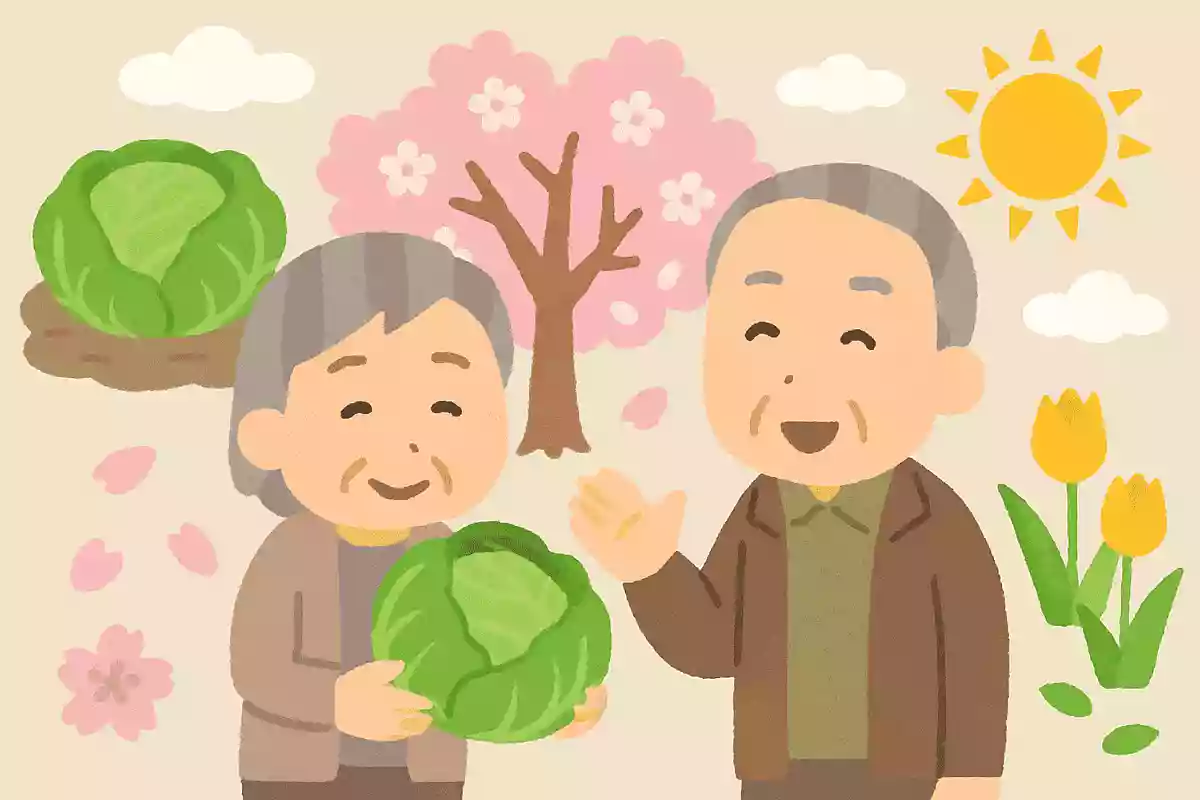
Neoruby SP, Suzusora, Ayari, Okina SP—do you know what they refer to? The answer is cabbage.
If you’ve always thought “Aren’t all cabbages the same?”, try looking them up and check out their colors and shapes.
What we commonly call “spring cabbage” actually refers to cabbage sown in autumn and grown over the winter.
Instead of a vivid green, it tends to be more yellowish-green, and its leaves are tender.
Stir-fry it with ham and cheese and it becomes a main-worthy side dish.
It’s also delicious raw with dressing!
Caterpillars eat cabbage, but they don’t eat lettuce.
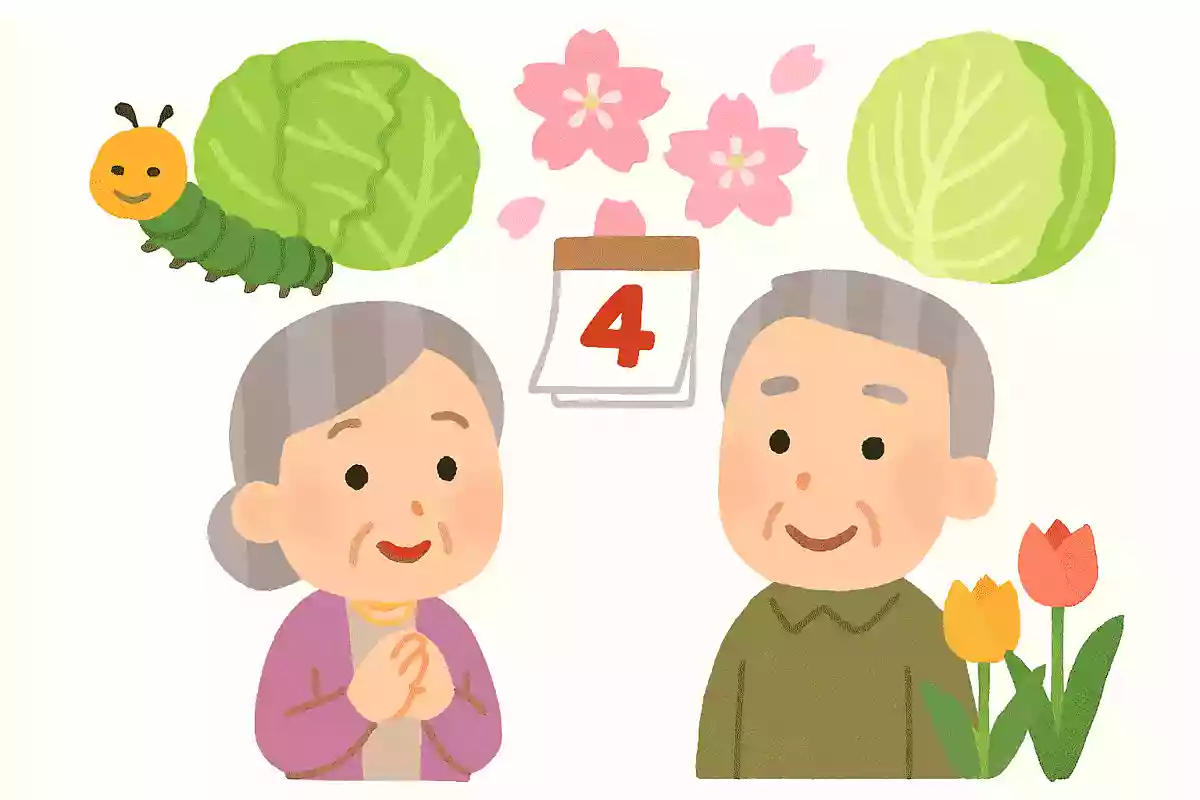
When the topic turns to vegetables, the inevitable debate is “Team cabbage or team lettuce?” Which do you prefer? People who cook often tend to favor cabbage, since it’s handy whether you stir-fry it or simmer it.
But that fresh, crisp crunch of lettuce is irresistible too.
By the way, did you know that green caterpillars eat only cabbage and not lettuce? That’s because cabbage contains a lot of sinigrin, one of their favorite compounds.
Sinigrin is very bitter… There really are some peculiar insects out there, aren’t there?
The classic school backpack for elementary students, the randoseru, came from the Netherlands.

Randoseru, a staple item for Japanese elementary school students.
In fact, this randoseru originally came from the Netherlands.
At the end of the Edo period, when the shogunate introduced a military, they used backpacks received from the Dutch as part of their equipment.
In Dutch, a backpack worn on the back is called a “ransel,” and that ransel’s name gradually shifted to “randoseru” in Japanese.
It’s said that the use of the randoseru as a school bag was introduced by Gakushuin during the Meiji era.

For Seniors: Never Run Out of Conversation Starters! Trivia About April and Spring (11–20)
Yogurt is a food that is effective for alleviating hay fever.
With its warm, comfortable climate and plenty of smile-inducing events like cherry-blossom viewing and school entrance ceremonies, many people might be thinking, “Spring would be perfect if it weren’t for pollen…” In addition to the well-known cedar and cypress pollen, some people are also triggered by grasses like rice, ragweed, and mugwort.
If possible, we’d all like to protect ourselves somehow.
Good news for those people: according to one theory, yogurt can help with hay fever.
It’s also said that oily fish rich in omega-3 fatty acids are beneficial.
If there’s even a little effect, it’s worth a try!
Sakura mochi use different batters in Kanto and Kansai.
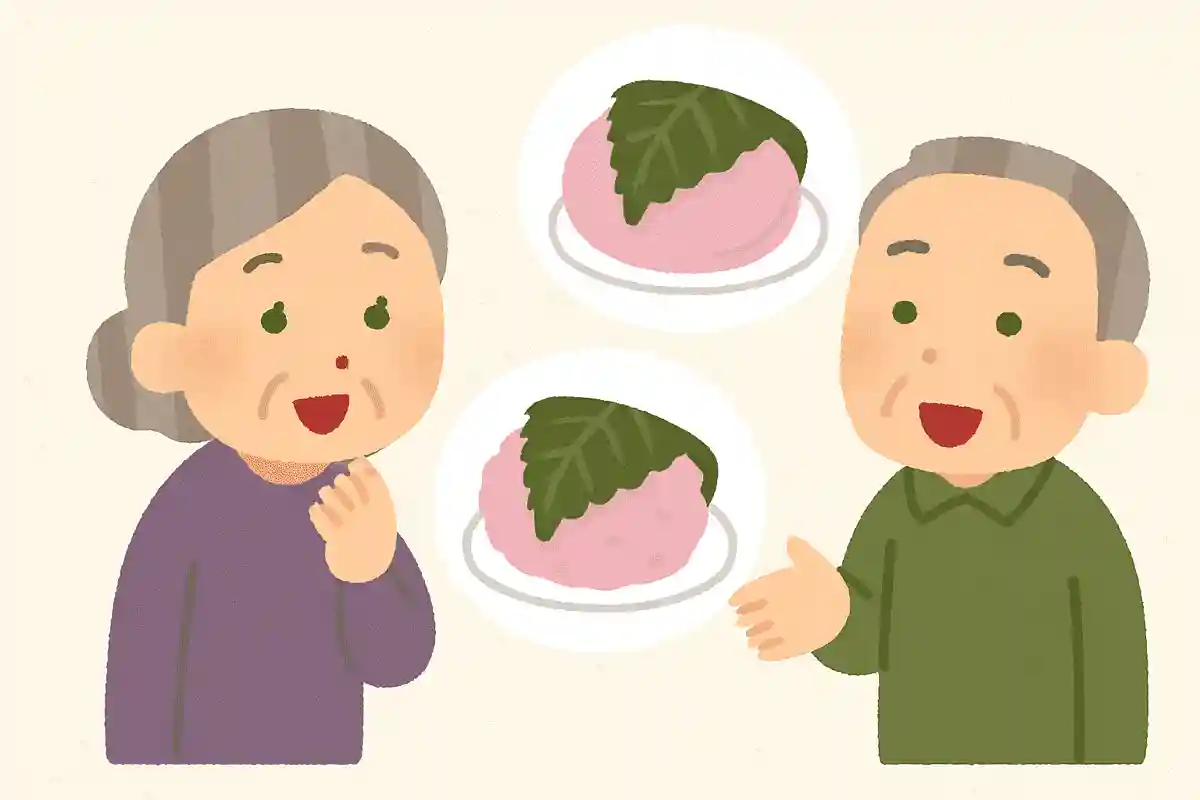
Sakuramochi is a treat that you start craving in spring, but did you know the batter differs between Kansai and Kanto styles? Kanto-style sakuramochi wraps sweet bean paste in a thin crepe-like sheet made by thinning wheat flour with water and cooking it.
Kansai-style sakuramochi, on the other hand, encloses the bean paste in a dumpling made from domyoji flour—steamed glutinous rice that’s dried and coarsely ground.
Both styles are traditionally wrapped in a salted cherry leaf.
Which one feels like the classic sakuramochi to you? It would be fun to get both and compare them side by side.
Measuring ‘sitting height’ during the April physical checkup is done to confirm the development of the internal organs.

In particular, students have physical measurements taken in April, right? I think they measure things like height, weight, and chest circumference.
In the past, one of the items was sitting height.
It was discontinued starting in fiscal year 2016, but older people probably had it measured when they were students.
Do you know why sitting height was measured? The answer is: to check the development of the internal organs.
The reason it was discontinued is that there weren’t many opportunities to make use of the data even if it was measured.

Hina-arare is made by crushing hishi-mochi.
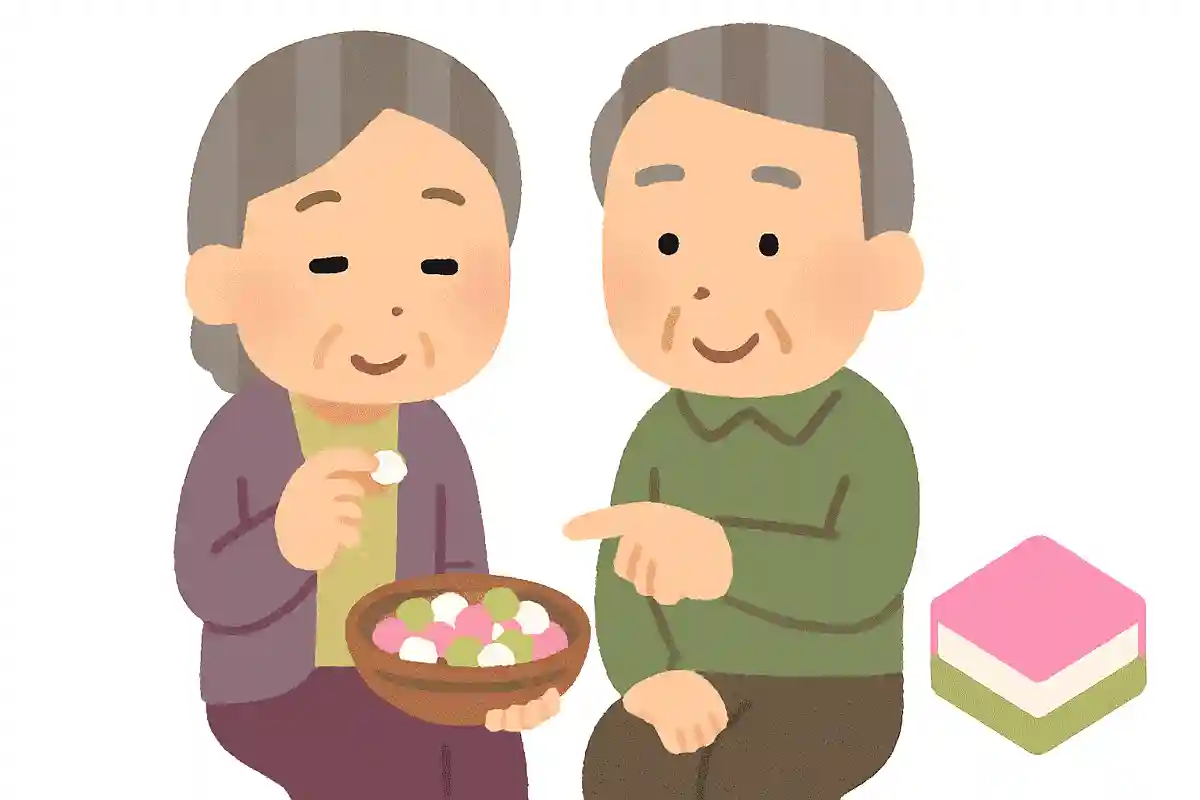
In March, during the Peach Festival (Hinamatsuri), many places likely display Hina dolls and hold events.
For Hinamatsuri, the dolls are sometimes displayed together with hina-arare (sweet rice puffs) and hishi-mochi (diamond-shaped rice cakes).
There are various reasons for displaying them together, but a prominent theory says that hina-arare originated from crushing hishi-mochi.
This is closely connected to an Edo-period custom called hina no kunimise.
In hina no kunimise, people would take the Hina dolls outdoors—to fields, hills, or riverbanks—and enjoy the spring scenery with them.
They are said to have brought along crushed hishi-mochi at that time, which became the origin of hina-arare.
Indeed, the colors of hishi-mochi and hina-arare are similar, aren’t they?
