

![[For Seniors] Horse Trivia Quiz: Have fun with surprising facts about their behavior and little-known tidbits](https://media.ragnet.co.jp/img/1200__png__https://www.studiorag.com/files/2025/11/94be8ff98a03d546fa0fe9baf872f384.webp)

How about enjoying a quiz full of surprising horse trivia—things that feel familiar yet are not widely known—like how horses see the world and colors, the rules they follow when walking on roads, or how fast their hooves grow? The more you learn—such as their wide field of vision, how long it takes a foal to stand up, and what ear movements express—the deeper the fascinating world of horses becomes.
By exploring these curious horse-themed quiz facts with your family or friends, you’ll rediscover the charm of horses.
Wishing you a warm, smile-filled time of friendly conversation.
- [For Seniors] Trivia Quiz & Fun Facts for Everyday Life
- For Seniors: Useful Trivia Questions! Introducing Fun Facts Quizzes You'll Want to Share
- [For Seniors] Boost Your Knowledge! Fun Trivia Quiz
- [For Seniors] Fun and Informative! Health Trivia Quiz
- [For Seniors] Lively two-choice trivia quiz. Handy to know and tidbits you'll want to share with others
- [For Seniors] Super Amazing Trivia Quiz! Introducing Practical Tips for Everyday Life
- [For Seniors] Fun and Informative! Trivia and Quizzes Introduced
- [For Seniors] Fun and Informative Trivia Quiz Collection
- [For Seniors] Surprisingly Unknown! General Knowledge Quiz
- How much do you know? Trivia quiz for seniors that’s full of surprisingly unknown facts
- [For Seniors] Enjoy Learning the Wonders of Mars! Trivia Quiz & Fun Facts to Exercise Your Brain
- [For Seniors] Sports Trivia Quiz & Fun Facts. Easy and Entertaining
- [For Seniors] Multiple-Choice Quiz Collection About Living Creatures
[For Seniors] Horse Trivia Quiz: Have Fun with Surprisingly Little-Known Habits and Facts (1–10)
How many centimeters does a horse’s hoof grow in a month?
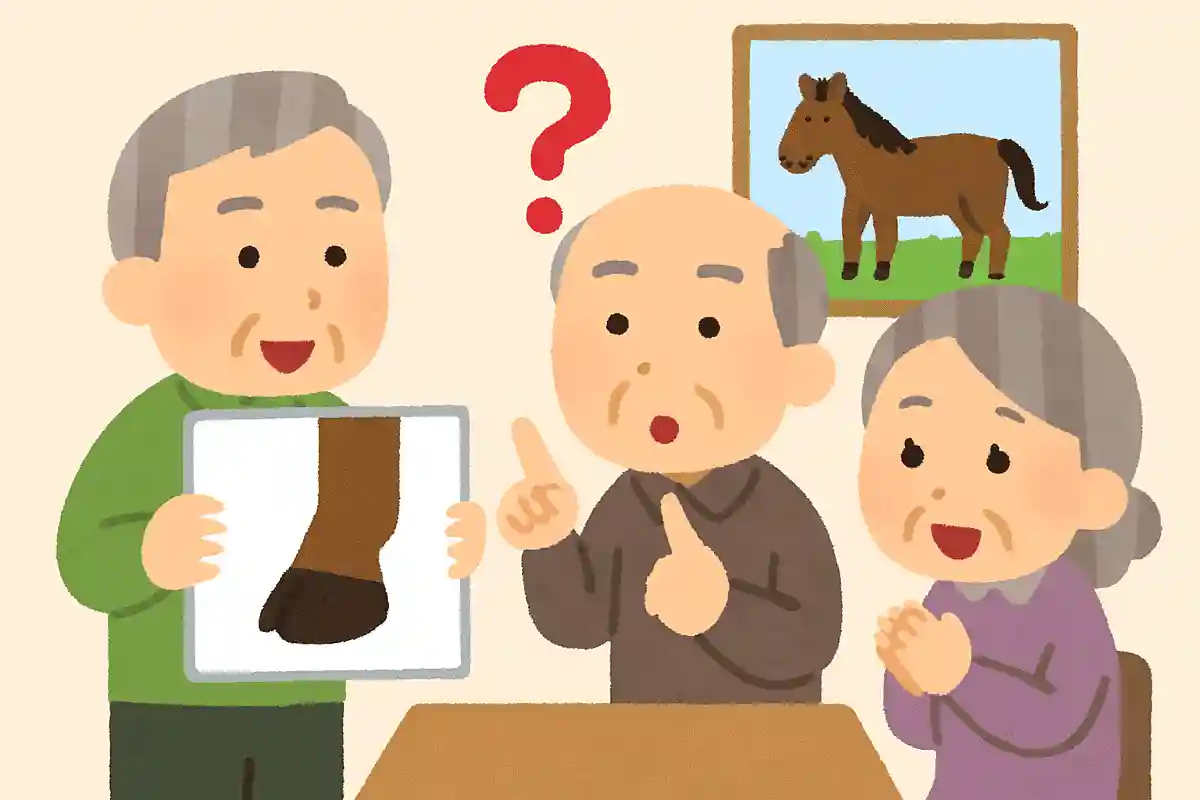
- About 0.5 centimeters
- about 1 centimeter
- about 2 centimeters
See the answer
about 1 centimeter
A horse’s hoof keeps growing just like a human fingernail. Generally, a horse’s hoof is said to grow about 1 centimeter per month. If the hoof grows too long, it can throw off the horse’s balance and make walking difficult, which can affect its health, so regular trimming is necessary. This is especially important for older horses, whose reduced activity means their hooves wear down less naturally and therefore require extra care. Healthy hooves are crucial for horses to maintain mobility and quality of life.

How many hours do horses sleep in a day?
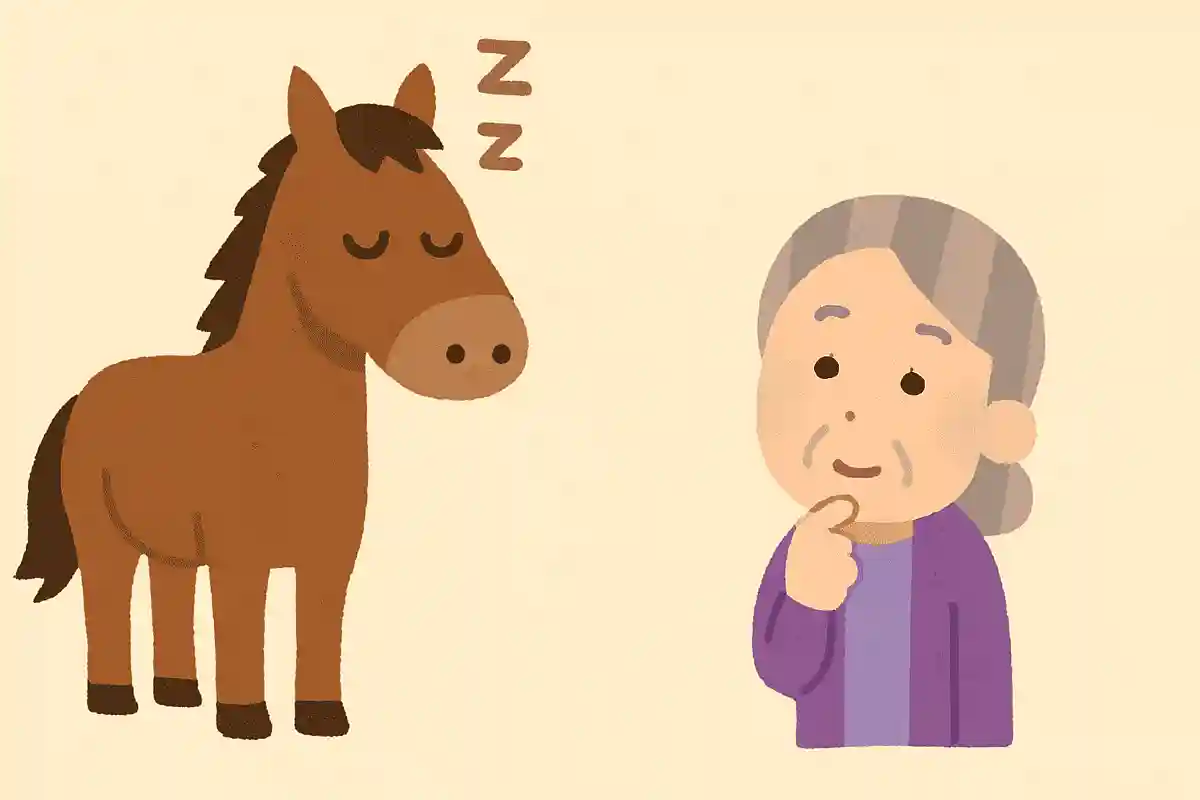
- About 2 to 3 hours
- About 7–8 hours
- About 12–13 hours
See the answer
About 2 to 3 hours
Horses are said to sleep only about 2 to 3 hours per day on average. Unlike humans, horses do not sleep for long periods at a time. They mostly sleep in short bouts while standing, but they lie down only when entering deep sleep (REM sleep). In the wild, where predators are present, this helps them quickly detect danger. Although horses’ sleep is short, it is still a very important time for maintaining their health.
How many main types of horse blood groups are there?

- three types
- 7 types
- 8 types
See the answer
8 types
Horse blood types are highly diverse, with eight main groups (A, C, D, K, P, Q, T, U), each containing many subgroups. Depending on the combinations of antigens, the classifications can be further subdivided—astonishingly, into as many as three trillion variations.
What color can horses not see?

- red
- blue
- green
See the answer
red
Because horses have only two types of color-sensitive cells (cone cells), they cannot distinguish as many colors as humans. In particular, it is said to be difficult for them to discriminate red, which they likely perceive as gray or brown. As a result, it is hard for horses to clearly distinguish red obstacles or objects in their field of view. Conversely, while blue and green do not appear as vivid to them as they do to humans, horses can recognize these colors.
How wide is a horse’s field of vision?
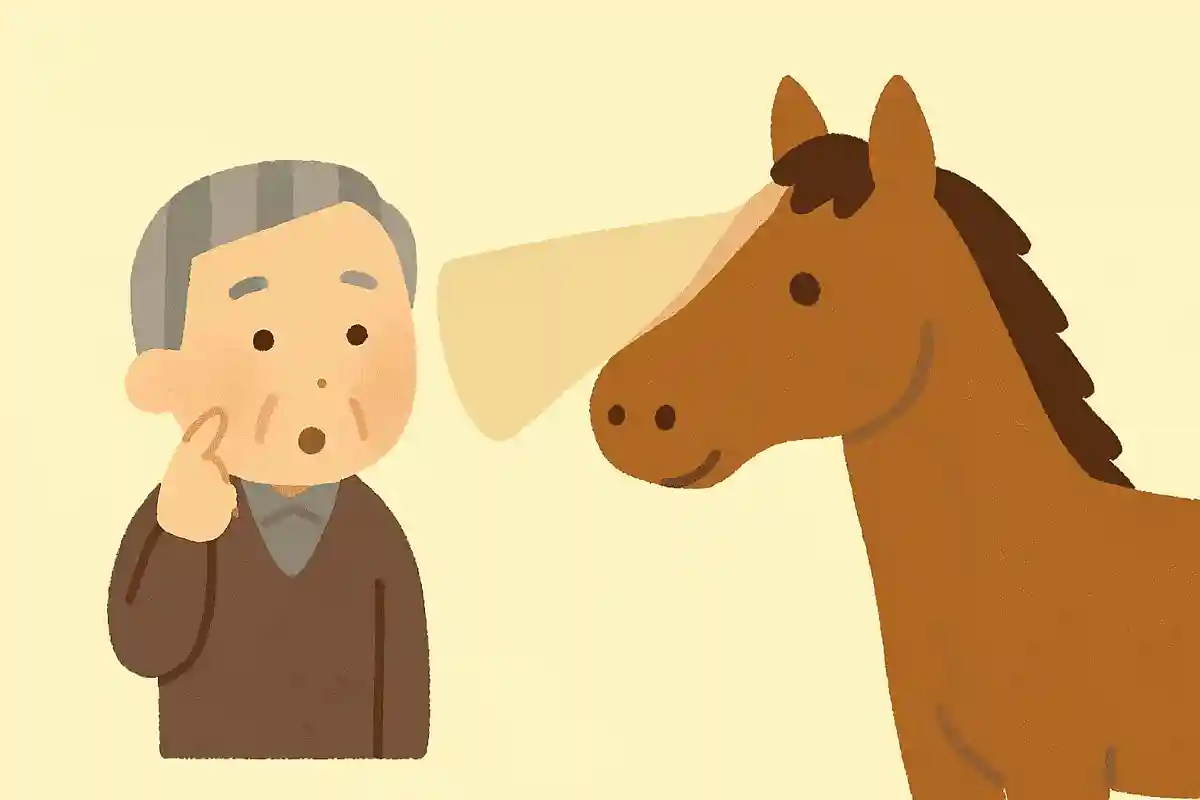
- about 90 degrees
- about 180 degrees
- about 350 degrees
See the answer
about 350 degrees
A notable feature of horses is their extremely wide field of vision—about 350 degrees. Because their eyes are positioned on the sides of their heads, they can see almost all around them, except for the area where their fields of view overlap. However, there are blind spots directly behind the head and just in front of the nose. This wide field of vision helps protect them from predators in the wild. Because of this, if a person stands directly behind a horse, the horse may not notice and could be startled, so be careful when interacting with them.
When measuring a horse’s height at the withers, from exactly which points do you measure?
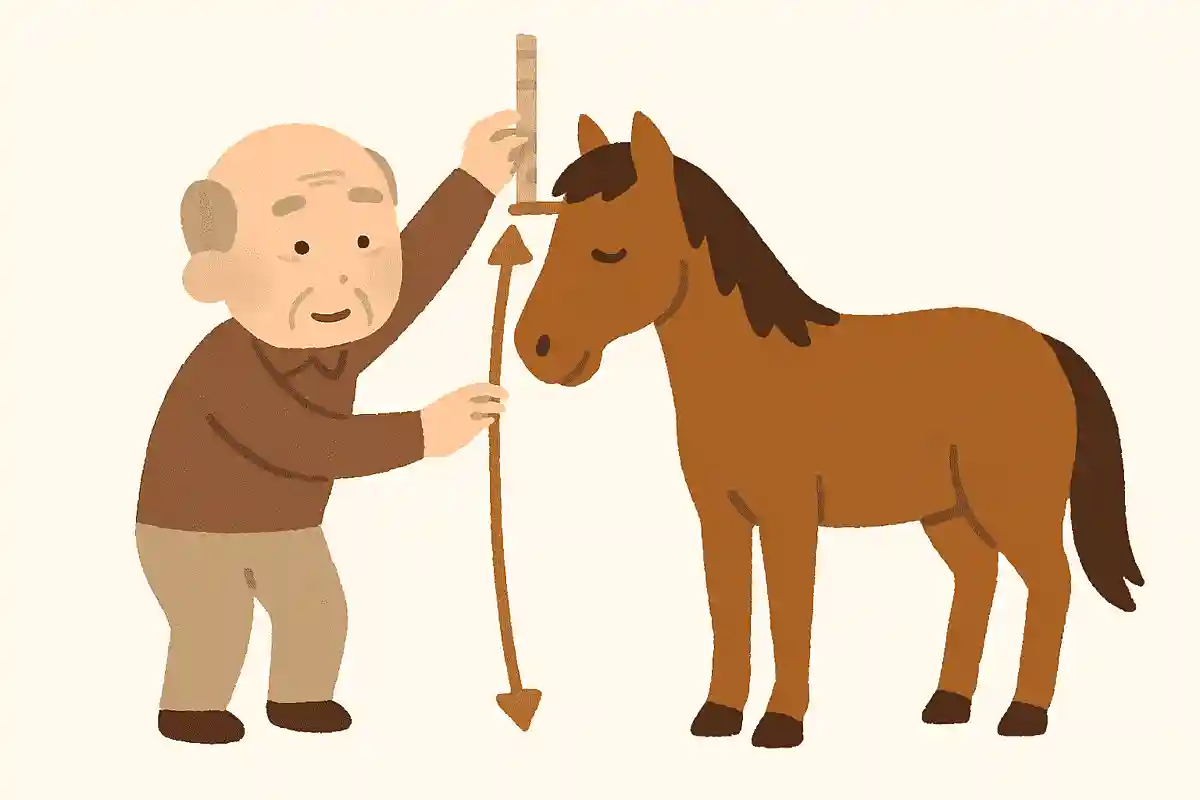
- From the top of the head to the ground
- From the middle of the back to the ground
- From the withers at the base of the neck to the ground
See the answer
From the withers at the base of the neck to the ground
A horse’s height at the withers is measured from the ground up to the point called the “kō” (withers). The withers are the raised area between the neck and the back, and they serve as a consistent reference regardless of the horse’s breed or age. The top of the head moves and is not constant, and the middle of the back is not a standard measuring point. This method is the international standard used to compare horse sizes in fields such as horse racing and animal husbandry.
How long does it take for a newborn foal to be able to stand on its own?
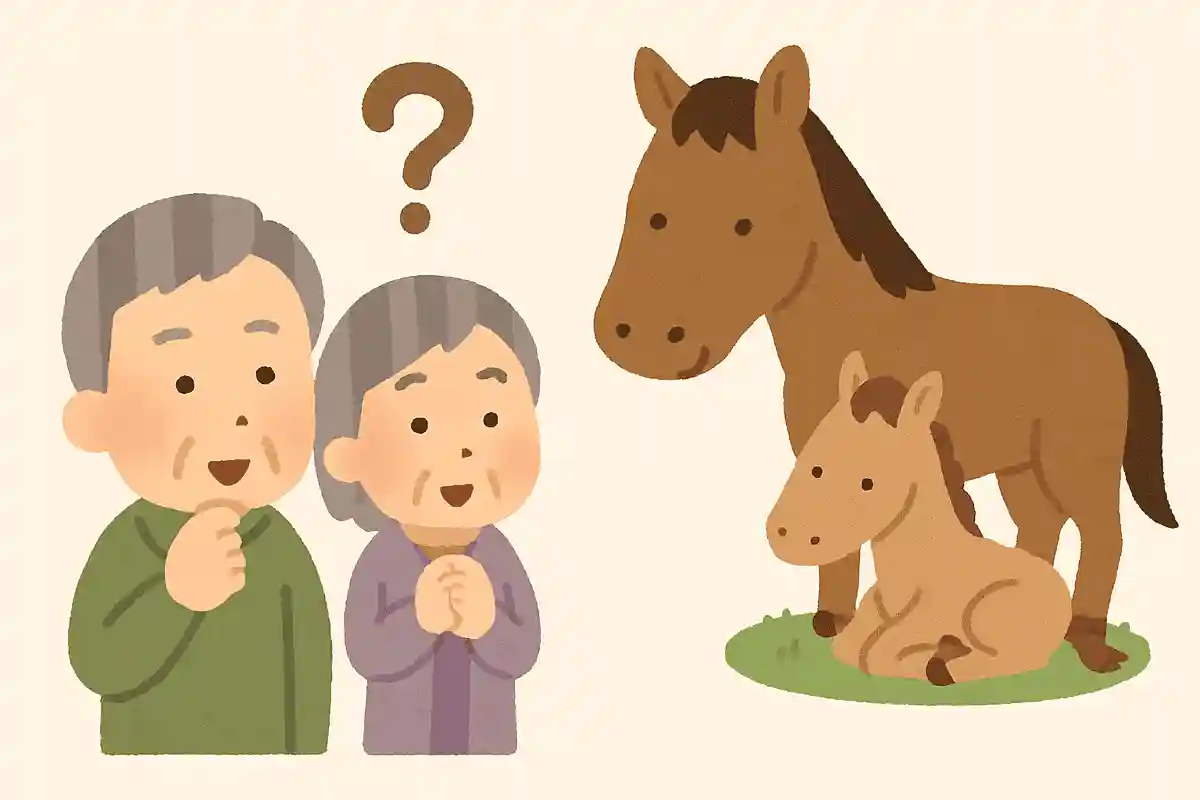
- About one hour later
- About one day later
- About a week later
See the answer
About one hour later
A newborn foal can usually stand on its own legs about an hour after birth. This ability is necessary to quickly flee from predators in the wild. Compared to other animals, foals stand very early and are able to walk with their mothers within a few hours. Because horses are herd animals that move together, this rapid development is vital for their survival.