

![[For Seniors] Enjoy Learning the Wonders of Mars! Trivia Quiz & Fun Facts to Exercise Your Brain](https://media.ragnet.co.jp/img/1200__png__https://www.studiorag.com/files/2025/07/e8904da46f98e9dee065a17826a84308.webp)
[For Seniors] Enjoy Learning the Wonders of Mars! Trivia Quiz & Fun Facts to Exercise Your Brain

Introducing a trivia quiz and fun facts about the mysterious Red Planet, Mars—things you might think you know, but actually don’t! Mars has terrain and weather similar to Earth, and it has long sparked human imagination.
These topics are perfect for everyday recreation: they spark conversation and expand the imagination.
Why not explore the mysteries of the universe together with older adults—sometimes seriously, sometimes in a relaxed mood? We’ve prepared plenty of enjoyable questions to stimulate the brain.
[For Seniors] Enjoy Learning the Wonders of Mars! Fun Trivia Quiz & Facts for Brain Exercise (1–10)
How many moons like the Moon does Mars have?
- 0 item(s)
- 2 pieces
- 5 pieces
See the answer
2 pieces
Mars doesn’t have a large moon like Earth, but it does have two small satellites. Their names are Phobos and Deimos. Both are small and irregularly shaped, and they orbit slowly around Mars.

What is the name of the Mars probe that Japan launched in 1998 (Heisei 10)?
- Nozomi
- light
- echo
See the answer
Nozomi
In 1998 (Heisei 10), Japan launched its first spacecraft bound for Mars, named “Nozomi.” Nozomi was a Mars probe developed by Japan’s space agency (then ISAS: the Institute of Space and Astronautical Science) and garnered significant attention as Japan’s first Mars mission. Although it unfortunately failed to enter Mars orbit, it was an important challenge that has a lasting place in the history of Japan’s space exploration.
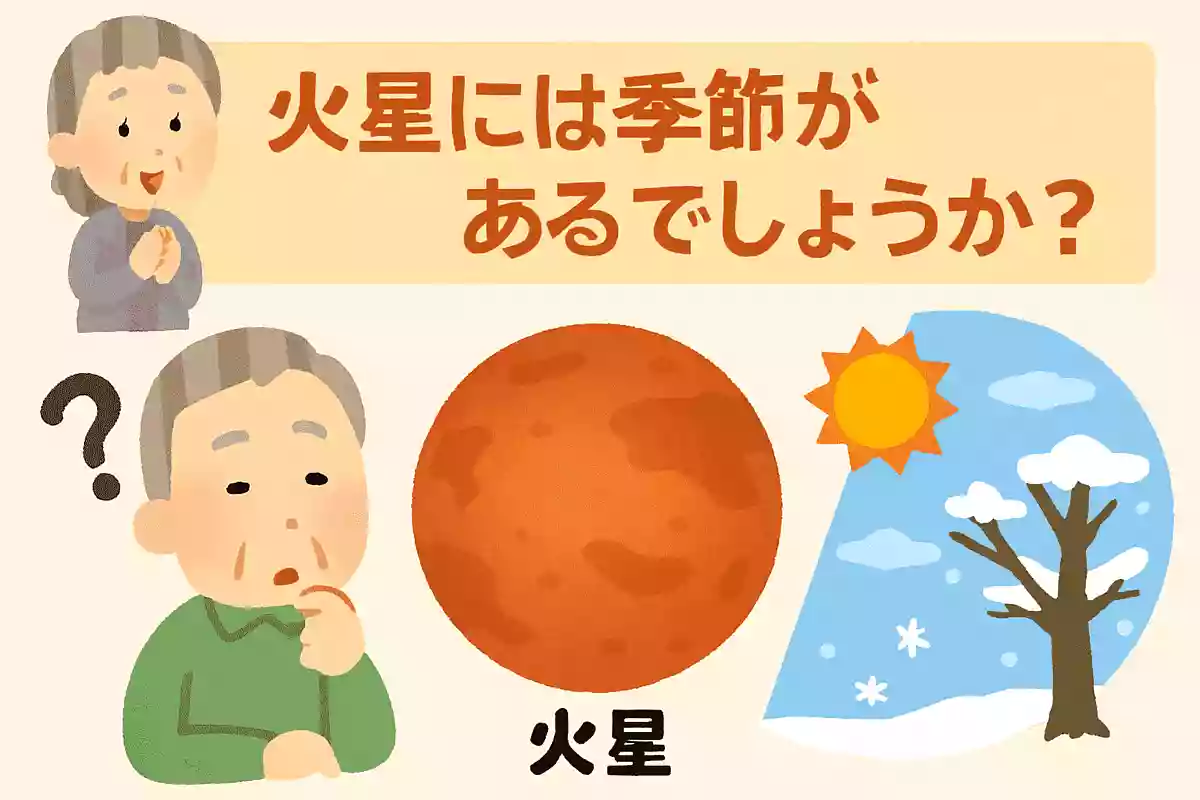
Does Mars have seasons?
- there is / to exist / to have
- not
- changes every year
See the answer
there is / to exist / to have
Mars also has the four seasons—spring, summer, autumn, and winter. Because its axis is tilted, it experiences seasonal changes just like Earth.
What is the Martian atmosphere primarily composed of?
- oxygen
- carbon dioxide
- hydrogen
See the answer
carbon dioxide
The atmosphere of Mars is composed mainly of carbon dioxide. Unlike Earth’s atmosphere, it contains very little oxygen. Therefore, humans cannot breathe on Mars as is. Also, because the atmosphere is very thin, the Martian surface is cold and dry.
What is the name of this mountain on Mars, the highest one with an elevation exceeding 20,000 meters?
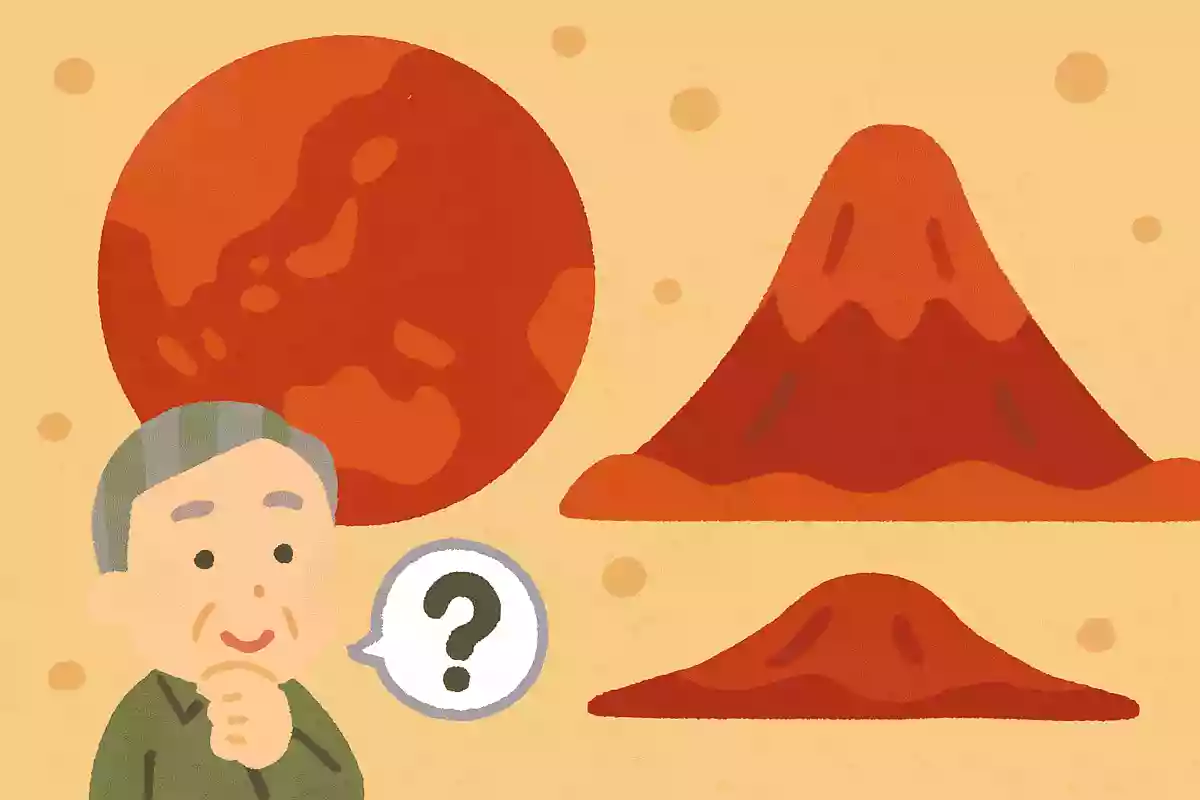
- Mount Everest
- Mount Maxwell
- Mount Olympus
See the answer
Mount Olympus
The highest mountain on Mars is Olympus Mons. Its height is an astonishing approximately 22,000 meters (22 km), about 2.5 times that of Everest, the tallest on Earth! Olympus Mons is also known as the highest mountain in the solar system and has a volcano-like shape. It is believed to have formed through ancient volcanic activity.
About how many Earth days is one Martian year?
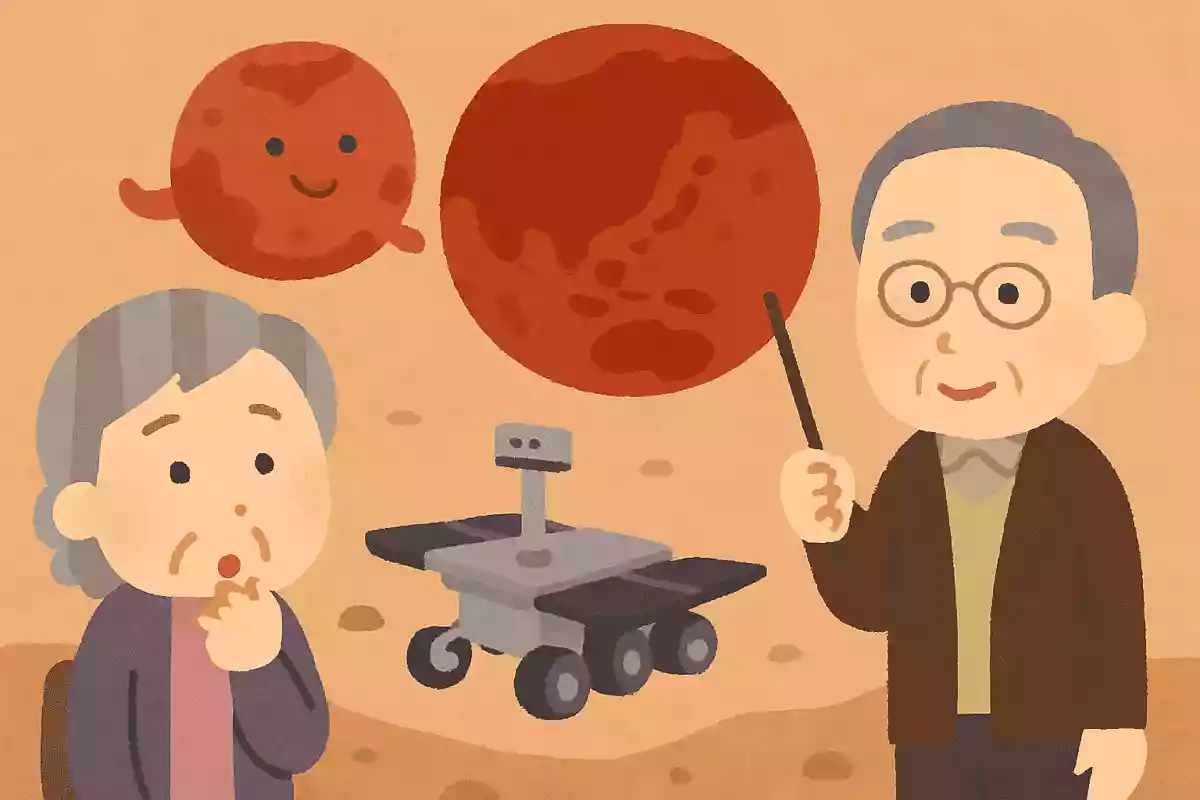
- about 100 days
- about 365 days
- about 687 days
See the answer
about 687 days
A year on Mars (the time it takes to go once around the Sun) is about 687 days. Because Mars is farther from the Sun and takes longer, its year is longer than Earth's.
Why does Mars appear red?
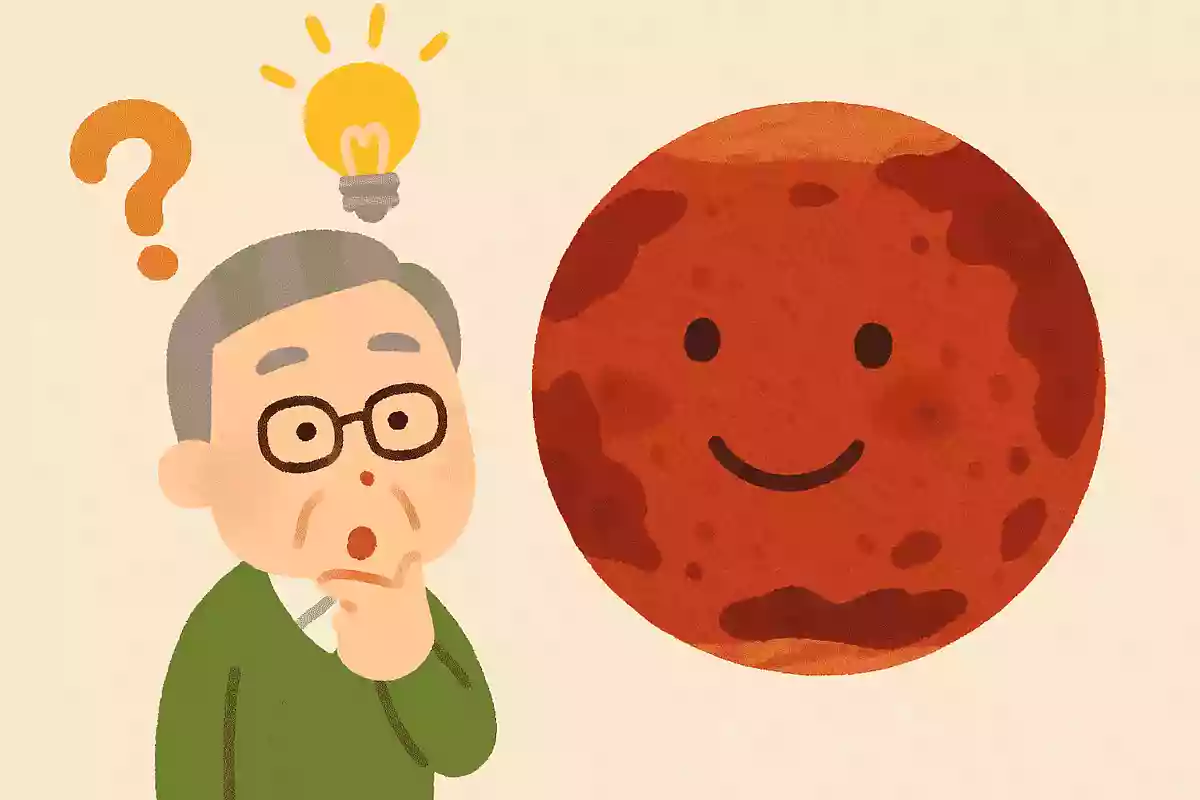
- Because the surface is burning
- optical illusion
- Because the soil is red.
See the answer
Because the soil is red.
The reason Mars looks red is that the soil on its surface is red. Martian soil and rocks contain a lot of iron oxide, which has a reddish color. It’s similar to how rusty iron turns reddish-brown. Because of this red soil, Mars appears to shine red when seen from Earth.