

![[For Seniors] July Trivia Quiz & Fun Facts. Easy and Engaging](https://media.ragnet.co.jp/img/1200__png__https://www.studiorag.com/files/2025/06/da9d92d42e1e3a33dbbab0d87c57d99b.webp)
[For Seniors] July Trivia Quiz & Fun Facts. Easy and Engaging

Trivia quizzes and fun facts are an enjoyable form of recreation for older adults, allowing them to feel the joy of “knowing” and “remembering.” Questions themed around past events or familiar topics naturally spark conversation and help stimulate the brain.
In this article, we carefully select and introduce real examples used in care settings, as well as trivia quizzes and fun-fact questions tailored for seniors.
They require no preparation and are easy to incorporate, making them perfect for daily activities or short breaks.
[For Seniors] July Trivia Quiz & Fun Facts. Easy and Exciting (1–10)
July 7th is Tanabata. Which of the following foods is eaten for the Tanabata festival?
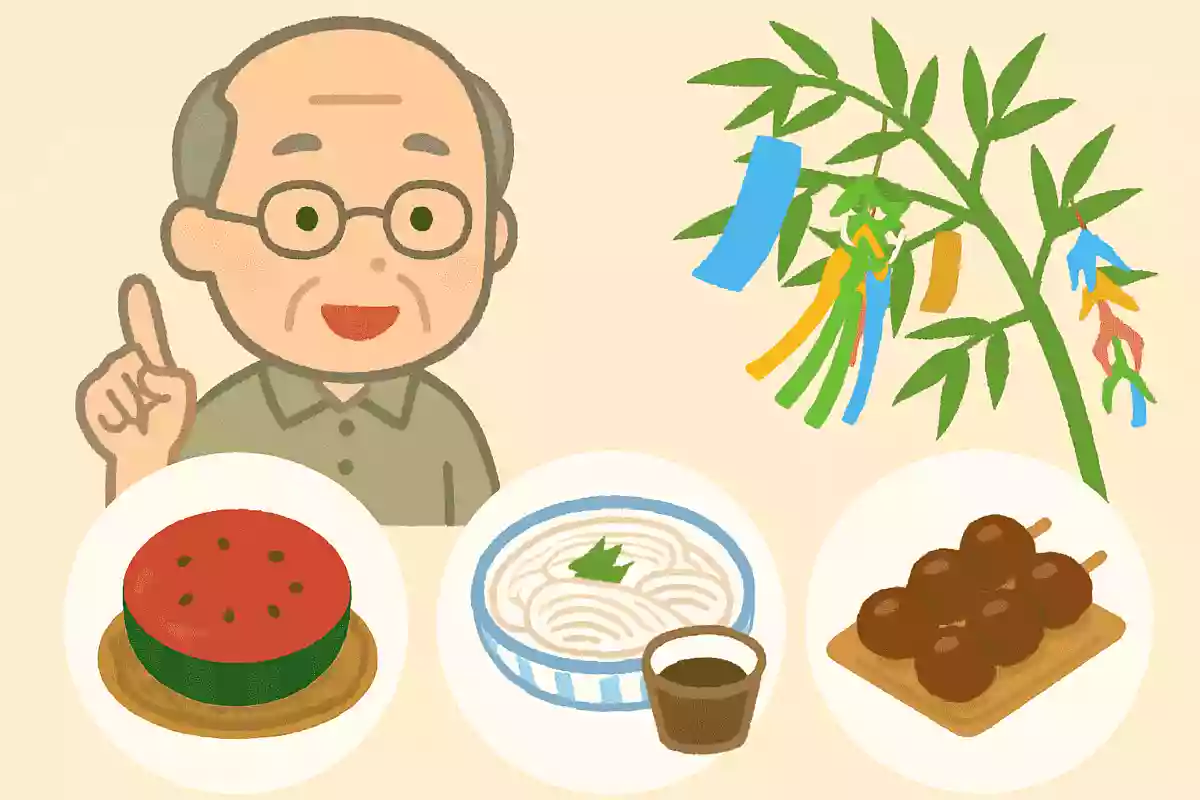
- soba
- somen (thin Japanese wheat noodles)
- udon
See the answer
somen (thin Japanese wheat noodles)
July 7th is Tanabata, a festival inspired by the romantic legend that Orihime and Hikoboshi can meet only once a year at the Milky Way. One of the foods traditionally eaten on this day is somen (thin wheat noodles).

Orihime’s job was weaving. So, what kind of work did Hikoboshi do?
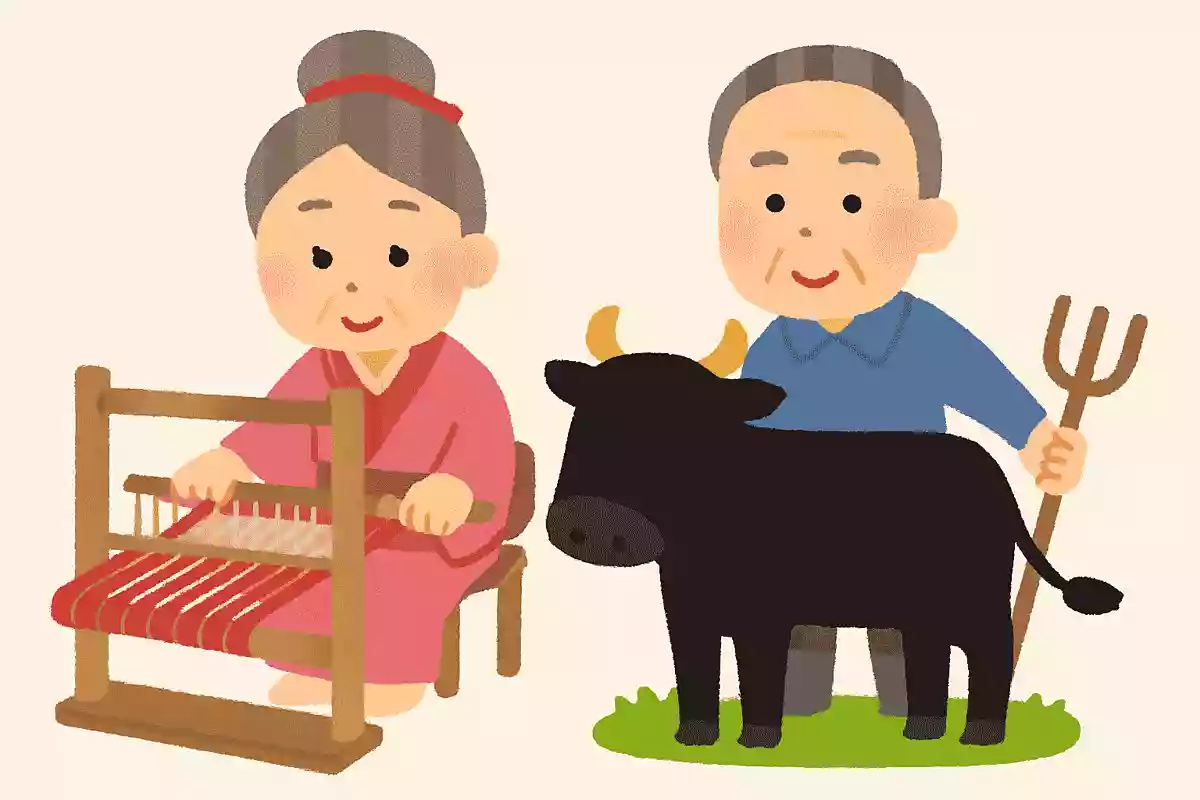
- farm work
- shepherd
- cowherd
See the answer
cowherd
In the legend of Tanabata, Orihime is known for her work as a weaver, while Hikoboshi is said to have worked as a cowherd. This derives from an ancient Chinese myth, in which Orihime is associated with the weaving star (Vega) and Hikoboshi with the cowherd star (Altair).
Speaking of July, it’s Tanabata. So why do we hang tanzaku (wish strips) on bamboo during Tanabata?
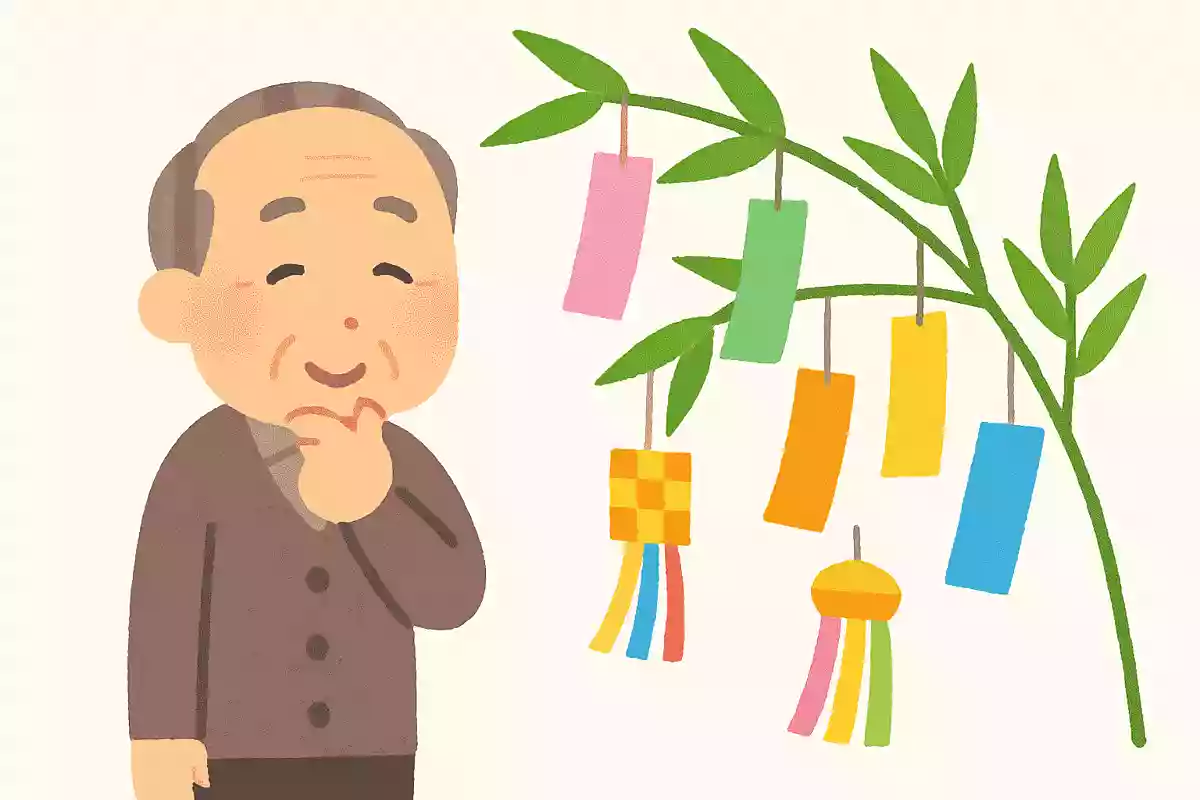
- Because bamboo grass is a familiar plant
- Because bamboo (leaves) can be bought cheaply.
- Because bamboo grass (sasa) was considered sacred
See the answer
Because bamboo grass (sasa) was considered sacred
In the Tanabata festival, people hang tanzaku (paper strips) on bamboo because bamboo has long been regarded as a sacred plant. Since bamboo grows straight upward toward the sky, it holds special meaning as a medium for conveying wishes to the gods.
In July, it becomes possible to climb Mount Fuji. What do you call the day when people are allowed to enter the mountain for the first time that year?

- Opening of the mountain season
- first opening
- First ascent
See the answer
Opening of the mountain season
In July, the climbing season begins on many mountains, including Mount Fuji. During this period, ceremonies and events called “Yama-biraki” (mountain opening) are held, marking the official start date when climbing is permitted. Yama-biraki is a traditional event to pray for safety in the mountains and the well-being of climbers, and it often includes prayers and ceremonies at Shinto shrines.
On July 9th and 10th at Sensō-ji Temple, a hallmark of Asakusa’s summer is sold. What is it?

- mosquito coil
- ground cherry (Japanese lantern plant)
- wind chime
See the answer
ground cherry (Japanese lantern plant)
On July 9 and 10 each year, the Hozuki (Chinese lantern plant) Fair—known as a hallmark of summer—is held at Senso-ji Temple during the festival of Shimanrokusennichi. It is said that offering prayers on these days brings the same merit as praying for 46,000 days (about 126 years), drawing many worshippers to the temple.
The third Monday of July is Marine Day. What is the origin of Marine Day?

- The ship carrying Emperor Meiji safely returned to port.
- It was established as a commemoration day marking the first time sea bathing was held in Japan.
- Established in honor of a traditional festival that prays for abundant fishing catches.
See the answer
The ship carrying Emperor Meiji safely returned to port.
It originates from Emperor Meiji’s 1876 (Meiji 9) imperial tour of the Tohoku region and his safe return to Yokohama Port. This event came to carry symbolic meaning as a day to “give thanks for the blessings of the sea and pray for the prosperity of Japan as a maritime nation,” which later led to the establishment of Marine Day.
What does “Tanabata” refer to?

- loom
- tiller
- washing machine
See the answer
loom
“Tanabata” originally refers to a loom. In ancient Japan, a weaving hut or platform set up in a sacred place was called “tanabata” (literally, ‘shelf loom’), where a weaving maiden (a woman who wove) would weave cloth to offer to the gods.