

[For seniors] Nagasaki Prefecture local quiz: from famous sightseeing spots and local cuisine to classic confections

We’ve gathered local quizzes for seniors that let you enjoy a sense of travel while having fun exercising your brain! This time, the theme is Nagasaki Prefecture, rich in history and exotic atmosphere.
We’ve prepared a wealth of uniquely Nagasaki questions, from famous sightseeing spots and distinctive customs to mouthwatering local cuisine.
These questions, which seem familiar yet surprisingly tricky, will make you want to share them with someone.
They’re perfect for recreational activities at senior facilities, so please join in together, get lively, and enjoy the challenge!
- [Local Quiz for Seniors] Rediscover the Charms of Nagano! Introducing Famous Tourist Spots and Delicious Local Specialties
- [For Seniors] Rediscover the Charm! Local Quiz of Kagoshima Prefecture
- [Local Quiz from Fukuoka Prefecture] Introduced for seniors!
- [For Seniors] How many can you answer? Introducing a local quiz about Shizuoka Prefecture
- [Local Quiz for Seniors] A Collection of Quizzes Showcasing the Charms of Aomori Prefecture
- [For Seniors] Hiroshima Prefecture Local Quiz: A collection of questions packed with regional charm, from tourist attractions to famous local foods.
- [Miyazaki Prefecture Local Quiz for Seniors] Easy and Fun Questions
- For Seniors: Shiga Prefecture Local Quiz – Learn About Famous Tourist Spots and Regional Cuisine
- [For Seniors] Niigata Prefecture Local Quiz Collection
- [Hyogo Prefecture Local Quiz] Introducing questions for seniors!
- [For Seniors] Introducing Local Quizzes from Mie Prefecture!
- For Seniors: Local Quizzes of Osaka Prefecture, from Famous Tourist Spots to Food
- [For Seniors] Enjoyable Brain Training! Liven Up with a Local Three-Choice Quiz
[For Seniors] Nagasaki Prefecture Local Quiz: From Famous Tourist Spots and Local Cuisine to Classic Confections (1–10)
Which unique custom do the people of Nagasaki Prefecture perform during Obon to welcome the deceased?

- Float paper lanterns on the sea
- set off fireworks and firecrackers
- Dance the Bon Odori until morning
See the answer
set off fireworks and firecrackers
During Obon in Nagasaki Prefecture—especially during the Shōrō-nagashi (Spirit Boat Procession)—there is a distinctive custom of setting off large amounts of fireworks and firecrackers to send off the deceased in a splendid manner. Influenced by Chinese culture, this practice carries the meaning of warding off evil spirits with the loud sounds of the firecrackers and ensuring that the departed can make their way to the afterlife without losing their way.

At Nagasaki Bio Park in Saikai City, Nagasaki Prefecture, you can see a certain animal taking a bath in winter. What animal is it?

- Capybara
- penguin
- Kangaroo
See the answer
Capybara
At Nagasaki Bio Park in Saikai City, Nagasaki Prefecture, the “capybara open-air bath” is a well-known winter tradition. Native to South America and living in warm waters, capybaras are not fond of the cold, so when the keepers prepared a hot bath for them, they began to soak in it with obvious pleasure. Nowadays, seasonal baths such as yuzu and zabon (pomelo) are also provided, and the adorable sight of the capybaras narrowing their eyes and relaxing in the warmth soothes the hearts of many visitors.
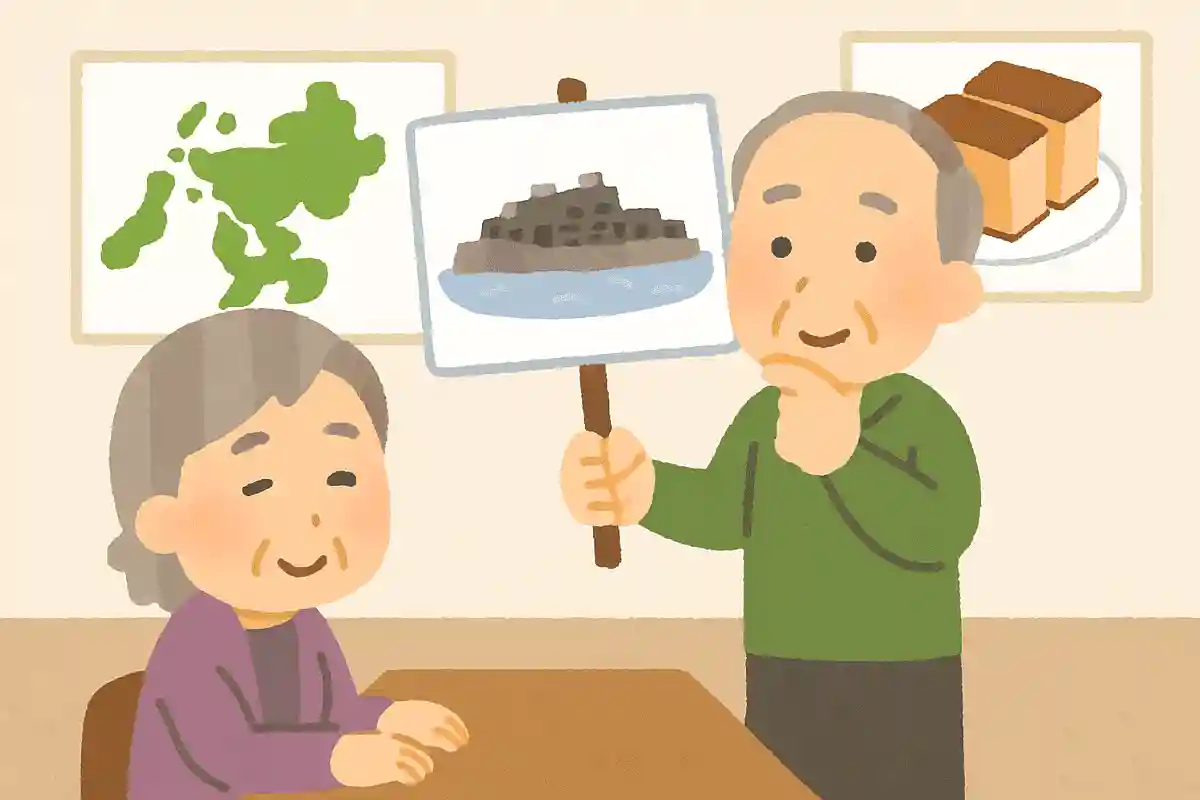
What is the official name of “Gunkanjima” located in Nagasaki City, Nagasaki Prefecture?
- Ikeshima
- Hashima
- Takashima
See the answer
Hashima
The official name of Gunkanjima is Hashima. It came to be called “Gunkanjima” (Battleship Island) because its appearance from the sea resembled the Imperial Japanese Navy battleship Tosa. Once prosperous thanks to its undersea coal mines, it was an important site that supported Japan’s modernization. At its peak, it boasted a population density more than nine times that of Tokyo’s 23 wards at the time, but as the primary energy source shifted from coal to oil, the mine was closed in 1974 and the island became uninhabited. Today, it is inscribed as a UNESCO World Cultural Heritage site and attracts many visitors as a tourist destination.
[For Seniors] Nagasaki Prefecture Local Quiz: From Famous Tourist Spots and Local Cuisine to Classic Confectioneries (11–20)
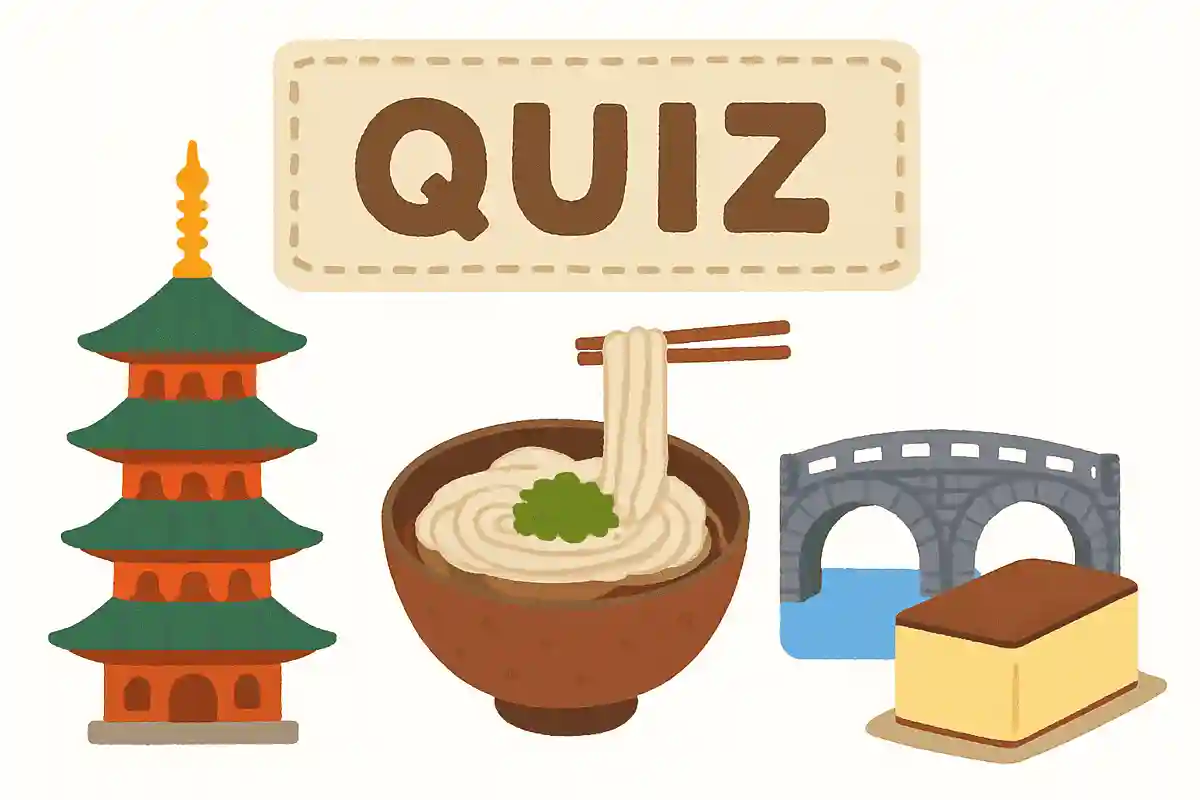
What is the name of the traditional dish from Nagasaki Prefecture that is eaten with noodles made from sweet potato flour and yam in a soy sauce-based broth?
- Rokubei
- Goto udon
- Guzōni (ingredient-rich zoni soup)
See the answer
Rokubei
Rokubei, or Rokubee, is a traditional local dish that has long been passed down on the Shimabara Peninsula in Nagasaki Prefecture. It is said to have been devised by a man named “Rokubei” during a severe food shortage in the Edo period. Its hallmark is kneading powdered sweet potatoes with grated yam, then pressing the dough through a special perforated board called a “Rokubei-oroshi” into boiling water to cook it into noodle-like strands. The natural sweetness of the sweet potatoes pairs well with a warm broth seasoned with soy sauce and flying-fish (ago) dashi. With its smooth texture and easy digestibility, it is a gentle, easy-to-eat dish.
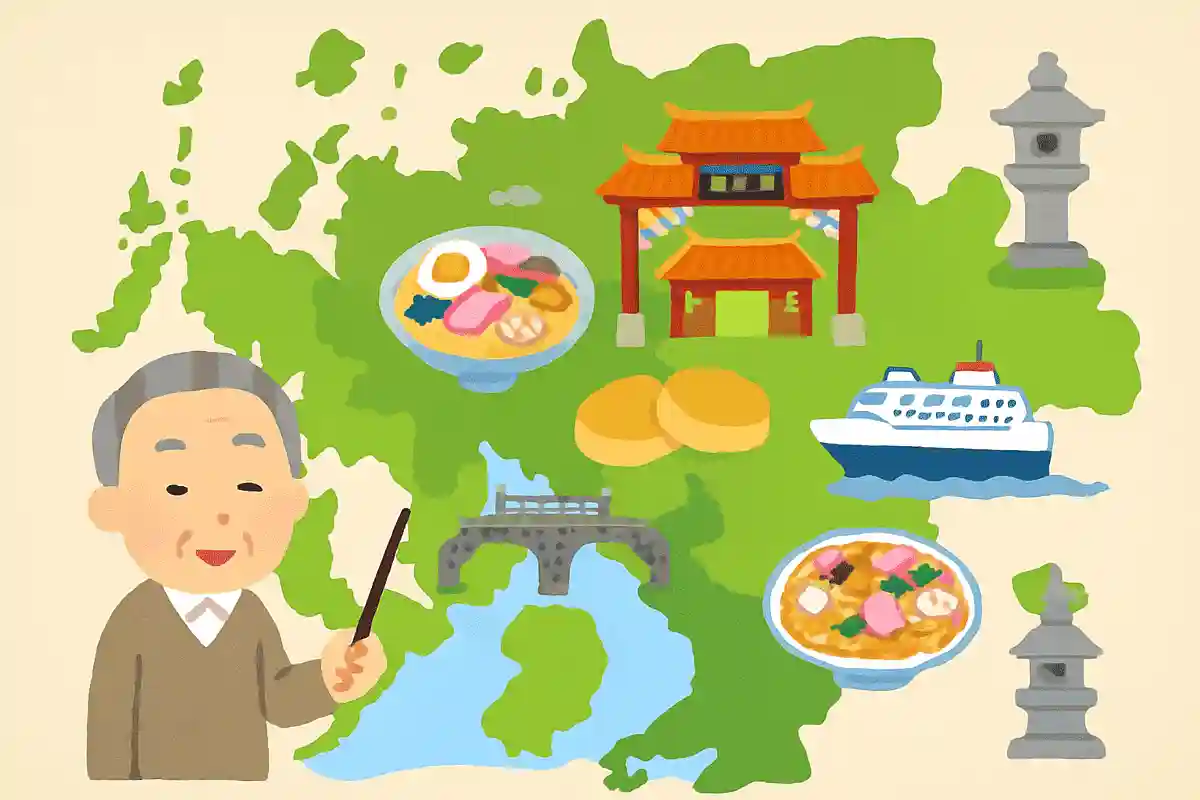
In which city or municipality is Nagasaki Shinchi Chinatown located?
- Nagasaki City
- Sasebo City
- Isahaya City
See the answer
Nagasaki City
Nagasaki Shinchi Chinatown is located in Nagasaki City and is known as one of Japan’s three major Chinatowns, alongside Yokohama and Kobe. It is said to have originated in the mid-Edo period, when land was reclaimed from the sea to create “Shinchi,” an area for storing imported goods from China. Even today, vibrant Chinese gates stand at the north, south, east, and west entrances, and the district is loved by locals and tourists alike as a popular sightseeing spot where you can enjoy delicious Chinese cuisine such as Nagasaki specialties like champon, sara udon, and kakuni manju.
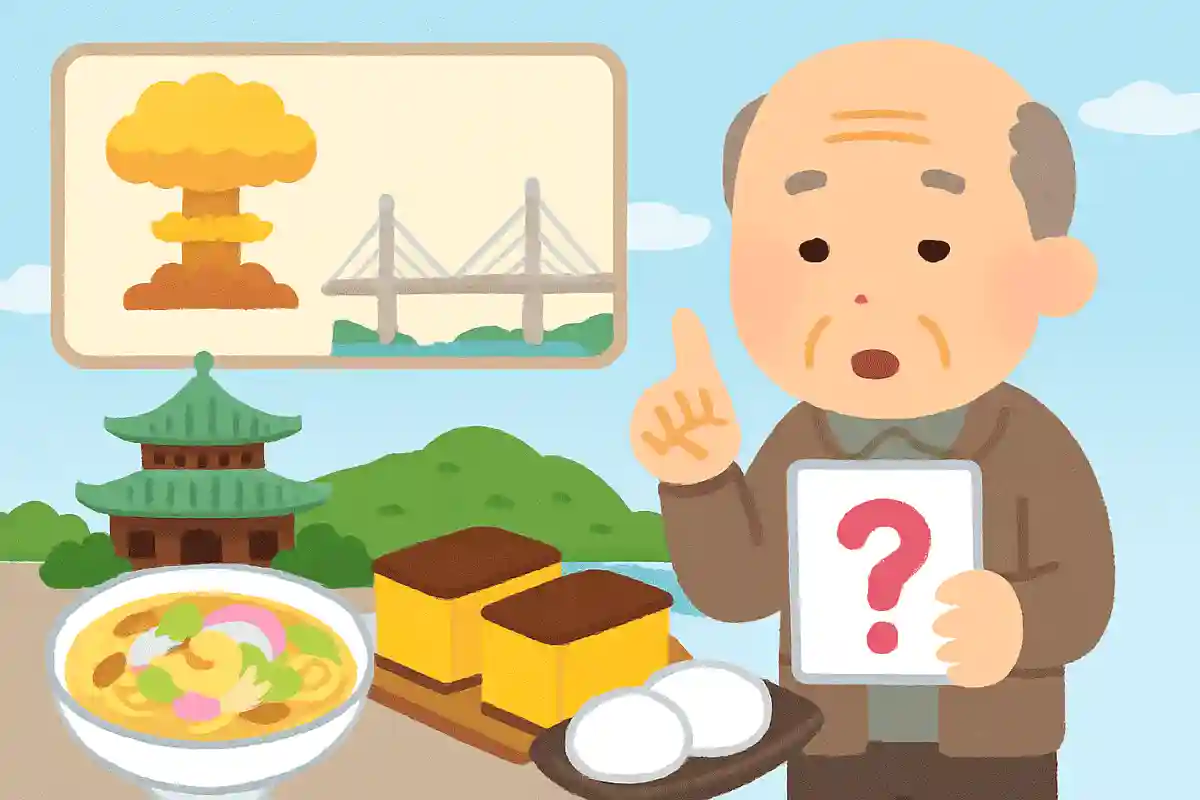
When was the atomic bomb dropped on Nagasaki Prefecture?
- August 6, 1945
- August 9, 1945
- August 15, 1945
See the answer
August 9, 1945
At 11:02 a.m. on August 9, 1945, following Hiroshima, an atomic bomb—the plutonium-type bomb “Fat Man”—was dropped on the city of Nagasaki. This single bomb killed or injured about 150,000 people, roughly half of Nagasaki’s population at the time, and caused devastating damage to much of the city. Every year on this day, Nagasaki holds a Peace Memorial Ceremony to console the souls of the atomic bomb victims and to continue appealing to the world for the abolition of nuclear weapons and the realization of lasting global peace.
What kind of fish is used in Nagasaki Prefecture’s “white tekka-maki”?
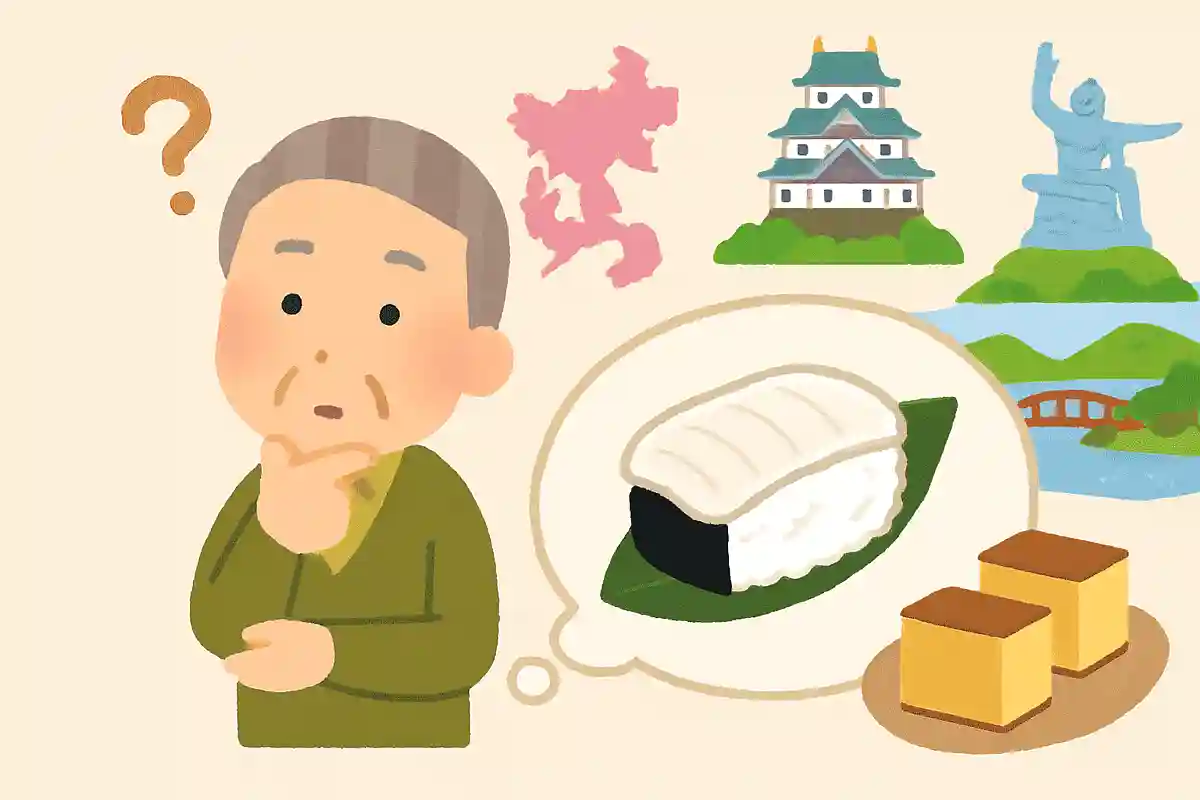
- Hirasu
- Thailand
- squid
See the answer
Hirasu
When people think of a typical tekka-maki, they usually picture rolls made with lean tuna, but in Nagasaki Prefecture, “white tekka-maki” is widely enjoyed. This white tekka-maki uses fresh white-fleshed fish such as amberjack. With one of the largest fish catches in Japan, Nagasaki has abundant delicious local fish, and a unique culture took root of making tekka-maki with more familiar white fish rather than tuna. It’s known for its clean, refined flavor and the pleasantly firm texture that only truly fresh fish can offer—a beloved local taste cherished by residents for many years.