

Words useful for conversations with elderly people. Words that were used in the past.

Nostalgic old expressions are filled with the scenery and warmth of their time.
When you weave them into conversation, the atmosphere naturally softens and you may feel closer to the other person.
For example, words like “oaiso” or “ikishina.”
Using words we don’t usually use can feel fresh to younger generations and let us share a sense of nostalgia with older people.
This time, we’ll introduce words that were used in the past and can help when talking with seniors.
Some terms may feel unfamiliar, but why not give them a try to brighten the mood and foster communication?
- Things that have changed between the past and now. Is it really this different?
- Introducing words that will delight elderly people
- Introducing old-fashioned words that are useful for conversations with elderly people!
- [For Seniors] Uplifting Words That Comfort the Heart
- For seniors: Fun shiritori—enjoyable and easy to play
- [For Seniors] Lively Wordplay Game: Fun Recreation for Elderly Care
- Fun, engaging topics for conversations with older adults!
- [For Seniors] Nostalgic! Showa-Era Quizzes Recommended for Reminiscence Therapy
- Conversations Made Easy! A Collection of Topics That Elderly People Enjoy
- [For Seniors] Enjoyable Brain Training! Proverb Quiz Collection
- [For Older Adults] Games to Enhance Oral Function: Enjoyable and Easy to Do
- [For Seniors] Fun and Exciting! Difficult Kanji Quiz
- [For Seniors] That phrase too! A fun 3-choice abbreviation quiz
Useful phrases for conversations with elderly people. Words that were used in the past (11–20)
highbrow; stylish; fashionable; trendy
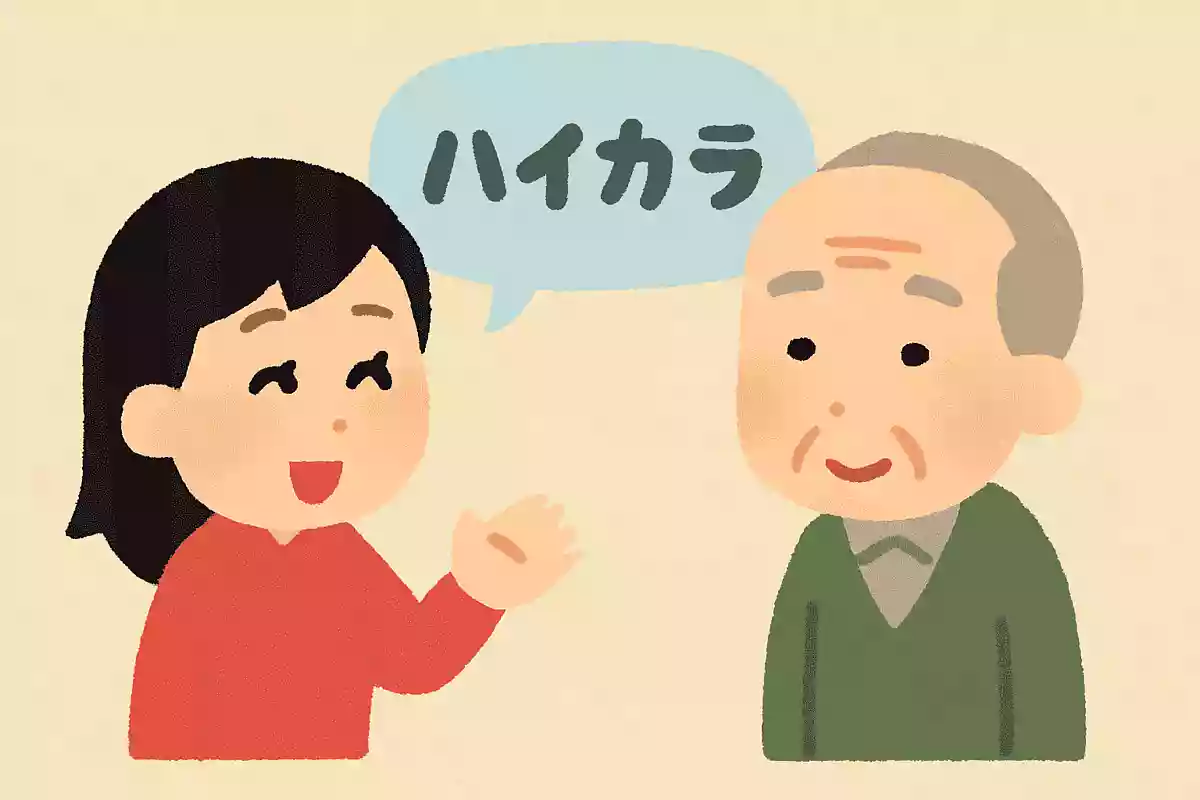
The word “haikara” began to be used in the Meiji era, and at the time it referred to Western-style attire, lifestyles, and people.
It’s said to have become a buzzword and taken root after being used by Anjirō Ishikawa, who was then the editor-in-chief of the Tokyo Mainichi Newspaper.
Today, it’s often used to mean someone who is fashionable and new—stylish and on the cutting edge of the times.
You’ll likely hear the term come up often in everyday conversations with older adults, so it’s definitely a word worth remembering.

In conclusion
By incorporating words that were used in the past into your conversations, you can enjoy moments that feel nostalgic and warm. Did you find any words you’d like to try using? Depending on your generation, some might have felt familiar while others were completely new. Even introducing a few little by little can spark communication across generations. Give it a try!