

Recommended for brain training: a proverb quiz using a whiteboard

Proverbs are something we often hear in everyday life.
For older adults, a proverb quiz using a whiteboard is recommended.
Write the questions on the whiteboard and work together to discuss and figure out the answers.
Thinking stimulates the brain and helps prevent dementia.
A key point for running a proverb quiz is to divide the questions by category, such as animals, which makes it easier for everyone to understand.
I hope this article serves as a helpful reference for your proverb quiz activities.
- [For Seniors] Fun Brain Training! Lively Whiteboard Activities
- [For Seniors] Proverb Quiz with Animal Names
- [For Seniors] Brain Training with a Whiteboard! Fill-in-the-Blank Exercises & Quizzes
- [For Seniors] Brain-Training Recreation Using a Whiteboard
- [For Seniors] Today’s recommended quiz. Daily brain-training quiz!
- [For Seniors] Fun Brain Training! Prefecture Quiz
- [For Seniors] Test Your Memory!? Ideas for Whiteboard Games
- [For Seniors] Think and Have Fun: Introducing Brain-Stimulating Logic Puzzles
- [For Seniors] Fun Riddles That Stimulate the Brain
- [For Seniors] Brain Training! Recall Quiz Collection!
- [For Seniors] Popular Brain Training and Recreational Quizzes
- [For Seniors] Lively Wordplay Game: Fun Recreation for Elderly Care
- Hand games that liven things up for seniors—also great brain training
Recommended for brain training. Proverb quiz using a whiteboard (1–10)
Unrequited Love of Iso no 〇〇〇

This is a proverb used to express unrequited love—when only one person has feelings and the other does not.
If you think of different creatures that live on rocky shores, you’ll gradually get closer to the answer.
Asking people to picture what lives on the shore and giving the big hint of “a shell” makes it easier to understand.
The answer is “abalone.” Although it’s a type of gastropod, it looks like one half of a bivalve, which gave rise to a stylish way of saying “unrequited love.”

A kite gives birth to 〇〇.
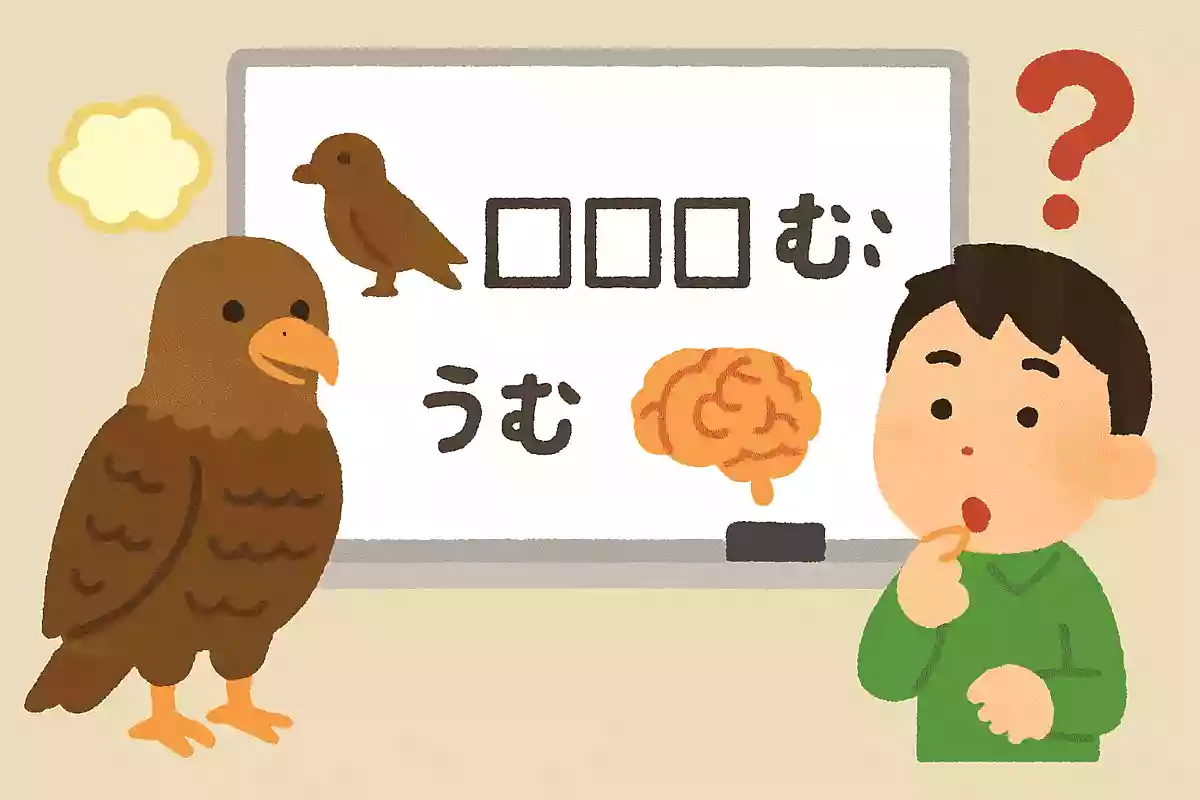
This is a proverb used as a metaphor for an excellent child being born to ordinary parents.
Since it mentions “being born,” it seems helpful to offer hints that narrow it down step by step: it’s an animal, it’s a kind of bird, it’s a bird similar to a kite.
Let’s guide people closer to the answer with progressively specific hints.
The answer is “hawk.” Hawks often fly high in the sky and are not frequently seen up close, and because they share sharp talons and beaks, some people might mistakenly think they’re the same bird.
Plum blossoms with 〇〇〇〇

This is a phrase used as a metaphor for things that are well-matched or beautifully harmonious.
Let’s think about what appears in plum-blossom season, or what looks beautiful when placed near plum blossoms.
Clear hints include a bird flying toward the plum tree and a vivid green that stands out against the pink of the plum blossoms.
The answer is “uguisu” (Japanese bush warbler).
It’s also interesting that there are many other expressions for beautiful seasonal scenes or harmony, such as “crane with pine,” “deer with autumn leaves,” and “butterfly with peony.”
Recommended for brain training: Proverb quiz using a whiteboard (11–20)
Even a [fool/idiot] can be swept away by the river
![Even a [fool/idiot] can be swept away by the river](https://media.ragnet.co.jp/img/1200__png__/files/2025/05/3aa0ed7d800a0760416ff83ed9b82bb5.webp)
This is a proverb used as an example that even a master in a field can sometimes fail.
It’s also used as a cautionary reminder that you might fail at something you’re good at if you let your guard down.
Given the situation of being swept away by a river, it’s easy to imagine applying it to someone who is usually good at swimming.
The answer is “kappa,” and other expressions that convey a master’s mistake include “Even monkeys fall from trees” and “Even Kobo makes mistakes with the brush,” so it’s a good idea to learn these as well.
A dip in 〇〇〇

It’s a phrase often used with a touch of irony to describe taking very short baths.
It refers to a creature that doesn’t spend much time bathing, but if you haven’t seen it yourself, it might not come to mind.
Hints: it’s an animal with a strong “dirty” image and a bird that lives close to us.
The answer is “crow.” Interestingly, crows are actually quite fastidious and bathe in water multiple times a day—a point worth remembering.
It’s not that their bathing is sloppy; rather, they repeatedly take quick dips, which is pretty amusing.
This lasts a thousand years, and that lasts ten thousand years.
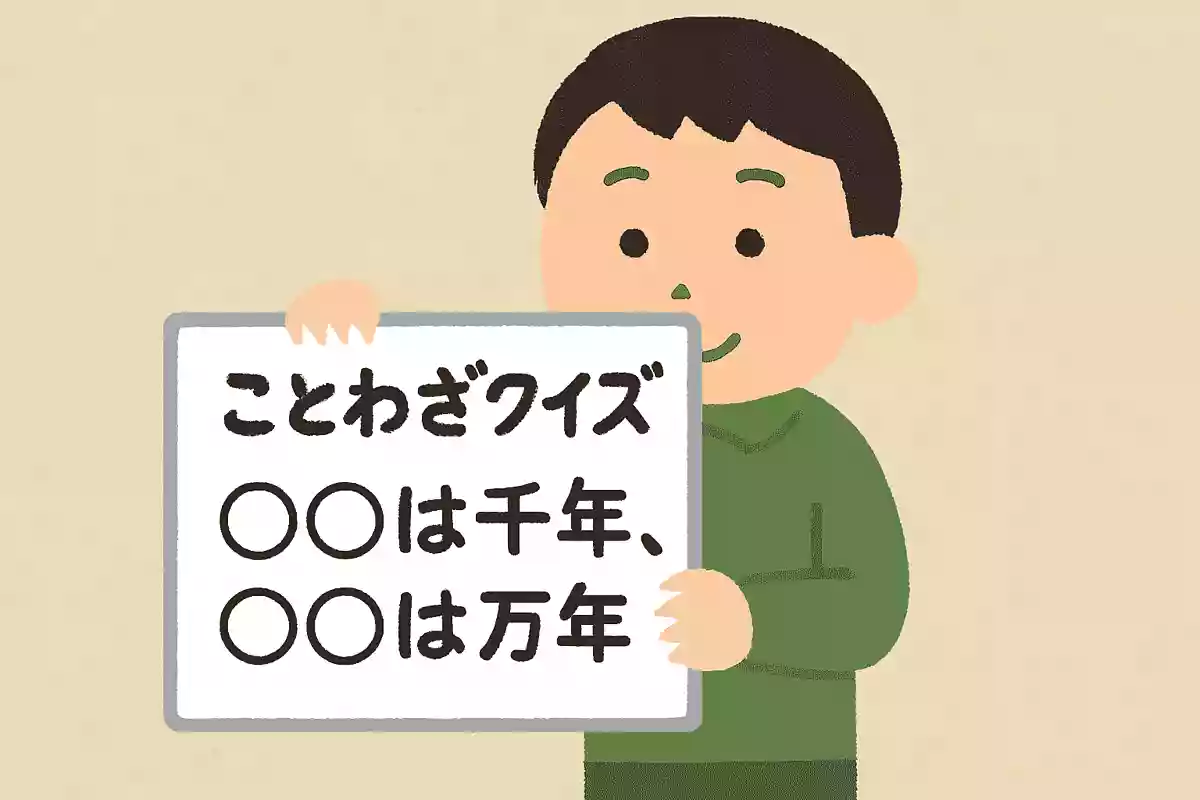
These words are used as examples of longevity and good fortune, and if you picture the classic motifs that symbolize long life, you’ll likely arrive at the answer quickly.
It’s also interesting to consider not only motifs of longevity but also creatures known for long lifespans.
If you go looking for beings that live 1,000 or 10,000 years, you won’t find them, so it’s important to note that such lifespans are described in mythology.
The answer is “cranes” and “turtles,” animals used in many contexts as symbols of longevity and auspicious motifs.
Even a small 〇〇 has a spirit of its own (literally: Even in an inch of 〇〇, there is a half-inch soul).
This is a phrase used as an example to show that no matter how weak something may be, it has its own pride and way of thinking, and shouldn’t be underestimated.
If you think about small things that we don’t usually pay much attention to in daily life, you might get closer to the answer.
One sun is about three centimeters, but that’s a figurative expression of smallness rather than an actual size—another hint.
The answer is “insect.” It’s a phrase that carries the lesson that even the smallest living creature has a life of its own and should not be treated carelessly.