

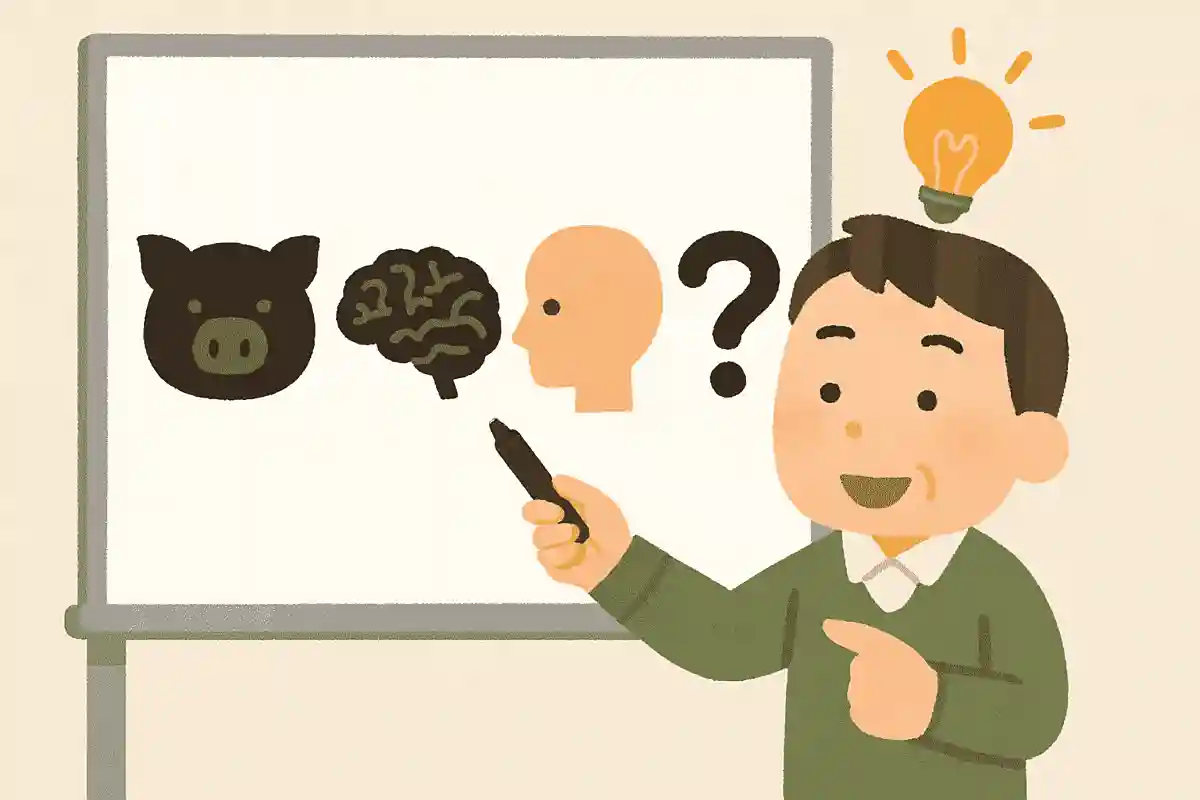
Recommended for brain training: a proverb quiz using a whiteboard

Proverbs are something we often hear in everyday life.
For older adults, a proverb quiz using a whiteboard is recommended.
Write the questions on the whiteboard and work together to discuss and figure out the answers.
Thinking stimulates the brain and helps prevent dementia.
A key point for running a proverb quiz is to divide the questions by category, such as animals, which makes it easier for everyone to understand.
I hope this article serves as a helpful reference for your proverb quiz activities.
Recommended for brain training. Proverb quiz using a whiteboard (1–10)
Even a blockhead becomes respectable through faith.
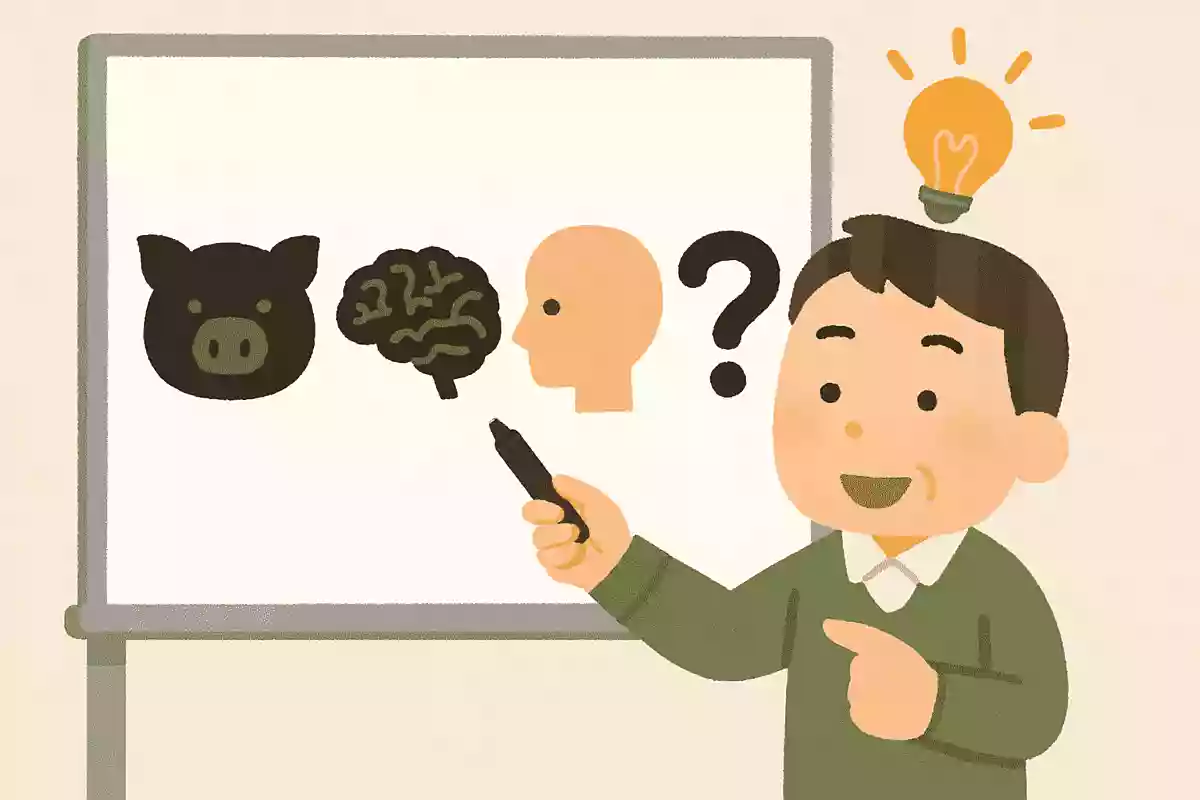
It’s an expression meaning that even something trivial is appreciated by those who believe in it.
It’s also used to tease or be sarcastic toward people who stubbornly believe in a single thing.
It applies to customs involving head adornments, and Setsubun might be a big hint.
The answer is “sardine” (iwashi), said to derive from the “holly-sardine” decoration (hiiragi-iwashi) displayed during Setsubun.
Since “iwashi” often appears to mean something trivial or insignificant, it could be fun to learn other proverbs that use sardines as well.

like 〇〇 looks totally startled (as if shot with a peashooter)
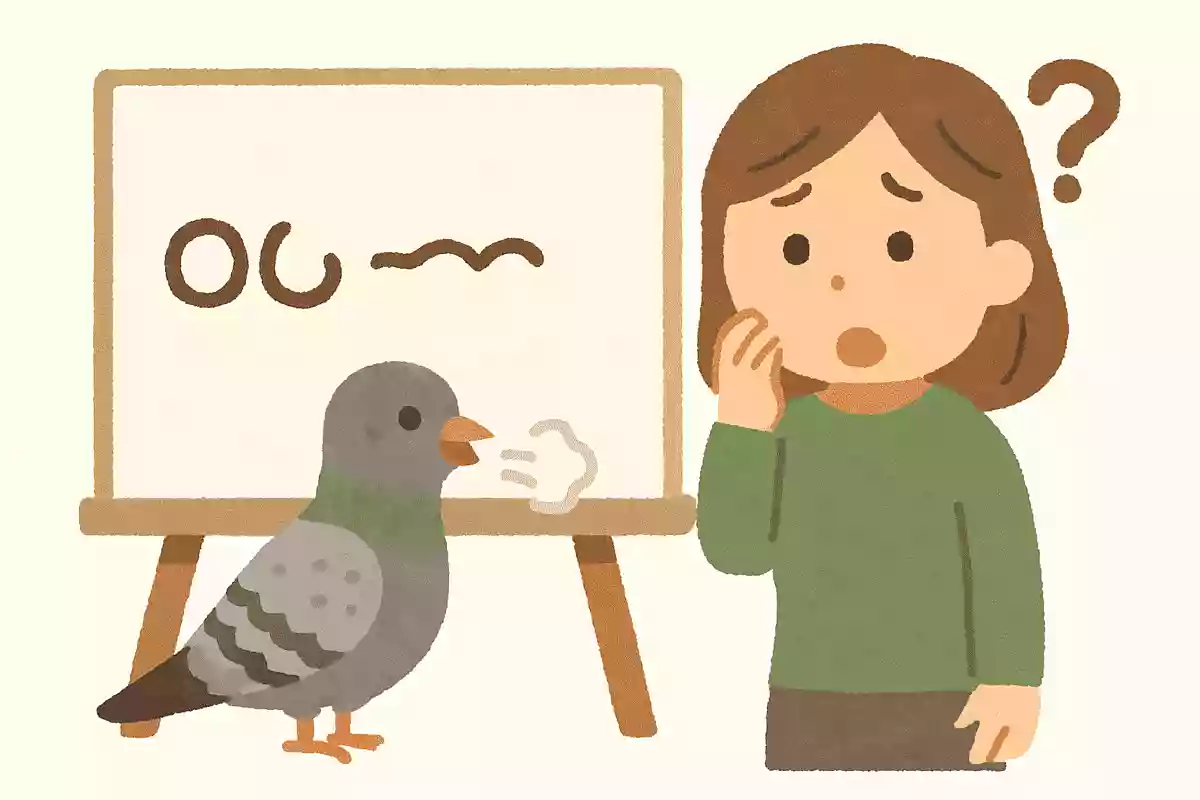
This phrase describes being stunned in surprise, with eyes wide open.
If you think of a funny-looking animal with a surprised expression, it might help you picture it and make the discussion more lively.
The word “mame-deppō” (pea-shooter) is also important; considering animals that eat beans makes it easier to grasp.
The answer is “pigeon,” and the sight of a pigeon freezing in surprise is enough to make you burst out laughing.
It could be interesting to compare it with various other expressions of surprise, too.
to catch a sea bream with 〇〇
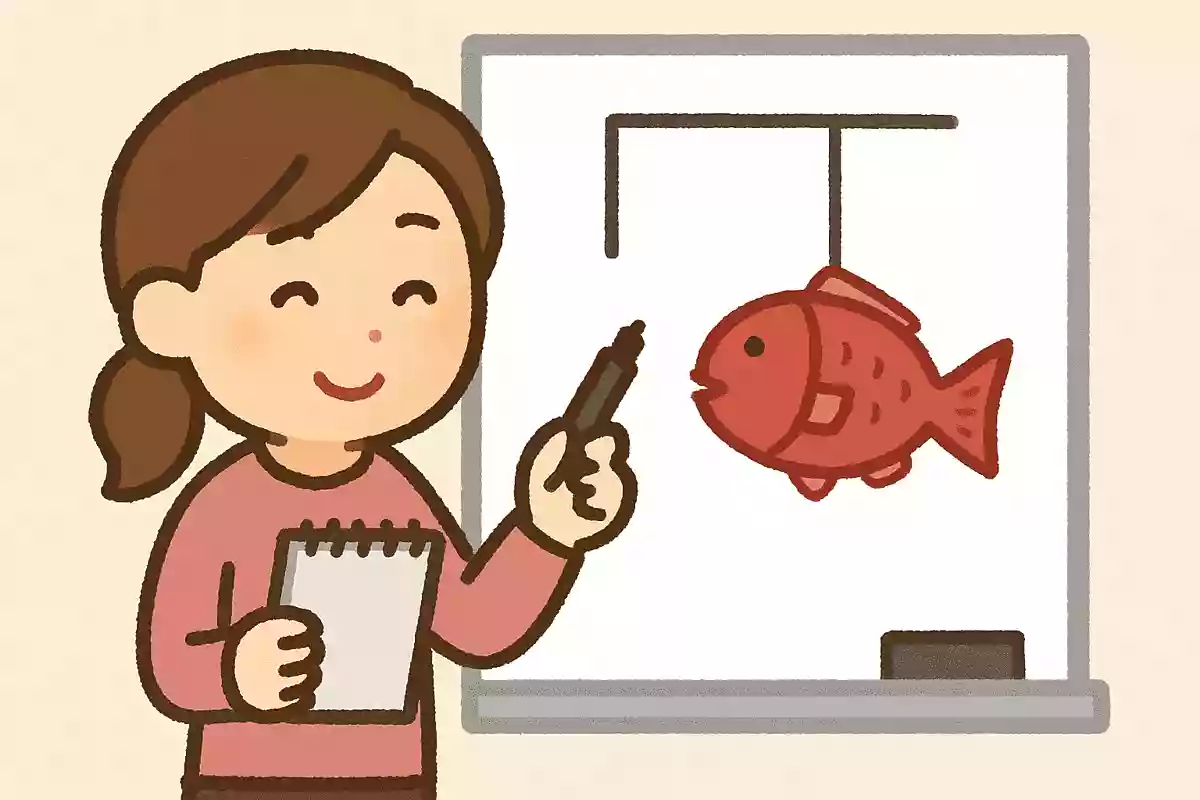
This is a proverb used to describe gaining great profit with little capital or effort.
Since sea bream (tai) is considered high-end, it’s easiest to think of something more accessible or smaller than that.
If you give hints like a small sea creature that can be used as fishing bait and appears alongside sea bream at the dining table, people should reach the answer.
The answer is “shrimp” (ebi).
Similar expressions include “nurete de awa” (literally, ‘millet on wet hands,’ meaning effortless gain) and “mugimeshi de tai o tsuru” (‘catching sea bream with barley rice’).
Casting pearls before swine

This is a proverb used to say that no matter how splendid something is, it has no value to someone who doesn’t understand it.
From the meaning of the proverb, let’s think of something that doesn’t recognize the value of a koban (an old Japanese gold coin).
With hints like “a familiar animal” and “often used as a motif for figurines,” you can probably arrive at the answer.
The answer is ‘cat.’ Many people may also recall the image of a maneki-neko holding a koban, remembered as a good-luck charm.
step on the tail of 〇〇
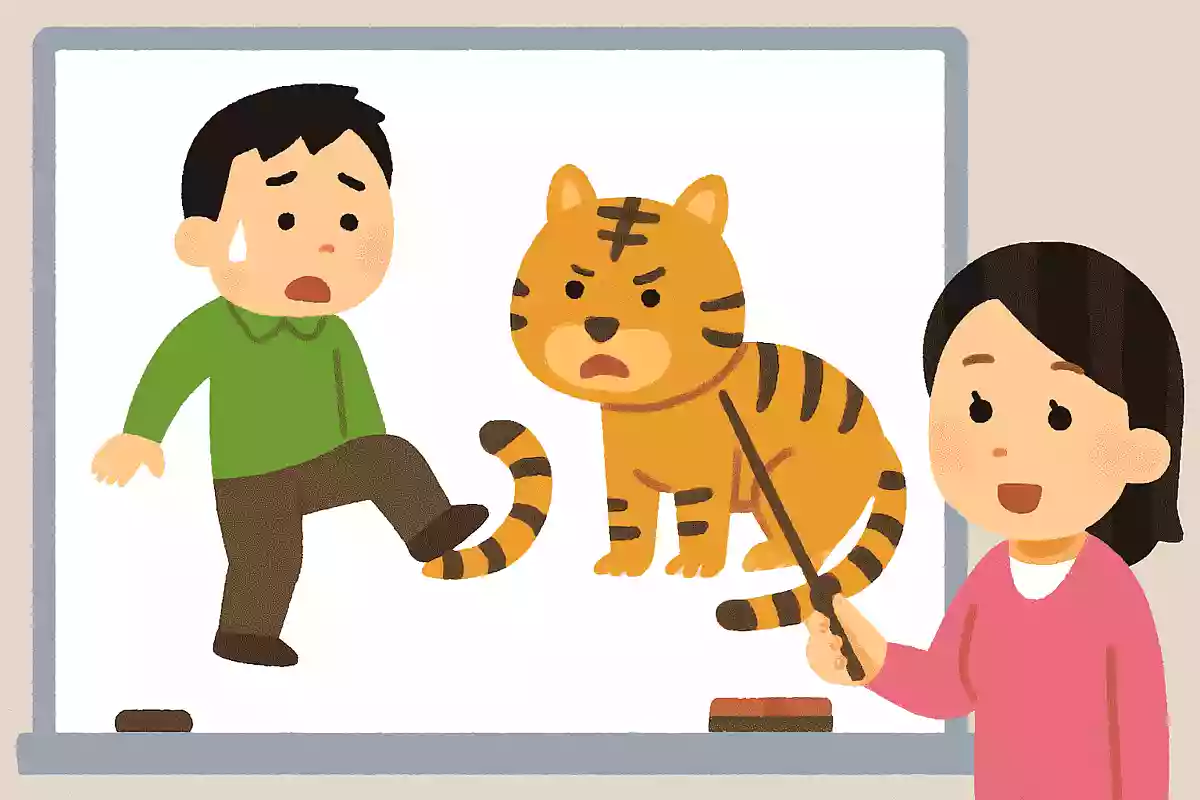
This is a proverb used as a metaphor for doing something extremely dangerous.
Stepping on a tail might evoke a sense of pity, but the hint may be that the crisis is so serious it makes you forget that feeling.
If you imagine a dangerous animal and substitute it in, you can arrive at the answer.
The answer is “tiger,” and sayings like “to put your hand in a tiger’s mouth” or “to touch someone’s sore spot” (literally, “to touch the imperial wrath”) are similar proverbs.
It could also be fun to ask, with anecdotes, which animals each person considers dangerous and why.
Even 〇〇 will run into a stick if it walks (i.e., if 〇〇 moves around, it will encounter unexpected trouble).
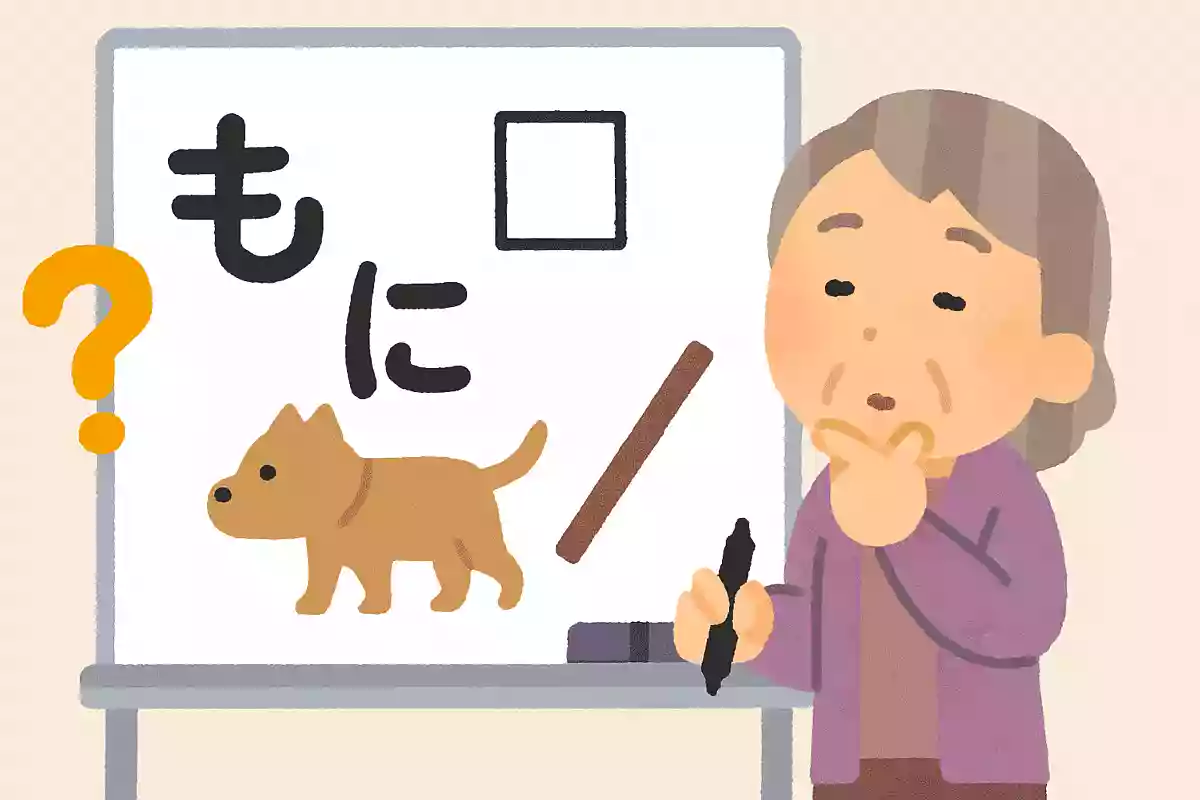
This is a proverb used both as a metaphor for how trying to do something can lead to misfortune, and for how going out and about can bring unexpected good luck.
The interesting point is that it’s used in both the negative and positive senses.
Hints include that it involves an animal—specifically one known for needing walks and being associated with walking.
The answer is “dog”; the proverb evokes the image of a cute dog getting distracted, bumping into a stick with a thud, and panicking.
(It’s the saying about a dog and a stick.)
Those who chase small gains fail to see the bigger picture.
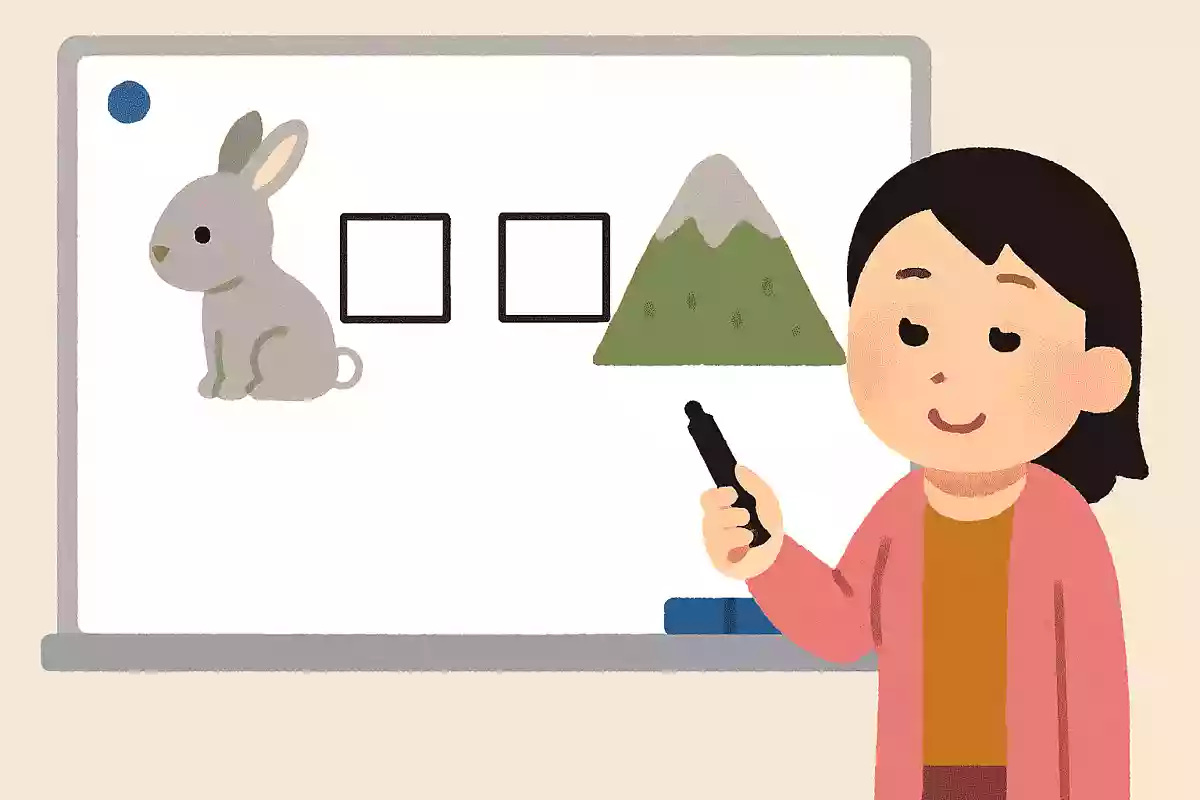
This is a phrase used to admonish someone for focusing only on what’s right in front of them and not looking around.
Imagine a situation where you’re in the mountains but not paying attention to your surroundings, and work toward the answer from there.
If you give hints like an animal that lives in the mountains and a classic target of hunting, you can probably arrive at the answer.
The answer is “deer.” The expression comes from getting so absorbed in chasing deer that you fail to notice the rugged mountains and end up in danger.
A similar expression in meaning would be “can’t see the forest for the trees.”