

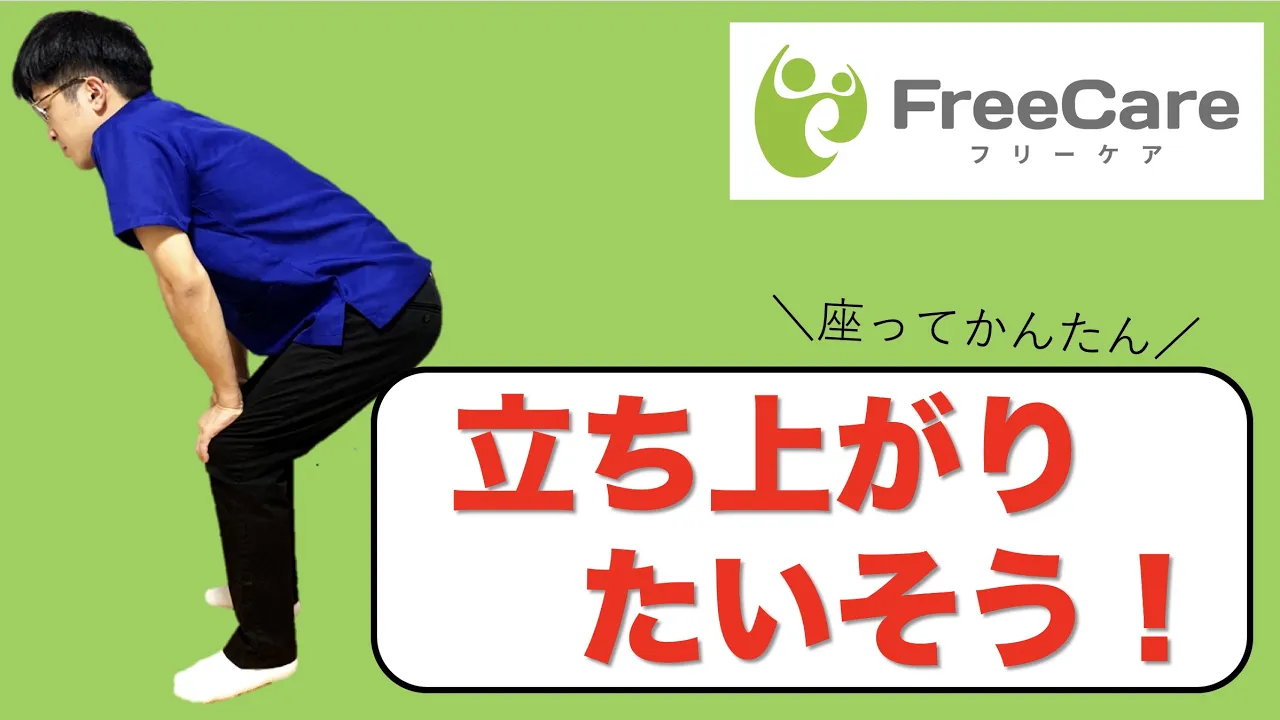

Standing up is an essential movement in many aspects of daily life.
Whether it’s standing from a chair, getting up from the floor, using the toilet, or getting ready to go out, each of these ordinary actions involves standing up.
That’s why it’s so important to maintain lower-body strength with training you can continue without strain.
In this article, we introduce standing-up exercises that older adults can do at their own pace.
There are routines you can do while seated and ones you can do while holding on for support, so try incorporating them into your daily habits.
- [With Video] Lower-limb strength training for seniors that can be done in bed
- [For Seniors] Simple pelvic floor exercises: various trainings in standing, sitting, and supine positions
- [For Seniors] Gluteus medius strengthening exercises: simple training you can do lying down, seated, and standing
- Summary of exercises for seniors: introducing preventative care movements by body part.
- [For Seniors] Easy-to-adopt foot exercises for daily life: A healthy habit to keep walking on your own
- Grip strength training for seniors: Introducing gentle exercises, stretches, and strength workouts you can stick with
- [For Seniors] Rehabilitation exercises targeting each body part: Introducing easy routines you can incorporate without strain
- [Seated] Fun Health Exercises for Older Adults and Seniors
- [For Seniors] Core Training: Recommended Simple Rehabilitation
- [For Seniors] Leg and lower-back training: Fall prevention
- [For Seniors] Strengthen Your Legs! Recommended Training Items
- [For Seniors] A Collection of Simple Exercise Programs Suitable for Beginners
- For seniors: Leg-strengthening exercises you can do without overexertion.
[For Seniors] Make Standing Up Easier! Training from a Chair and from the Floor (1–10)
Rehabilitation Functional Training Exercises: Standing Up Movement Improvement Edition

Let’s do a rehabilitation exercise routine that helps improve the motion of standing up.
Start with marching in place, gradually increasing the speed.
Next, put a TheraBand just above the knee joint and march in place.
From there, change the position of the TheraBand and continue with hip abductions and knee extensions.
Then add toe raises and heel raises.
Finish with deep breathing.
You can strengthen your legs and hips while sitting in a chair, so try it within a comfortable range.

Glute training for standing up smoothly from the floor
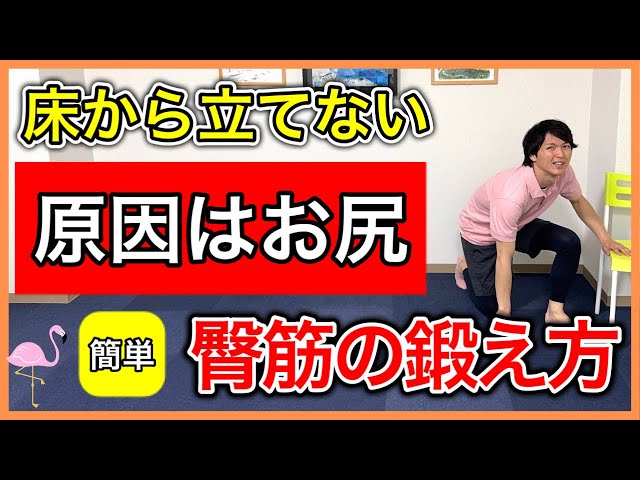
The gluteal muscles are the muscles that make up your buttocks.
By strengthening them, you’ll be able to stand up smoothly from the floor.
First, step one foot forward and the other back, and bend your knees slightly.
Place your hands on your knees for support, and repeatedly hinge your upper body forward and then return upright.
Next, in the same stance, move your hips up and down to do knee bends.
As you do this, focus on shifting your weight onto the front leg.
If you feel unsteady, it’s a good idea to hold onto a chair or a wall for support.
Rehabilitation for standing up from the floor using a chair

This rehabilitation uses a chair and progresses through three stages.
In Stage 1, you sit in the chair and then stand up.
In Stage 2, you use the chair seat as a platform to stand up.
In Stage 3, you stand up from the floor.
Be sure to follow the key points for each movement: include a kneeling position, dorsiflex your toes, and firmly support your body with your hands placed on the floor or your knees.
Since Stage 3 builds on Stages 1 and 2, take your time and complete each step one by one without rushing.
Sit-to-stand exercise using a chair

This is a training exercise using chairs that strengthens your legs and glutes.
It directly helps you perform the standing motion with less strain, so give it a try.
First, sit on a chair.
Place another chair facing the same direction in front of you, at a distance where you can touch its backrest with your arms extended.
Grab the front chair with your hands and lean your upper body firmly forward.
Then slowly lift your hips and stand up.
If you stand up with your torso upright, it puts strain on your legs and lower back, so be sure to lean forward well.
Hemiparesis: standing up from the floor

Here is a way for someone with paralysis on one side of the body to stand up from the floor.
We’ll start from a seated position with your hips on the floor.
I’ll explain assuming the right side is paralyzed.
First, bring your right leg forward with the knee slightly bent, and bend your left leg as if sitting cross-legged.
Place your left hand on the floor and lift your hips.
Then move your left leg back and come up into a kneeling position.
From there, lift your left knee, plant your foot as if taking a step, and stand up.
Quadriceps training that makes standing up smoother

The quadriceps are the muscles at the front of the thighs.
When these muscles weaken, it becomes difficult to stand up or sit down slowly, so it’s important to strengthen them.
Here are some training methods.
First, sit in a chair and straighten your back.
Next, extend your right leg to knee height and hold that position for 10 seconds.
Do the same with your left leg.
Next, lie on your back, raise your extended leg to a height of 30–40 degrees, and hold for 10 seconds.
If 10 seconds feels too long, do it within a comfortable range.
Standing-up exercises that don’t strain the knees or lower back

When you have pain in your knees or lower back, it can be hard to stand up.
Here’s a way to stand with less strain.
First, sit in a chair and place both hands on your thighs.
Then lean your upper body forward as if you’re bowing and lift your hips slightly off the seat.
Finally, press down firmly on your thighs with your hands to raise your upper body.
In addition to this standing technique, we also introduce exercises you can do while seated.
By continuing these, you can strengthen your legs, balance, and core, which should make standing up easier.