

[For Seniors] Tanabata Trivia Quiz: Simple and Fun

Here’s a fun, lively trivia quiz that’s perfect for the Tanabata season.
It’s designed mainly with easy questions so that older adults can enjoy it without difficulty.
Spend a smile-filled time with family and friends as you learn about the origins and customs of Tanabata through the quiz.
It also helps stimulate the brain and sparks conversation, making it ideal for gatherings and recreational settings.
Enjoy the seasonal atmosphere and try this easy-to-join quiz that everyone can participate in.
- [For Seniors] Summer Festival Trivia Quiz & Fun Facts. Enjoyable Quizzes That Boost Your Knowledge
- [For Seniors] Summer-Themed Quiz: A Collection of Fun Questions to Liven Up Recreational Activities
- [For Seniors] July Trivia Quiz & Fun Facts. Easy and Engaging
- [For Seniors] Summer-Themed Trivia Quiz & Fun Facts Collection
- [For Seniors] Trivia Quiz & Fun Facts about Stars. Brain Training
- [For Seniors] Introducing Trivia Quizzes & Fun Facts About Space!
- [For Seniors] Informative and Fun Obon Quiz
- Recommended for seniors! Liven up your event with a Respect-for-the-Aged Day quiz!
- For Seniors: Lively! Trivia and Fun Facts Quiz for August
- [For Seniors] Boost Your Knowledge! Fun Trivia Quiz
- [For Seniors] July Knowledge-Boosting Quiz
- [For Seniors] Perfect Brain Training! Fun Trivia
- [For Seniors] Fun and Lively! Recommended Quiz Questions
[For Seniors] Tanabata Trivia Quiz: Simple and Fun (1–10)
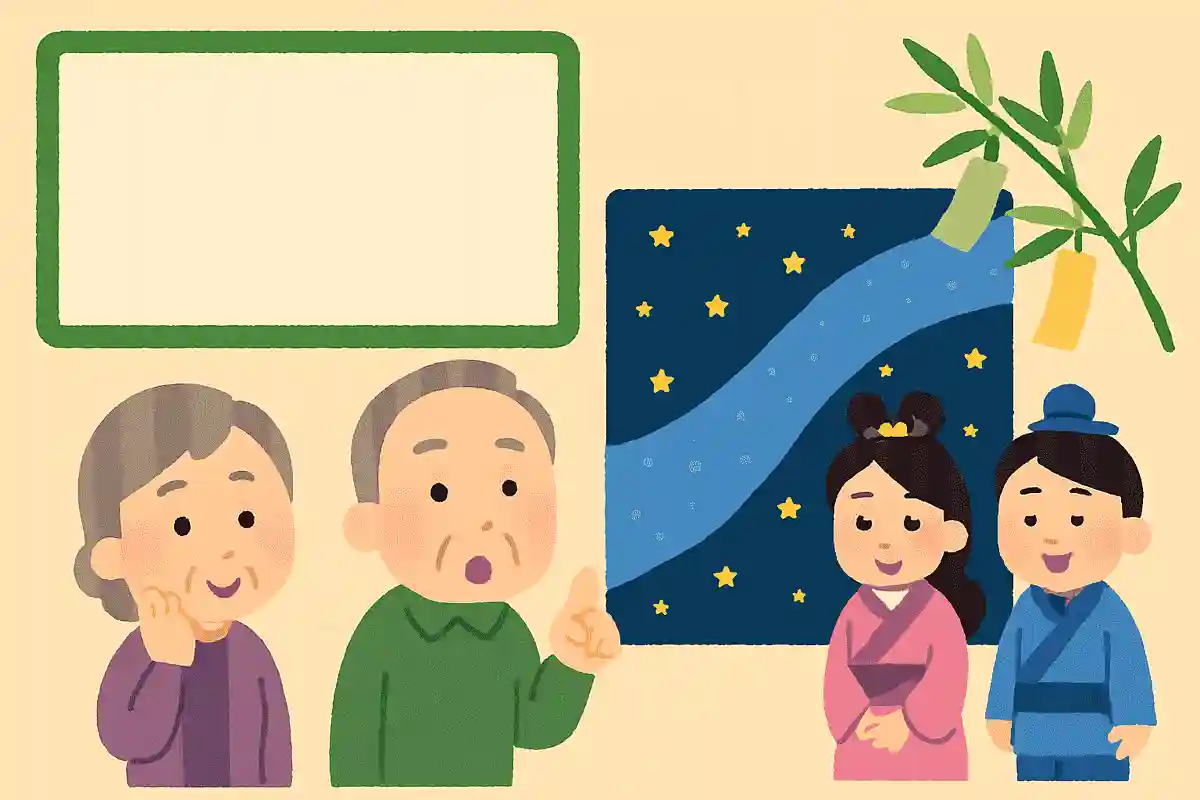
When can we see the Milky Way?
- Any time in summer
- Only during July
- Always visible
See the answer
Always visible
The Milky Way is actually a cluster of stars that appears in the night sky all year round. If the weather is clear and the sky is dark, you can see it regardless of the season. However, it’s said to be more clearly visible on summer nights because it appears higher in the sky. That’s why Tanabata is associated with the Milky Way.

When did people start writing their wishes on tanzaku strips?

- Heian period
- Edo period
- Heisei era
See the answer
Edo period
The answer is the Edo period. Tanabata originally came from China, and in the past people wished for improvement in weaving and calligraphy. In the Edo period, ordinary people also began writing their wishes on tanzaku paper strips, and the custom of Tanabata in its current form spread. Writing wishes on tanzaku is a long-standing Japanese tradition.
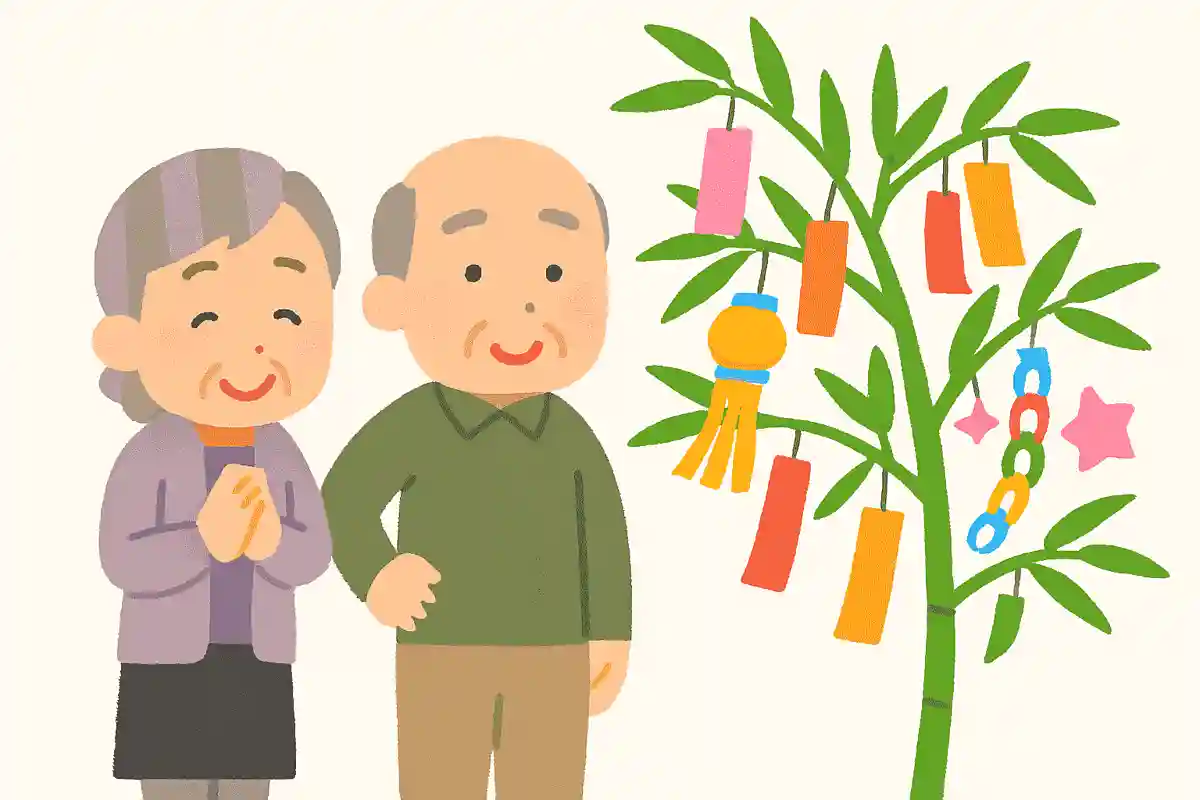
Where is a good place to put the bamboo branches decorated for Tanabata?
- In front of the front door
- inside the house
- Anywhere is fine
See the answer
Anywhere is fine
You can place it anywhere. There’s no strict rule about where to put the Tanabata bamboo decorations. It’s fine to display them wherever you like—inside your home, by the entrance, on the balcony, or in the garden. What matters most is enjoying the tradition while making your wishes. Attach your wish slips to the bamboo and let them flutter in the breeze to celebrate the Tanabata spirit.
[For Seniors] Tanabata Trivia Quiz. Easy and Exciting (11–20)
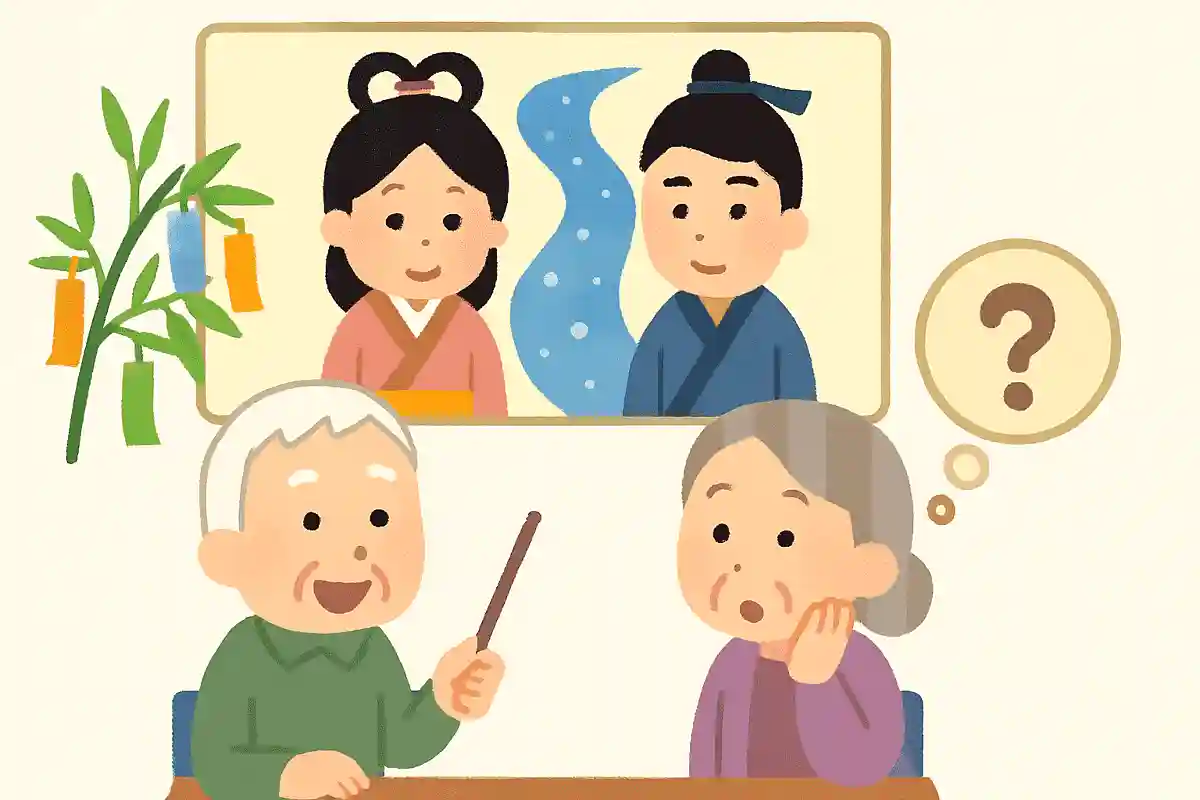
Why are Orihime and Hikoboshi only able to meet once a year?
- Because I got sick.
- Because both of us are busy with work.
- Because two people stopped working
See the answer
Because two people stopped working
Orihime and Hikoboshi were originally very hard workers. Orihime wove fabric, and Hikoboshi tended cattle, but after they married, the two spent all their time playing and stopped working. Seeing this, the god of heaven grew angry and separated them to opposite banks of the Milky Way. He then promised, “If you work diligently, I will allow you to meet just once a year.”
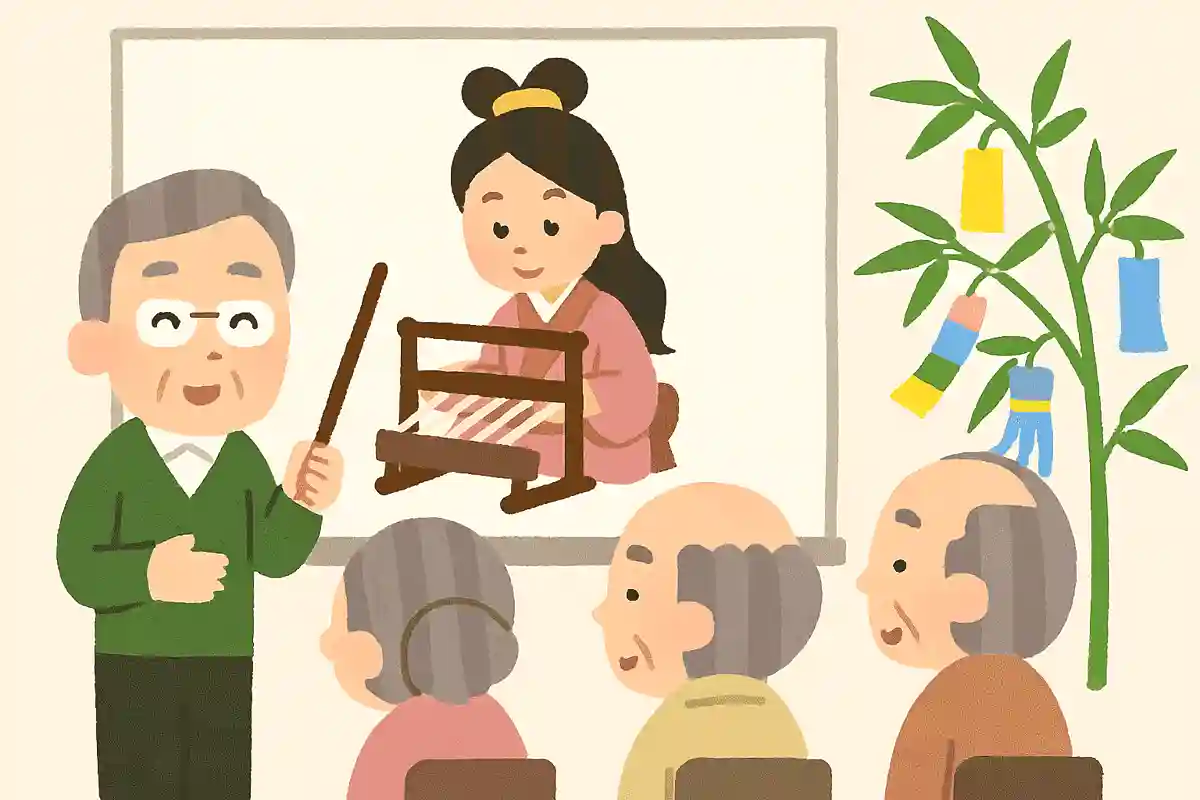
What is Orihime’s job?
- nurse
- weaving
- flower shop
See the answer
weaving
Orihime was the daughter of the heavenly god and worked as a weaver. She was very diligent and known for weaving beautiful cloth. This weaving work is also connected to the origin of Tanabata, and the word “Tanabata” itself comes from the act of weaving.
What do the phrases “Tamaya~” and “Kagiya~,” shouted when fireworks are launched, refer to?
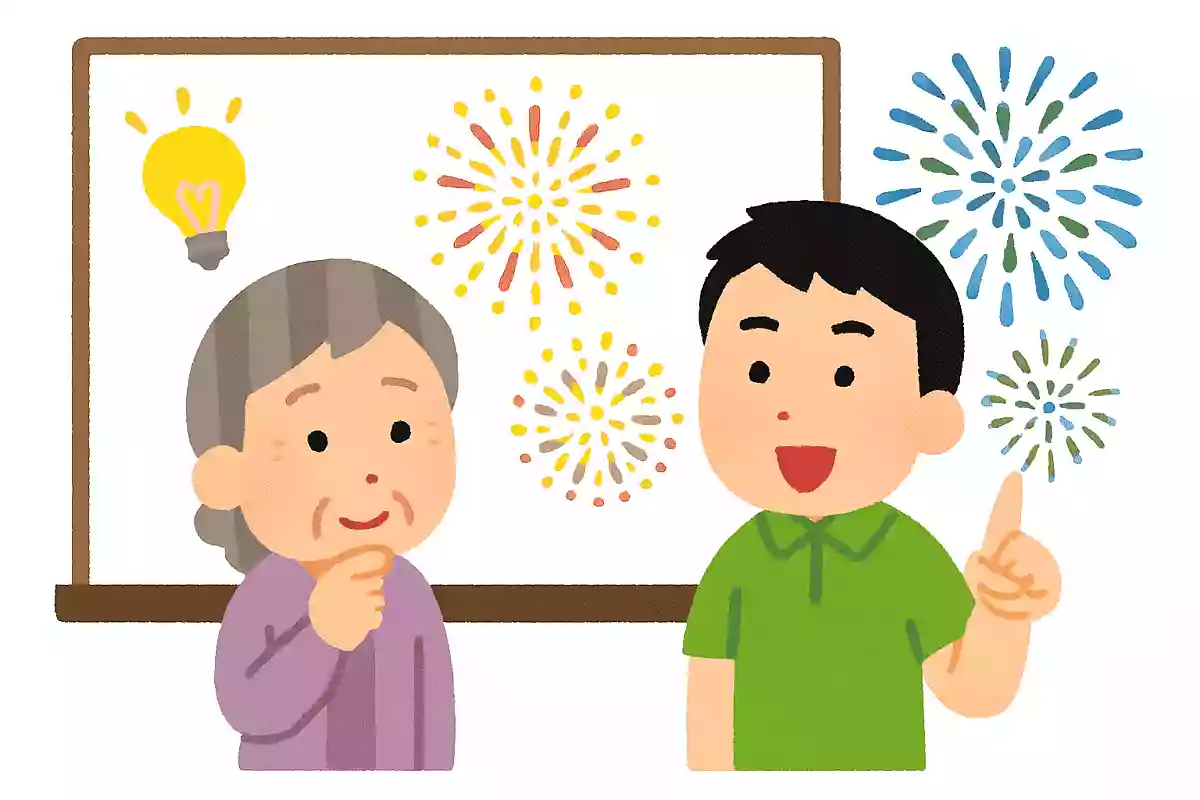
Cries of “Tamaya!” and “Kagiya!” echo across the summer night sky.
You often hear these shouts at fireworks festivals, and while they’re an old custom, do you know what they mean? In fact, they’re not just random cheers—they have a history.
In the Edo period, there were famed fireworks craftsmen whose shop names were Tamaya and Kagiya.
Spectators would call out as if to cheer and compare which shop’s fireworks were more beautiful.
In other words, they’re “the names of the shops that made the fireworks.” This custom, which remains today, is proof that the artisans’ skill and pride have been passed down.
When those calls ring out along with the boom of the fireworks, a summer night becomes all the more evocative.

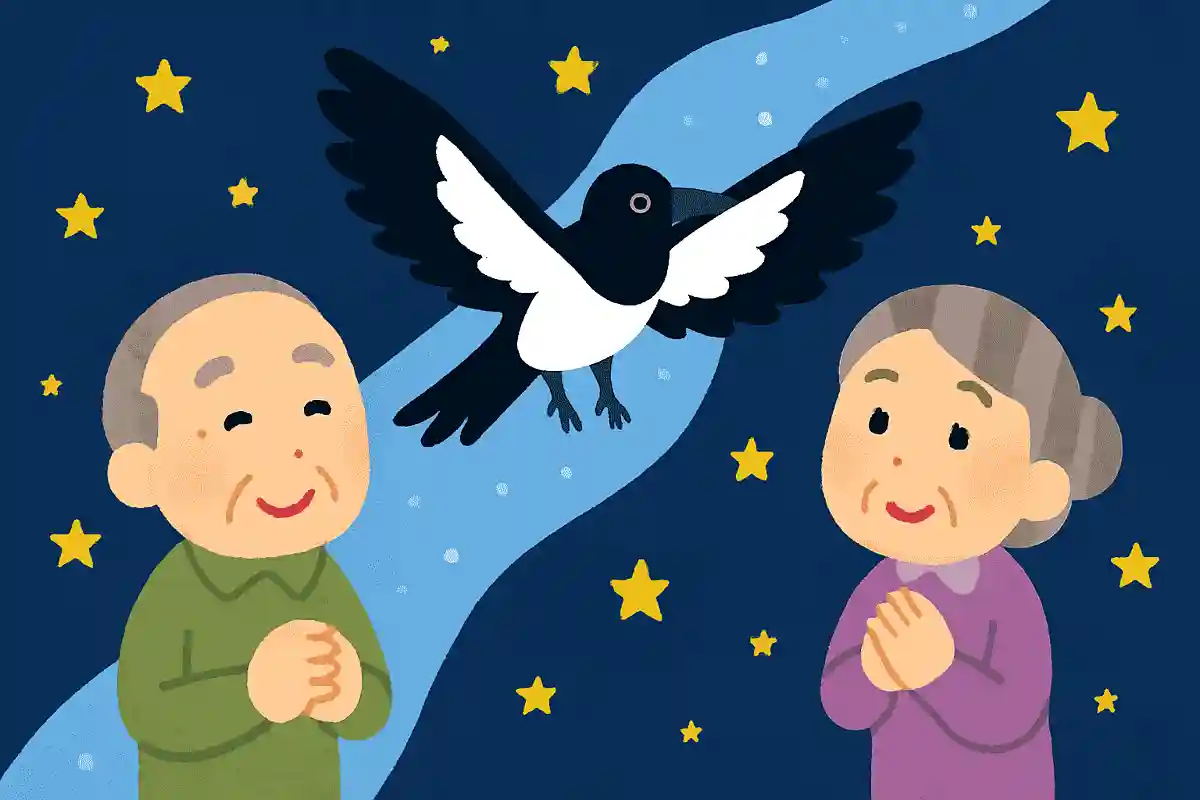
What is the name of the bird that builds a bridge across the Milky Way?
- swan
- crane
- magpie
See the answer
magpie
Because there is no bridge over the Milky Way, they must cross the river to meet. That’s where the bird called the “magpie” comes in. The magpies are said to spread their wings to form a bridge across the Milky Way, helping Orihime and Hikoboshi meet.