

[For Seniors] Trivia Quiz & Fun Facts About the Weather

Weather is closely connected to human life.
There’s a wealth of information and folklore about it, and many people—even older adults—may not know much of it.
In this article, we’ll introduce trivia quizzes about the weather.
By gaining knowledge about weather, which everyone encounters, you’ll have great conversation starters.
Turning it into a quiz format can not only help prevent cognitive decline, but also encourage lively interaction with other seniors.
Be sure to try it together with those around you and deepen your knowledge about the weather!
- [For Seniors] Weather Proverb Quiz
- Make weather forecasts more fun! Trivia and fun facts about the weather
- [For Seniors] Fun and Informative! Health Trivia Quiz
- [For Seniors] Trivia Quiz & Fun Facts About the Rainy Season (Tsuyu)
- [For Seniors] Recommended Trivia Quizzes & Fun Facts for November
- [For Seniors] Fun and Informative Trivia Quiz Collection
- [For Seniors] Today’s recommended quiz. Daily brain-training quiz!
- [For Seniors] Fun and Informative! Trivia and Quizzes Introduced
- How much do you know? Trivia quiz for seniors that’s full of surprisingly unknown facts
- [For Seniors] Hina Matsuri (Girls’ Day) Trivia Quiz & Fun Facts. Recommended for Dementia Prevention Activities
- [For Seniors] Let’s have fun with October trivia and fun facts quizzes!
- [For Seniors] Trivia Quiz & Fun Facts for Everyday Life
- [For Seniors] Introducing Scary Trivia Quizzes & Fun Facts!
[For Seniors] Weather Trivia Quiz & Fun Facts Questions (1–10)
Which bird is said to bring rain when it flies at a low altitude?
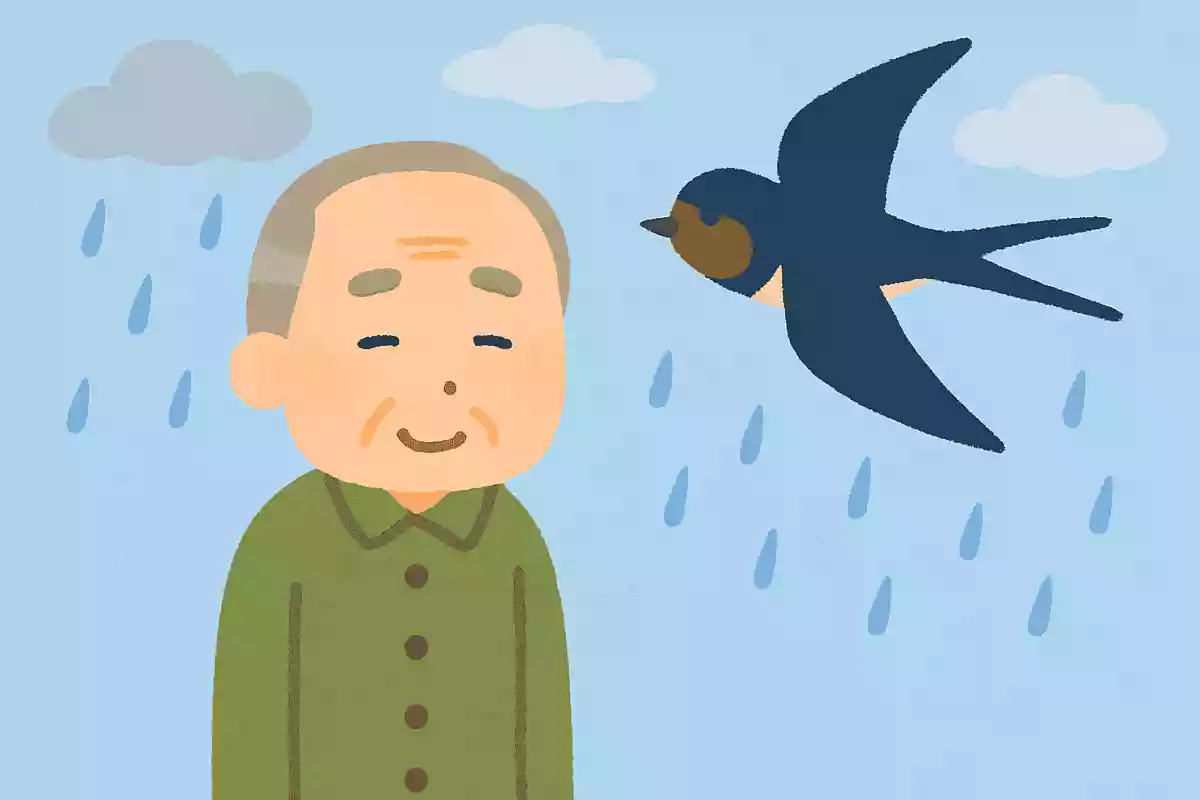
- swallow
- crow
- pheasant
See the answer
swallow
Swallows fly high and catch insects on sunny days, but when a low-pressure system approaches and rain seems likely, the air becomes humid and insects stay lower, so swallows fly low. For this reason, there is a saying that seeing swallows flying low means rain is near.
When does koharu-biyori refer to?

Koharu-biyori refers to warm, spring-like days felt during the cold season of winter. Please choose which period it generally refers to.
- January to February
- From March to April
- From November to December
See the answer
Selection 4
Koharu-biyori refers to spring-like warm weather felt at the beginning of winter (mainly from November to December). During this period, warm days are unusual amid the generally cold season, which is why they feel especially pleasant.
Which number should I call for the weather forecast service?

- 117
- 177
- 119
See the answer
177
177 is a telephone number in Japan dedicated to weather forecasts. If you want to know the weather forecast, you can call this number to hear the forecast for the day. 117 is the time announcement service, and 119 is the emergency number for fires and ambulances.
[For Seniors] Weather Trivia Quiz & Fun Facts Questions (11–20)
What is the name of Japan’s meteorological health service?

Please choose the correct name of the Japanese weather satellite from the options below.
- sunflower
- cradle
- morning glory
See the answer
sunflower
Japan's meteorological satellite is named Himawari. The Himawari satellites observe weather over Japan and the Asia-Pacific region from geostationary orbit.
What is the symbol that represents rain in weather notation?
- white circle
- black circle
- double circle
See the answer
black circle
In weather symbols, a solid black circle represents “rain.” A white circle indicates “clear skies,” and a double circle denotes “clouds.”
What is something that has an “advisory” but not a “warning”?
- heavy rain
- storm
- Fog
See the answer
Fog
There is an “advisory” for fog, but no “warning.” A Fog Advisory is issued to caution against traffic disruptions caused by reduced visibility. By contrast, heavy rain and strong winds each have both advisories and warnings, which signal that conditions may worsen further.
Which of the following refers to a sunshower?

- fox’s wedding
- a word from the top
- A cow’s pace
See the answer
fox’s wedding
The fox’s wedding is a Japanese folk expression that mainly refers to a sunshower—rain falling while the sun is shining. The phenomenon of a procession of fox fires seen at night is also called by the same name.