

Elgar’s masterpiece. Popular classical music.

Edward Elgar is one of Britain’s quintessential composers; his Pomp and Circumstance and Enigma Variations are immensely famous and are frequently performed at orchestral concerts.
He also wrote Salut d’Amour as a gift to his wife, Caroline Alice Roberts, and even those unfamiliar with Elgar’s name have likely heard this melody.
To explore the allure of Elgar, we’ve compiled a list of many of his masterpieces this time!
We hope this helps you dive into Elgar’s charm and the stylish, enjoyable world of classical music.
- [Violin] A curated selection of beloved classic masterpieces and popular pieces that continue to be cherished across eras
- Edward Elgar Popular Song Rankings [2026]
- Brahms's masterpieces. Popular classical music.
- [Masterpiece Classics] A special showcase of gem-like masterpieces so beautiful they’ll move you to tears
- Masterpieces by Gustav Mahler. Popular classical music.
- Timelessly beautiful classical masterpieces. Recommended classical music.
- Mendelssohn’s Masterpieces | Popular Classical Music
- Popular classical piano pieces. A collection of masterful performances by Japanese pianists.
- Jacques Ibert Popular Song Ranking [2026]
- Cello Masterpieces: A comprehensive introduction to exquisite classical works that let you savor its profound timbre
- [Haydn] Pick up famous and representative pieces!
- [Baroque Music] A Curated Selection of Timeless Masterpieces and Famous Works
- Gabriel Fauré | Introduction to His Famous and Representative Works
Elgar’s masterpieces: Popular classical music (1–10)
Symphony No. 1Edward Elgar

Edward Elgar, who composed Pomp and Circumstance and Salut d’Amour, also wrote symphonies.
This work premiered in 1908 and is regarded as one of the most exalted pieces in British musical history.
Elgar achieved rapid success in his forties and established a distinctive style.
The piece musically depicts Elgar’s life experiences, struggles, and path to success, characterized by rich emotional expression and a complex structure.
It is in four movements; each movement stands on its own while contributing to a cohesive whole, showcasing Elgar’s delicate orchestration technique.
It’s a recommended work not only for those interested in classical music but also for anyone wishing to feel the breadth and depth of human experience.
Fantasia & Fugue in C minorEdward Elgar

Here I’d like to introduce a work in which Edward Elgar arranged one of Bach’s organ pieces for orchestra.
Elgar, born in 1857, was a British composer known for Pomp and Circumstance and the Enigma Variations.
This piece was created between 1921 and 1922, blending respect for Bach with the expressive power of the twentieth-century orchestra.
While preserving the solemnity of Baroque music, it explores rich tone colors and dynamics—one of its chief attractions.
It’s recommended for those interested in classical music or who want to enjoy Bach’s works from a fresh interpretive angle.
It’s a piece that conveys Elgar’s skill as an arranger and his passion for music.
In the TropicsEdward Elgar

Composed during a trip to Italy between 1903 and 1904, this piece is a concert overture by Edward Elgar with a performance length of about 22 minutes.
Inspired by Italy’s rich nature and history, its character paints the joy of the natural world and vast open spaces, accompanied by Elgar’s distinctive melodies.
In particular, the gentle solo viola line is widely known as a Neapolitan love song.
This is a recommended work for those who wish to experience Italian landscapes and culture, as well as for anyone who wants to immerse themselves in Elgar’s musical world.
Elgar’s Masterpieces: Popular Classical Music (11–20)
children’s magic wandEdward Elgar

Introducing early works by Edward Elgar, one of Britain’s foremost composers.
These pieces depict the fantasy world of childhood and are based on a melody Elgar composed around the age of eleven.
Re-arranged to mark his fiftieth birthday, the work consists of two suites, comprising seven and six movements respectively.
The First Suite, premiered in London on December 14, 1907, and the Second Suite, premiered in Worcester on September 9 of the following year, reflect Elgar’s creativity and nostalgia for his youth.
While melodically appealing and structurally simple, the work is distinguished by captivating orchestration.
Expressing the purity and dreams of childhood in music, it is recommended for those who wish to enjoy a richly imaginative sound world.
Symphony No. 2 in E-flat majorEdward Elgar

Edward Elgar was a British composer born in 1857.
Elgar’s Symphony No.
2 in E-flat major is a masterpiece of the late Romantic era, premiered in May 1911.
The work consists of four movements and lasts about 55 minutes.
It begins with the “Spirit of Joy” in the first movement, followed by a funeral march in the second, a rondo in the third, and a return of the “Spirit of Joy” in the fourth movement.
The piece reflects Elgar’s personal sorrow and the historical context of the time, resonating deeply with listeners.
It is recommended not only for fans of classical music but also for anyone interested in grand, expansive music.
Serenade for Strings in E minorEdward Elgar

If you’re looking for approachable works in classical music, Edward Elgar’s Serenade for Strings is a great choice.
Written in 1892 and published when Elgar was 36, its melodies may trace back to when he was just 10 years old.
Comprising three movements, the piece deftly blends a Romantic atmosphere with post-Romantic elements.
The second movement, in particular, is a captivating section that hints at Elgar’s mature style.
It explores the rich timbre of string instruments and emotional depth, making it thoroughly enjoyable even for beginners.
It might be the perfect introductory piece for those interested in classical music but worried it might be too difficult.
Variations on an Original Theme for Orchestra (Enigma Variations)Edward Elgar
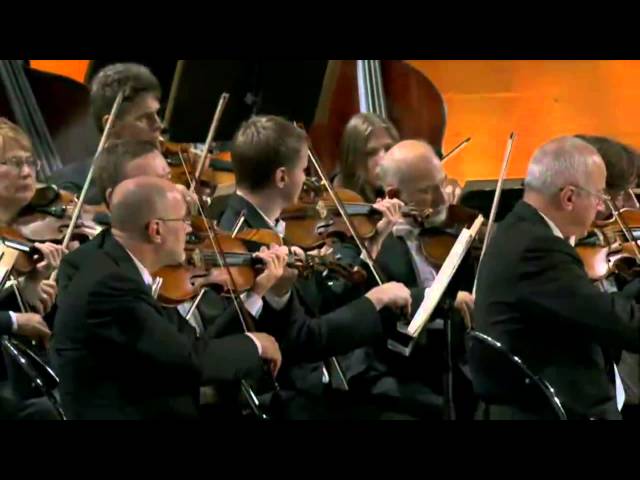
“Enigma Variations” is an orchestral work composed in 1898 and premiered in London in 1899.
Following the theme, it consists of 14 variations, from Variation I to Variation XIV.
Because arrangements for wind band have also been published, many school and community wind ensembles may have performed it as a classic repertoire piece.
Edward Elgar gained international fame through the success of this work, and it has continued to be loved by the public alongside “Pomp and Circumstance March No.
1,” composed in 1901.