

English will become more fun! A collection of trivia and fun facts about the English language.

In today’s global community, English has become indispensable, hasn’t it?
It’s now included as a subject in elementary schools, and many people begin studying English in earnest as adults.
In this article, we’ll introduce various trivia and fun facts about English.
Studying English can be tough, but learning about it from a slightly different angle—through trivia and fun facts—can make your studies even more enjoyable!
Feel free to use this as a little breather during your English study sessions!
- [Interesting] Compilation of Trivia Quiz Questions
- Learn English through fun! English games
- [Great for speeches] Trivia and fun-fact quizzes recommended for morning assemblies
- Trivia and fun facts about food (summary)
- Perfect for pronunciation practice! A collection of English tongue twisters.
- [Study] Fun to Know! A Collection of World History Trivia Quizzes
- Fun facts you’ll want to share! January trivia and tidbits special
- A compilation of unsettling trivia and fun facts about Earth
- [For Kids] Let’s Play in English! A Collection of Fun Recreational Activities and Games
- Trivia quiz with useful tips to know: fun facts that come in handy at school or at home [for kids]
- Stimulate your intellectual curiosity! Fascinating trivia quizzes that you’ll want to share with others
- [For Kids] November Trivia Quiz & Fun Facts: Let’s Learn While Having Fun!
- Trivia quiz about schools: a roundup of fun facts you’ll want to brag about
English is even more fun! A collection of trivia and fun facts about English (1–10)
The English alphabet originally had 29 letters.
Do you know how many letters there are in the alphabet? If you count from A to Z, you’ll find there are 26.
That’s common knowledge today, but it used to be different.
In fact, it’s said that in addition to those 26, there were 3 more—or even 5 to 12 additional—letters.
Some of them were letters formed by combining two characters, like “&” or “ſt,” but because their usage was complex and difficult, their number was reduced to what we have today.
Examples of the lost letters in use have also been published, so feel free to take a look if you’re interested.

William Shakespeare invented many English words.
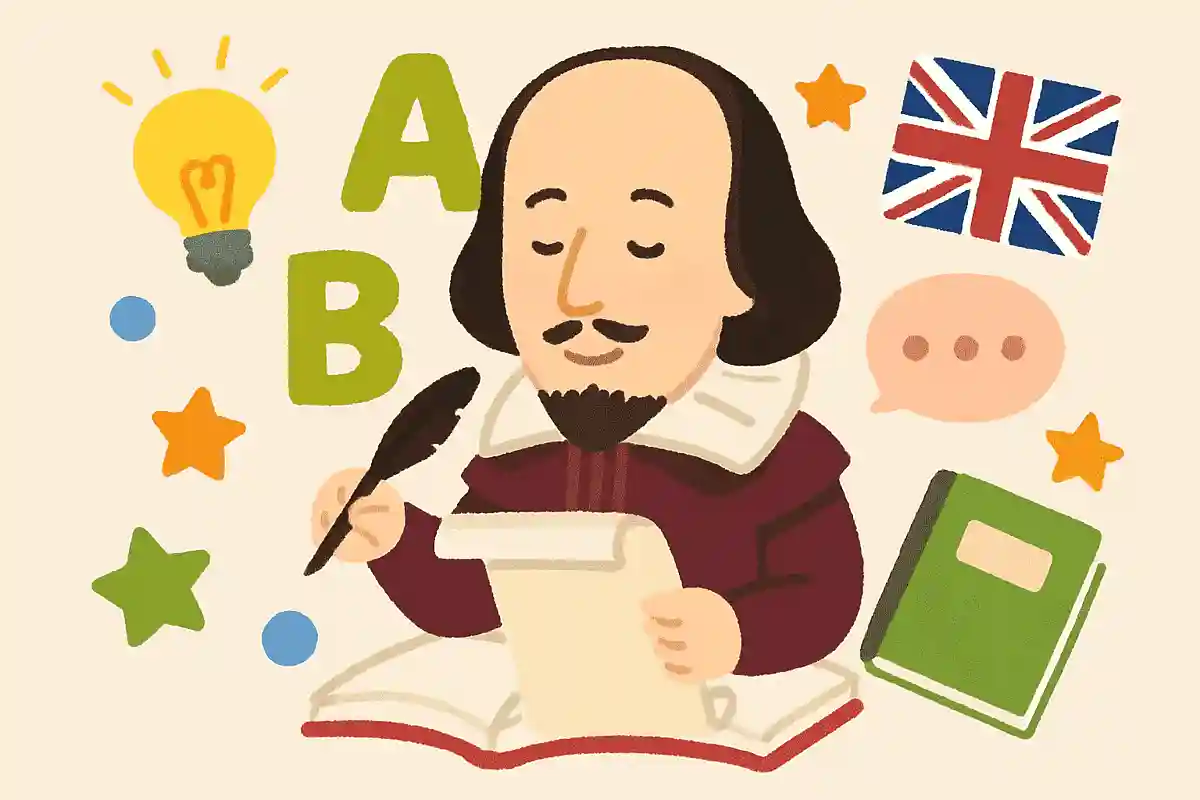
Shakespeare, the playwright who left behind many masterpieces, also invented many English words.
Lines from the plays he wrote were accepted as new words.
To people of his time, those words must have seemed fresh and stylish.
It’s fascinating that even the now-common expression “catch a cold” was born from one of his plays.
With a sensibility that could be called that of a designer of language, he created and popularized many terms.

The most commonly used adjective is “good.”
One of the most commonly used adjectives is “good.” Because this word carries a variety of meanings and nuances, it appears in many contexts.
If you learn it, you can use it broadly, so be sure to check out its different meanings.
Other frequently used adjectives include “other,” “new,” “many,” and “best.” You probably see words like “new” and “best” often on signs and in advertisements.
When you read or listen to English sentences or conversations, try paying attention to how often these adjectives are used.
Make English Even More Fun! A Collection of Trivia & Fun Facts About English (11–20)
“Ze” and “hir” are pronouns that can be used regardless of gender.

In recent years, efforts to respect diversity have become more active, and accordingly, opportunities to use gender-neutral pronouns have increased.
With that in mind, it’s good to be familiar with “ze” and “hir.” However, they aren’t always used with a strictly gender-neutral meaning, so it’s important to infer the intended meaning from the flow of the conversation.
Additionally, other gender-neutral pronouns are also becoming more widespread, so if you’re interested, try looking them up.
The dots on “i” and “j” are called a “tittle” or a “superscript dot.”
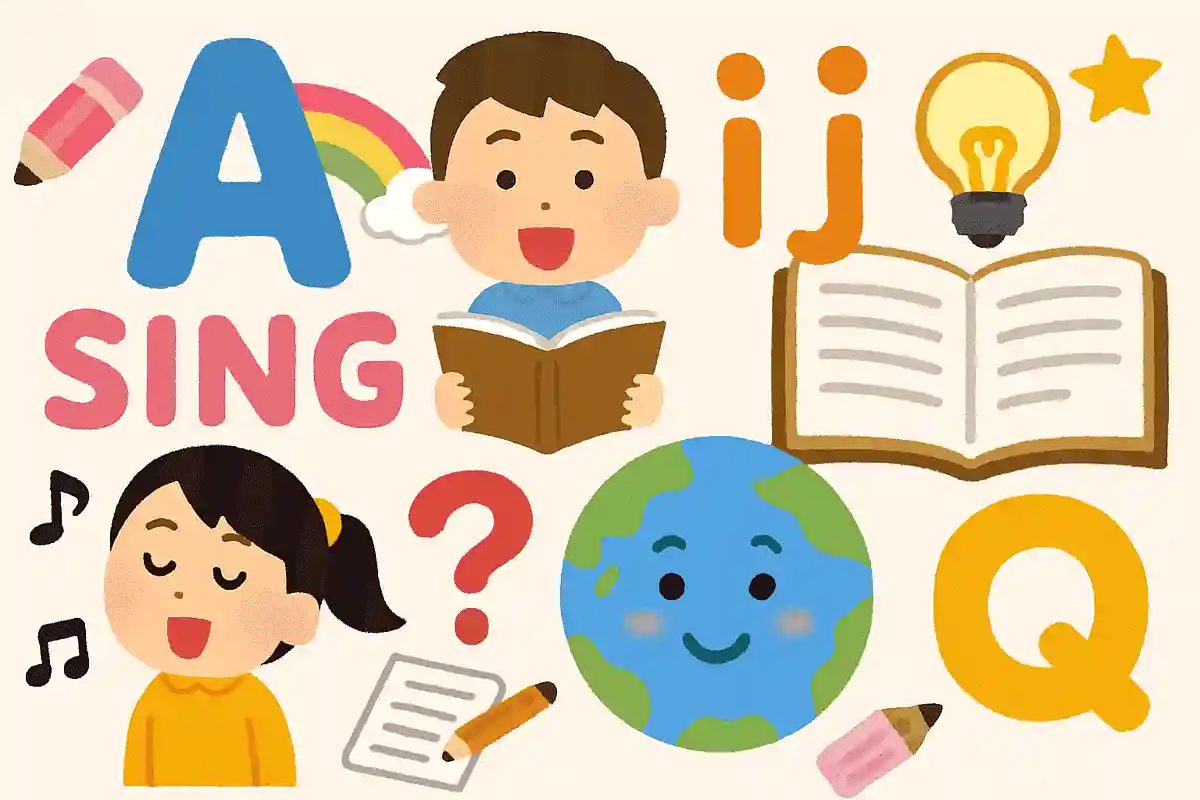
The letters i and j have dots, right? That dot is called a “tittle” or a “superscript dot.” It probably won’t come in handy very often in everyday life, but do try to remember it.
By the way, there’s a phrase “to dot the i’s and cross the t’s.” Literally, it means putting the dots on the i’s and drawing the crossbars on the t’s, and it conveys the idea of putting the finishing touches on something.
The most frequently used letter in English words is ‘E.’
Which letter do you think is used most often in English words? It’s E.
E is frequently used as a vowel, and many of you have probably noticed that longer words often contain multiple Es.
Incidentally, the next most common is A.
And the letter most commonly used at the beginning of words is S.
Indeed, I remember the S section of English dictionaries being quite large.
Keeping things like this in mind as you read English sentences can make you think, “I see!”
A sentence that uses all 26 letters of the alphabet is called a “pangram.”
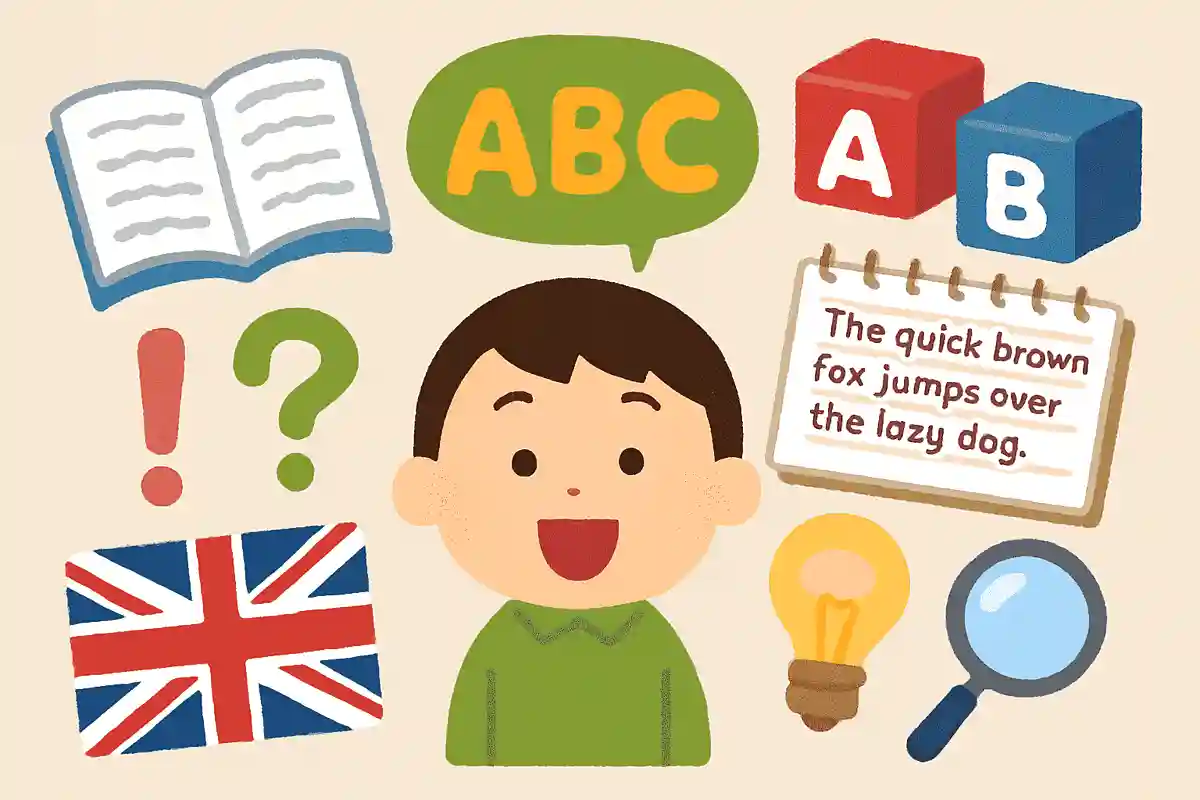
Do you know what a pangram is? A pangram is a single sentence that uses every letter in a given language.
You can use the same letter multiple times, but shorter ones tend to be rated more highly.
Many people have attempted English pangrams over the years, but they often end up sounding unnatural as sentences, and a perfect pangram hasn’t been created.
Give it a try yourself! Or you could tackle it in Japanese—though the larger set of characters will likely make it more difficult.