

Gabriel Fauré | Introduction to His Famous and Representative Works

Gabriel Fauré, the French composer who influenced many others during the 19th and 20th centuries when new forms of music were emerging.
While he was influenced by the many new styles published by his contemporaries, he did not become absorbed by them; instead, he developed his own voice with an exquisite sense of balance.
His works convey a serene purity rather than showiness.
Fauré’s famous and representative pieces span a wide range—from orchestral works to chamber music, piano pieces, and songs.
Please enjoy the beautiful melodies and harmonies that could only have come from Fauré.
- Gabriel Fauré Popular Songs Ranking [2026]
- [Masterpiece Classics] A special showcase of gem-like masterpieces so beautiful they’ll move you to tears
- Timelessly beautiful classical masterpieces. Recommended classical music.
- [Violin] A curated selection of beloved classic masterpieces and popular pieces that continue to be cherished across eras
- Brahms's masterpieces. Popular classical music.
- A masterpiece by Franck. Popular classical music.
- Cello Masterpieces: A comprehensive introduction to exquisite classical works that let you savor its profound timbre
- Rachmaninoff’s masterpieces. Recommended pieces by Rachmaninoff.
- A poignant classic masterpiece. Recommended classical music.
- Mendelssohn’s Masterpieces | Popular Classical Music
- Introducing Maurice Ravel’s Famous and Representative Works
- Debussy’s masterpiece. Popular classical music.
- François Couperin Popular Songs Ranking [2026]
Gabriel Fauré | Introduction to His Famous and Representative Works (1–10)
The Song of Songs by Racine, Op. 11Gabriel Fauré

Composed when Fauré was 19, this work is a sacred music piece distinguished by its graceful, gentle sonority.
Submitted in 1865 as his conservatory graduation piece, it won first prize.
Its melody, imbued with Fauré’s characteristic dignity and economy, foreshadows his later masterpiece, the Requiem.
Centered on Christian themes of salvation and faith, it is like a prayer that praises God and seeks mercy.
With elegant melodies and serene arpeggios, it brings listeners inner calm and deep emotion.
It’s recommended not only for those interested in sacred music, but also for anyone seeking peace of mind.
Violin Sonata No. 1, Op. 13Gabriel Fauré

Violin Sonata No.
1 is an important early chamber work composed between 1875 and 1876.
Consisting of four movements, it expresses Fauré’s characteristic lyricism and graceful harmony.
At its premiere in Paris in January 1877, it was a great success, with the third-movement Scherzo in particular being called for an encore.
Fauré’s close friend Camille Saint-Saëns praised it as “a masterpiece that embraces new sonorities and forms.” The work holds a significant place in French Romantic music and continues to be cherished by many today.
Nocturne No. 6, Op. 63Gabriel Fauré

Published in 1894, this piece is among the most popular of Fauré’s thirteen Nocturnes.
Its gently flowing triple meter, beginning at a relaxed adagio, warmly enfolds the listener.
In the middle section, the key modulates and new sonorities unfold, expressing nuanced shifts of emotion.
The music then returns to the quiet atmosphere of the opening, creating a cyclical structure across the work.
It offers the serene, delicate mood so characteristic of Fauré—a perfect recommendation for those seeking a calm, reflective moment.
Gabriel Fauré | Introducing Famous and Representative Works (11–20)
Cello Sonata No. 1, Op. 109Gabriel Fauré

Composed in 1917, the Cello Sonata No.
1 is a masterpiece that encapsulates the mature musical language of Fauré’s late years.
Woven with both the anxieties and hopes of World War I, it was created even as Fauré struggled with his deteriorating hearing.
In three movements, it moves from intense emotion to serene lyricism and finally to a brighter atmosphere, as if reflecting the complex feelings of life during wartime.
The beautiful melodies and harmonies—where the cello and piano converse and blend naturally—are filled with a uniquely Fauréan allure.
Combining profound introspection with high artistry, it is recommended not only for classical music enthusiasts but also for those seeking quiet contemplation.
Suite “Dolly,” Op. 56Gabriel Fauré
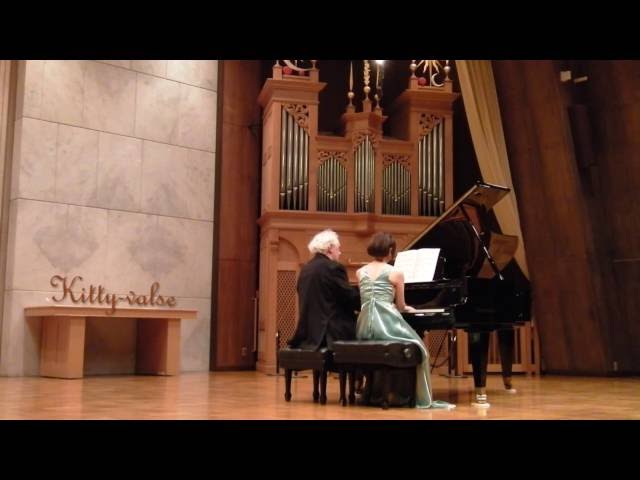
A collection of piano duets Fauré composed for the daughter of a friend.
Written between 1893 and 1896, the six pieces each bear a title inspired by events in Hélène’s life and her growth.
Ranging from the gentle “Berceuse” to the dazzling “Spanish Dance,” the set showcases a wide palette of expressions, with Fauré’s characteristic delicate harmonies and deep emotional nuance throughout.
An orchestral version was later created, and the music became widely known, even being used on a British radio program.
Graceful and approachable, this warm work brimming with affection for a child is well worth a listen.
Lullaby in D minor, Op. 16Gabriel Fauré

The short piece Fauré composed around 1879 was originally written for violin and piano.
Dedicated to his close friend Hélène Depret, it is characterized by a gently rocking melody in 6/8 time.
Its graceful, delicate melody and accompaniment are captivating, conveying Fauré’s distinctive serene beauty.
Set at an Allegretto moderato tempo, the work leaves an impression of an overall calm tone.
Fauré later arranged a version with orchestral accompaniment himself, and it has been adapted for various instrumental combinations.
It’s a recommended piece for those seeking gentle tranquility.
Barcarolle No. 1 in A Minor, Op. 26Gabriel Fauré

Gabriel Fauré composed 13 barcarolles over the course of his life.
A barcarolle is defined as an instrumental or vocal piece derived from the songs of Venetian gondoliers, yet Fauré did not visit Venice for the first time until after he had released his Barcarolle No.
4 and begun work on No.
5.
In other words, he composed the first barcarolle without having experienced the atmosphere of the place firsthand.
Even so, Fauré’s barcarolles have been highly acclaimed as outstanding works by many composers and music critics.
Through performance, why not experience the melodies and rhythms of the barcarolle that had taken root within Fauré?
