
Practice Songs Helpful for Learning Mixed Voice (Middle Voice) [For Women]


The term “mixed voice.” If you’re interested in singing, you’ve probably heard or seen it at least once.
Many of my vocal training students say, “I want to be able to use mixed voice!” However, I feel that surprisingly few people actually understand what it is.
So what exactly is mixed voice? Simply put, it’s “the voice between chest voice and head voice.” That’s why it’s also called middle voice.
In actual songs, it’s mainly used to cover the high-tone range that’s hard to hit with chest voice, but by changing the balance of how much chest and head voice you mix, you can create a wide range of vocal expressions.
In this feature, I’ve gathered female singers who skillfully use mixed (middle) voice to express their songs.
I’m sure you’ll find plenty to reference when you practice with the goal of mastering mixed voice yourself.
I hope you find it helpful.
- Songs to Help Women Sing Better: Practice Tracks for Improving at Karaoke
- [For Men] Mix Voice Practice Songs: Reference Tracks to Help You Hit High Notes More Easily
- Cool If You Can Sing! Popular Karaoke Songs Recommended for Women
- A must-see for low-voiced women! Popular songs that are easy to sing at karaoke
- Female vocal songs where women with low voices can shine
- I want to sing songs that use a lot of falsetto—tracks that are also good for practicing falsetto at karaoke.
- Recommended for women: Start your karaoke session with these! A roundup of popular Japanese songs
- Karaoke songs that are easy to sing even with a low voice (for women in their 30s)
- [Karaoke] A roundup of songs that are easy for women to sing!
- Easy-to-sing songs recommended for women in their 20s with low voices | Also great for getting a good reaction at karaoke!
- A collection of cool songs that sound great when sung by women, originally male songs
- Recommended for millennial women who aren't confident singers: easy-to-sing karaoke songs
- [For Beginners] Recommended Enka Classics for Karaoke — Women Singers Edition
[For Women] Practice Songs Helpful for Learning Mix Voice (Middle Voice) (81–90)
Zankyo SankaAimer

This is Aimer’s 20th single, released in January 2022.
It was also chosen as the opening theme for the anime Demon Slayer: Kimetsu no Yaiba.
In this song, Aimer seems to use mixed voice very effectively, especially around the high notes in the chorus.
Although the track itself is fast-paced and energetic, try to sing with a softer approach so your tone doesn’t become rough—aim the sound toward the area behind your upper molars.
In the higher passages in particular, shifting the placement slightly toward the center of the hard palate will let you tap into resonance from both the oral cavity and the nasal cavity, resulting in a more beautiful tone.
Also, try to make pitch transitions as smooth as possible by carefully planning your breath points.

Love letterYOASOBI

It’s YOASOBI’s 11th digital-only single, released on August 9, 2021.
Now, regarding the vocals by YOASOBI’s singer, Lila Ikuta: rather than only the soft type of “mix voice” that many people might imagine, she uses something closer to a true mix voice—the extension of chest voice that skillfully employs maxillary sinus to nasal resonance—allowing for smooth transitions into falsetto (head voice).
It seems that mix voice is used on the highest notes in the A-melody and in the mid-to-high passages of the chorus.
If you want to acquire mix voice yourself, listen closely to the original track and carefully check the changes in the vocal tone, then practice by imitating them.
I’m sure you’ll gain a lot from it!
AutomaticUtada Hikaru
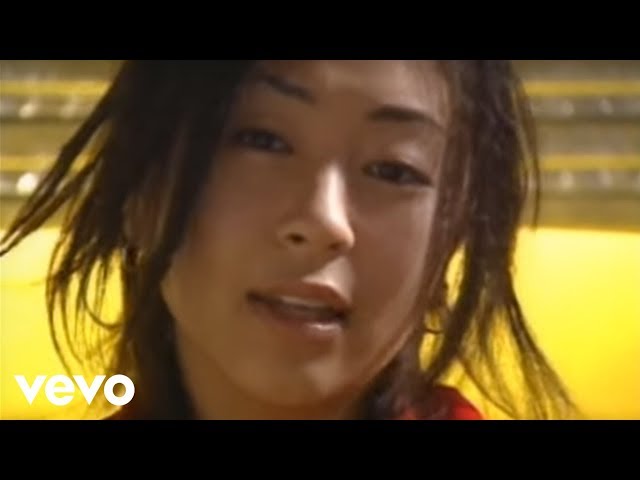
It was Utada Hikaru’s debut single, released in December 1998.
Now, the first notable feature of Utada Hikaru’s use of mixed voice is that it’s a falsetto-focused mix.
It’s likely used primarily to smoothly connect the chest-voice range with the falsetto range.
For those who want to expand their ability to express gentle, falsetto-like high notes, this song makes an ideal practice material.
The mixed voice used by R&B-style singers like Utada is often very easy to understand as an example of usage.
Since Utada’s songs inherently have a wide vocal range, mastering them may be difficult, but I encourage you to study them closely.
In conclusion
How was it? As you can see, even though we often lump everything together as “mixed voice (middle voice),” it actually covers a wide range—from a powerful, chest-like quality to a gentle tone that overlaps the falsetto area.
Because many women naturally have higher voices, there are fewer examples that are instantly recognizable as “this is mixed voice!!” the way they often are with male singers.
So I’m a little unsure how clearly this came across.
That said, the very fact that mixed voice can be used for such diverse vocal expressions depending on how you balance your production is precisely part of its appeal.
I hope this article helps you develop your own mixed voice and broaden the scope of your vocal expression.