

A roundup of leading female enka singers representing the Showa era

While the origins of enka are said to date back to the Meiji era, the form of “enka” most people imagine is believed to have been established around the late 1960s.
Today, many singers who are categorized as enka performers incorporate a variety of genres and are active across the music scene—some even enjoy idol-level popularity.
This article compiles the representative female enka singers who colored the Showa era—artists indispensable to any discussion of the enduringly popular genre of enka.
From those who have already passed on to those still performing actively in the Reiwa era, take this opportunity to learn about the histories of these great songstresses.
By the way, we’ve rounded up male singers in another article, so be sure to check that out as well!
- [2026] Active in the enka and kayō world! A roundup of beautiful enka singers
- [Female Singers Edition] The face of New Year’s Eve! Enka singers who appeared on the Kōhaku Uta Gassen
- A roundup of male enka singers who represent the Showa era
- [2026] Amazing if you can sing them! Enka Masterpieces [Women Singers Edition]
- [2026] A roundup of female enka singers in their 60s: Artists who support Japanese enka
- Diva of Enka: A roundup of female singers leading the enka world
- [Enka] Songs that are easy to sing even for those who are tone-deaf [Female singers edition]
- A roundup of female enka singers in their 70s: voices that evoke nostalgia
- [For Women] Masterpiece Enka Songs with a High Degree of Difficulty
- [2026] Easy-to-Sing Enka: From Classic Masterpieces to Recent Hits [Female Singers Edition]
- [2026] Enka’s Seventh Generation! A roundup of young enka singers
- [2026] All-Time Enka Sales Ranking
- [Enka] Songs That Are Easy to Sing Even for the Tone-Deaf [Male Singer Edition]
Compilation of representative female enka singers of the Showa era (11–20)
Kawachi Otoko-bushiNakamura Mitsuko

Mitsuko Nakamura has long been beloved as an enka singer who embodies Osaka’s downtown culture.
Born in 1950 in Higashi-Osaka, Osaka Prefecture, she has been a leading figure of Kansai-born enka since her major debut in 1986.
Her signature songs include “Kawachi Otoko Bushi” and “Osaka Jouwa ~Uchi to Issho ni Narehenka~,” and she is acclaimed for her expressive ability to move seamlessly between spoken narration and song.
In 1997, she won the Japan Record Awards’ Best Vocal Performance, and she has also appeared on the NHK Kouhaku Uta Gassen since 1992.
In addition, through the Mitsumame-kai guide dog training support activity she started in 1993, she has helped bring a total of 43 “Mitsuko-go” guide dogs into the world.
Keiko’s Dream Opens at NightFuji Keiko
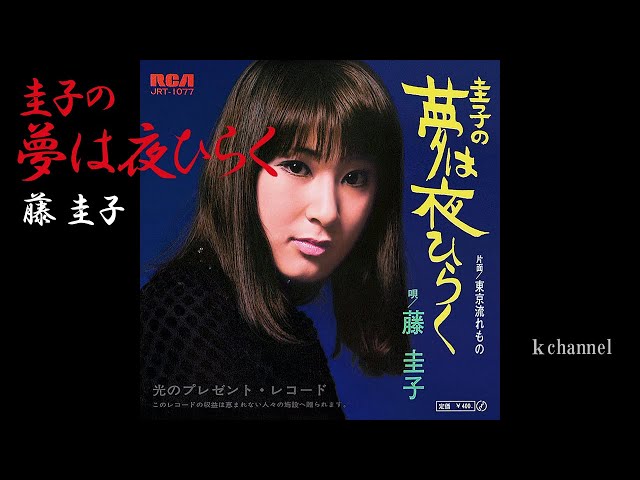
Keiko Fuji, also known as the mother of Hikaru Utada, was a female singer who took Japan’s kayōkyoku and enka scenes by storm from the late 1960s to the early 1970s.
Born to parents who were rokyoku performers, she grew up immersed in the world of entertainment and debuted in September 1969 with “Shinjuku no Onna.” Her low, husky, slightly raspy voice and a singing style packed with uncontainable emotion came to be called “enka of resentment,” and with an expressiveness beyond her teenage years, she quickly gained popularity.
In 1970, she won the inaugural Japan Kayō Awards and received the Popularity Award at the 12th Japan Record Awards, rising to national stardom.
That same year, she also made her first appearance on NHK’s Kōhaku Uta Gassen.
She’s a singer I’d recommend if you want to immerse yourself in a world of wistful, melancholic songs.
In conclusion
We’ve introduced the great divas of the enka world who colored the Showa era, and as you can see, they’re all stellar figures with nationwide popularity.
Most of them have signature songs that transcend the enka genre and that almost everyone has heard at least once.
Of course, beyond the singers we featured this time, there are many other female enka artists who blazed through the Showa period, as well as those who debuted toward the end of Showa and went on to lead the Heisei era—so be sure to dig deeper!