


I’ve gathered a collection of hard-to-read kanji for fish! How many can you read? The best-known fish kanji include things like 秋刀魚, 鮎, and 鮭.
I’m sure many of you recognized those right away.
But this article features difficult kanji.
Many of them are hard to read unless you know the origin of the characters or the fish’s ecology.
That said, some can be guessed with a flash of insight, so please give it a try.
Even kanji that are hard to memorize can stick once you learn their origins and meanings.
- Quiz on various kinds of fish
- A quiz of interesting obscure kanji: characters that look easy but are hard to read
- The world’s toughest! A collection of insanely hard-to-read kanji
- [For Seniors] Looks readable but you can't read it! Fish Kanji Quiz
- A quiz on how to read obscure kanji: words that become difficult when written in kanji.
- How many can you read? A quiz on difficult kanji for foods
- [Hard-to-Read Quiz] Single-character difficult kanji — including surprisingly simple ones!
- What animal is this kanji? A quiz on difficult animal kanji.
- One-character difficult kanji quiz: a multiple-choice (3 options) game to learn the readings of challenging kanji
- [Knowledge Expander!] A Three-Choice Quiz about Fish for Elementary School Students
- Can You Read These? Quiz on Kanji with Many Strokes
- The world’s fewest: A collection of one-stroke kanji. Learn them in a quiz format!
- [Interesting] Summary of Kanji Reading Quiz Questions
Obscure kanji for fish. Can you read them? (1–10)
shishamo
See the answer
shishamo (a small saltwater fish, often grilled in Japanese cuisine; commonly capelin is served as a substitute)
Shishamo, a fish you often see at supermarkets. Although it’s native to Japan, its numbers are declining domestically, and most of the ones on store shelves are said to be imported. There’s an Ainu legend behind why shishamo is written with these characters. According to the legend, shishamo was made from willow leaves.

Satsusougyo
See the answer
Sappa
Sappa is a fish in the herring family and can also be written with the kanji “鯯.” It is also known by the alternate name mamakari and is famous for being used in Okayama Prefecture’s local cuisine. Sappa looks similar to a fish called konoshiro, but they can apparently be distinguished by looking at the dorsal fin.
young sardines (shirasu) or whitebait
See the answer
sand lance
It’s said that the kanji “玉筋魚” are used because the fish swim in schools and their appearance looks like lines or tendons. “玉” refers to the school. There are also the kanji forms “鮊子,” “如何児,” and “䱊.” This fish is also known for the regional dish called kugini (sweet-simmered preparation).
millet roe

See the answer
banded blue sprat
When it comes to fish essential to Kagoshima’s local cuisine, kibinago tops the list. Its body’s patterns are likened to a sash (obi), and the name is said to combine “kibi,” a Satsuma dialect word for sash, with “nago,” meaning a small fish. It can also be written with the kanji characters 「黍女子」「吉備女子」「𩸕」.
grouper

See the answer
dace
The ugui is a member of the carp family (Cyprinidae). There are various theories about the origin of the name “ugui,” such as that its slender body resembles a sacred, cleansing stake, or that it is a fish frequently eaten by cormorants. It is also known for developing reddish lines on its body during the breeding season.
stonefish
See the answer
scorpionfish
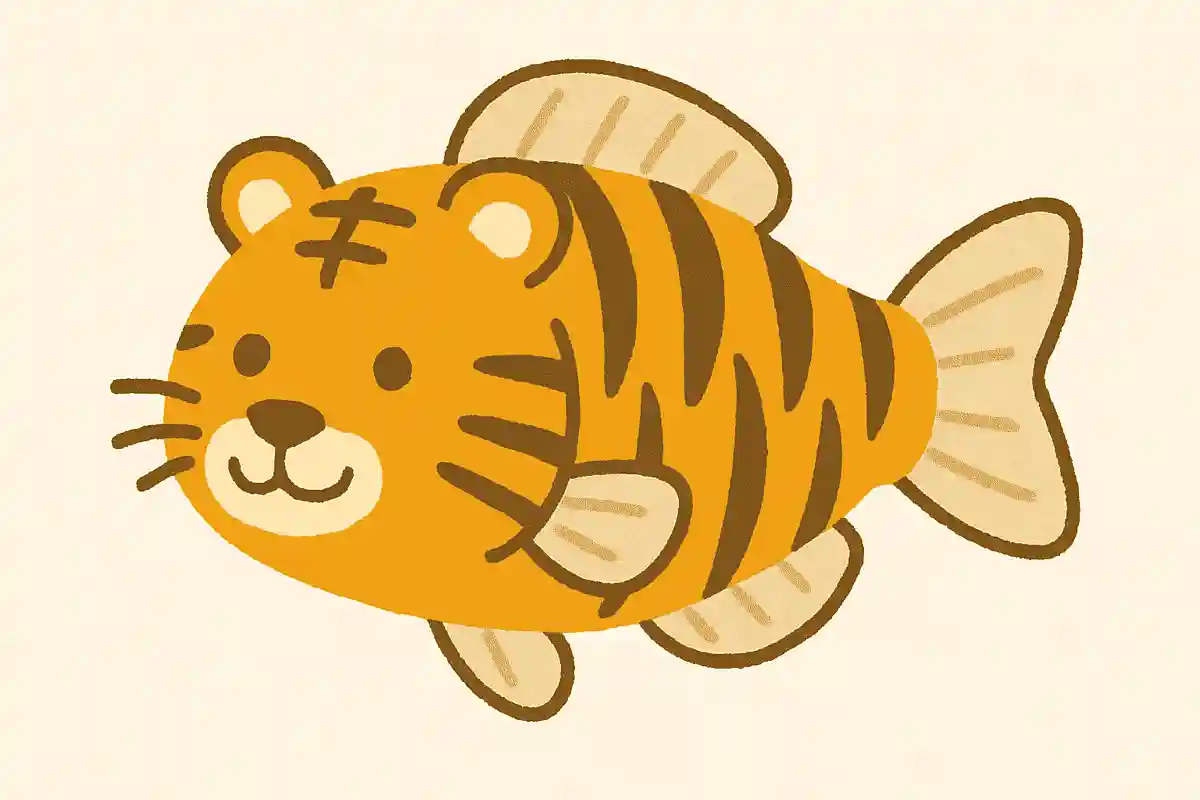
Scorpionfish are very tasty when you eat them. But as everyone knows, they aren’t exactly beautiful to look at. The kanji “虎魚” (literally “tiger fish”) seems to be an ateji, while the name okoze itself comes from “oko,” meaning ugly, and “ze,” meaning fish—so the name literally means “an ugly fish.” It’s a bit pitiful, isn’t it?
pufferfish
See the answer
pufferfish
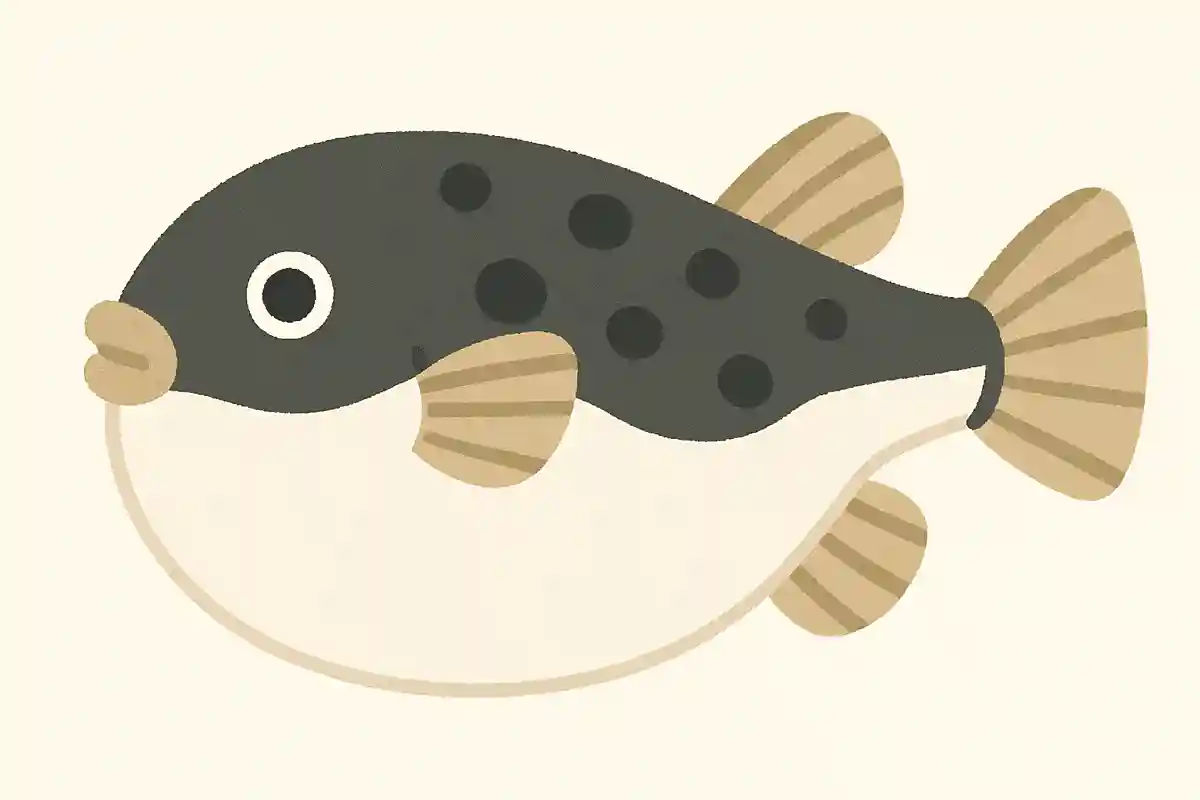
The pufferfish, known as a poisonous fish and one that inflates. I hear it puffs up as a threat display, but it ends up looking kind of cute, doesn’t it? The kanji “河豚” literally means “river pig.” It’s said to have been named that because its swollen appearance resembled a pig.