

Traditional Japanese Music: Famous Pieces of Gagaku and Kagura. Recommended Traditional Japanese Music

How much have you experienced the beauty of Japan’s traditional music passed down since ancient times? In gagaku and kagura dwell a solemn atmosphere and profound spirituality that modern music cannot offer.
Japan’s traditional music, handed down for over a thousand years, holds a universal appeal that resonates in our hearts.
In this article, we introduce a selection of exquisitely pure melodies from Japan’s classical music.
Their timbres may be unfamiliar to modern ears, but they will surely sink deep into your heart.
- Spirit of Wa: Masterpieces for the Koto — Japan’s Beautiful Melodies
- [New Year BGM] New Year Songs Loved Across Generations
- A Collection of Moving Shakuhachi Masterpieces | Beautiful Japanese Melodies That Stir the Heart
- [2026] A Collection of Classic and Popular J-Pop Songs About God [Japanese Music]
- Masterpieces and popular songs by Wagakki Band
- [Song of Osaka] A selection of passionate, warm-hearted Osaka tunes
- The Spirit of Japan: A Collection of Famous and Popular Shamisen Pieces
- Masterpieces of Japanese fusion—From nostalgic classics to recent recommendations—
- A beautiful Japanese song that purifies the heart. A highly recommended classic.
- Cute masterpieces of J‑Pop: recommended popular songs
- Today's recommended ballads: A carefully curated selection of heartwarming, gem-like masterpieces!
- [Japanese-style BGM] Beautiful tones woven from Japanese tradition
- “Japanese Traditions”: Japanese Festival Music (Jun Hōgaku)
[Traditional Japanese Music] Masterpieces of Gagaku and Kagura. Recommended Traditional Japanese Music (11–20)
Shonai Kagura, Oita Prefecture

This kagura, handed down in Shōnai-machi, Yufu City, Ōita Prefecture, is a community-rooted performing art that has continued since the late Edo period.
It is characterized by vibrant musical accompaniment of drums and flutes, with powerful drum tones and rhythmic beats that captivate the audience.
In signature pieces such as “Slaying the Great Serpent,” the dance unfolds in a style that is heroic yet at times humorous, and together with its dazzling costumes, it heightens the festive atmosphere.
Regular performances are held annually from May through October, and it is said that a festival featuring the entire kagura troupe is also held in autumn.
Hiroshima Kagura: Jinrin

A signature piece of Iwami Kagura and Hiroshima Kagura, this dramatic program tells the story of Emperor Chūai and his retainer Takamaro vanquishing fearsome demons.
The demons, depicted with wings on their backs and riding in on black clouds, are brought to life with some of the largest kagura masks and distinctive costumes, creating a stage presence that overwhelms the audience.
The performance begins with a spoken exchange between gods and demons, then unfolds into a fast-paced showdown featuring two deities and two demons—one of its key highlights.
As one of the core pieces frequently performed in regular programs across Hiroshima Prefecture, it captivates those seeking to experience the profound spirituality of Japanese traditional performing arts, with a compelling musical ensemble of drums, gongs, and flutes woven together with solemn kagura chants.
Bugaku: Bailu Hachinraku
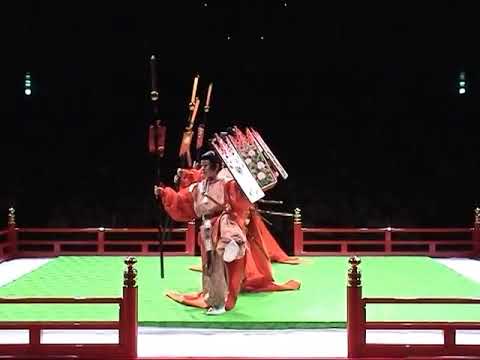
A valiant martial dance originating from Tang-dynasty military formations.
Four dancers wield swords, halberds, and shields, performing to the solemn strains of shō, hichiriki, and ryūteki—an awe-inspiring sight.
Set in the hyōjō mode, this piece is linked to legends that Prince Shōtoku performed it during his battle with Mononobe no Moriya to break the enemy lines, and that Minamoto no Yoshimitsu performed it seven times in succession during a campaign.
It is said to still be danced on specific memorial days at Shitennō-ji and Tōshōdai-ji.
If you wish to experience the depth of Japanese traditional performing arts or savor a majestic atmosphere, be sure to listen.
Dance of UrayasuTadatomo Asa
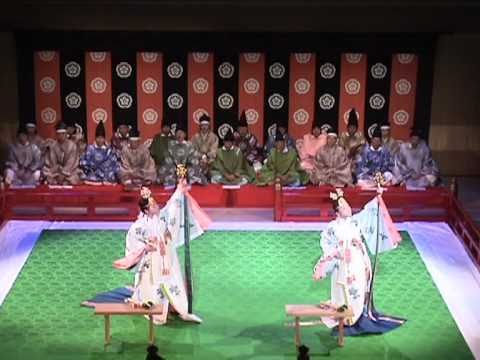
Composed by Tada Tomoasa, who served as director of the Imperial Household Ministry’s Music Department, this work was disseminated to shrines across Japan and was dedicated nationwide in November 1940 as part of the celebrations for the 2,600th anniversary of the imperial era.
Conceived on the basis of an imperial poem by Emperor Shōwa—“To heaven and earth, to the gods I pray, for a world unruffled like the morning-calm sea”—it expresses a wish for peace and tranquility through a solemn, two-part dance using a fan and bells.
Performed at a measured pace in harmony with gagaku instruments, the dance has been handed down as an offering before the kami and as a form of local folk performance, with traditions preserved in places such as Makkari Village in Hokkaidō.
If you have the chance to attend a shrine festival or annual rite, you may glimpse the spirit of Japan passed down across a millennium.
Gagaku SakuraNozu Teruo

This piece reimagines the tradition of gagaku—handed down for over a thousand years—through contemporary technology and the sensibilities of today’s performers.
Layers of the shō’s beautiful chords overlap, conveying a delicacy and stillness like petals drifting on a spring evening.
The hichiriki’s melodic line is gentle and lyrical, and with the addition of percussion, it evokes the uniquely solemn spatial atmosphere of gagaku.
I highly recommend it to anyone who wants to experience the mystical resonance of gagaku or feel the beauty of Japan’s four seasons through sound.
Etenraku ImayōBuntei
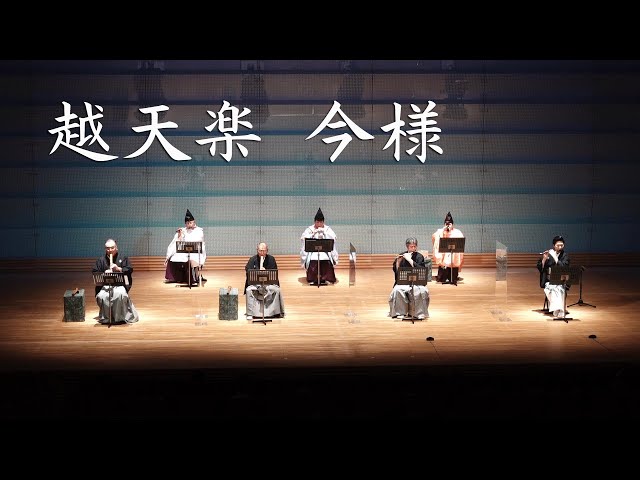
A work in which lyrics were set to a representative piece of gagaku and adapted to be sung in the imayō style.
Since the Heian period, a variety of texts have been attached to it and passed down in performances at court and at Buddhist ceremonies.
From the lyrics, composed in a waka-like manner describing cherry blossoms blanketing the spring mountains, one senses a longing for Japan’s beautiful nature and a profound awareness of the changing seasons.
Sung to the stable melody of the hyōjō mode, its majestic resonance carries a spirituality not found in modern music.
In the Noh play Umeeda, there are instances where this piece—reconstructed from old notation—is presented on stage, offering a chance to experience the depth of Japan’s traditional performing arts.
[Japanese Traditional Music] Masterpieces of Gagaku and Kagura. Recommended Japanese Traditional Music (21–30)
Hyojo Goshōraku-kyū Ryūteki Solotaiso

Goshōraku is said to have been composed by Emperor Taizong of the Tang dynasty.
The name “Five Constants” refers to the five Confucian virtues—benevolence (ren), righteousness (yi), propriety (li), wisdom (zhi), and trustworthiness (xin)—which were mapped onto the five tones of the pentatonic scale: gong, shang, jiao, zhi, and yu.
In the Tang-music repertoire, it is classified as hyōjō (Heptatonic mode equivalent), a medium-length piece, with sections including Jo (introduction) and various instrumental openings; Ha (development) in extended 8-beat cycles (16 measures), and a short piece; and Kyū (finale) in fast 8-beat cycles (8 measures).
There is also a shin-gaku version with a dance (four dancers, civil dance).
Within gagaku, it is one of the few works that fully embody the jo–ha–kyū structure, and a portion of it is performed here on ryūteki (dragon flute).
It is highly regarded as an ideal piece for beginners in gagaku, and because the fundamental techniques of Tang-style performance are concentrated in Goshōraku Kyū, those who wish to study and perform gagaku are advised to master Goshōraku.