

[Songs of Gunma] Exquisite masterpieces that sing of Gunma’s nature and the spirit of its people

When you hear place names from Gunma, do a nostalgic melody and lyrics come to mind? Songs themed around Gunma Prefecture are wonderfully diverse—from children’s songs and traditional school songs to enka, J-pop, and anime tunes! Many masterpieces vividly portray the atmosphere of hot spring towns, the grandeur of the mountains, and everyday life, and just hearing them makes you want to visit Gunma.
In this article, we’ve gathered songs related to Gunma Prefecture.
Why not discover Gunma’s lesser-known charms through music?
- Band, musician, and singer from Gunma Prefecture
- [Songs of Saitama] A Wealth of Humor-Filled Classics! Local Anthems Packed with Love for Saitama
- [Local Songs] Recommended tracks packed with Japan’s nationwide classics and hometown pride
- A classic song about Nagano. The enduring spirit of our hometown passed down through song.
- A classic song that sings of Yamanashi. The enduring heart of our hometown.
- [Songs of Kanagawa] A showcase of classic masterpieces that sing of port-town scenes and the feelings of its people!
- Recommended songs about mountains: classic and popular tracks for mountaineering and mountain songs
- Tokyo Desert: A Collection of Kiyoshi Maekawa’s Easy-to-Sing Songs [2026]
- A roundup of regional enka songs: classic hits that feature places from all across Japan in their lyrics.
- [Japan’s Tallest Mountain] Famous songs about Mount Fuji: recommended popular tracks
- [Songs of Yamaguchi] Introducing local tunes filled with hometown love and tracks related to Yamaguchi
- [Akita Songs] A Collection of Gem-Like Local Tunes Filled with Love for Hometowns
- [Yamagata Songs] Beloved local tunes and classic tracks celebrating majestic nature and hometown pride
[Songs of Gunma] Exquisite masterpieces singing of Gunma’s nature and the spirited hearts of its people (21–30)
Night Spinning WheelMegumi Misawa

It’s a quite well-known local song in Gunma Prefecture.
Set to a proper mood-kayō (mood ballad) style, it skillfully weaves in silk thread—registered as a World Heritage in 2014 as the silk production from the Tomioka Silk Mill—and even includes the names of Gunma’s urban centers from verses one to four, which surely boosts its popularity.
Little Cherry Blossom OsenIchikawa Yukino

It talks about cherry blossoms scattered across the back, but a cherry-blossom blizzard on the back inevitably evokes a strong image of Tōyama no Kin-san.
He, however, was a magistrate, whereas this is probably a bold-tongued woman barking, “Heads or tails?” The Jōshū accent also strongly conjures the image of a wandering gambler, and since it’s a woman, perhaps that’s why they went with cherry blossoms.
[Songs of Gunma] Exquisite masterpieces that sing of Gunma’s nature and the spirit of its people (31–40)
Woman of IkahoTachibana Noboru

Ikaho no Onna (Woman of Ikaho) is crafted with the image of the hot-spring town of Ikaho.
It’s nice how the scene is set against the backdrop of the spa town, telling the story of a man drinking alone at a bar, driven by his longing to see a certain woman.
The song was originally performed by Hiromasa Shimizu, who hails from Shibukawa City in Gunma Prefecture.
Oboro moonlit night on the Jōshū roadMoriyama Aiko

It’s interesting to have a young woman sing about a lone male drifter, isn’t it? When you think of Jōshū, there are so many images of traveling crows and the chivalrous underworld, and it’s true that there are also a lot of love songs as local tunes—but it’s all quite extreme.
Aiko Moriyama herself is an enka singer from Tochigi Prefecture.
Chūji’s Wandering JourneyKitajima Saburō

The single released in 2008 is a song featured in the stage production “Saburo Kitajima Special Performance: Chuji Kunisada.” Saburo Kitajima, who is second to none at singing about manliness, fits perfectly with the image of Chuji Kunisada in a traveling gambler’s attire.
The lyrics depict the scene where Chuji parts ways with his followers, and the mention of the ‘karakkaze’ (dry, gusty wind) is quintessentially Gunma Prefecture.
Beloved TakasakiKitagawa Daisuke & Mizuki Sakura
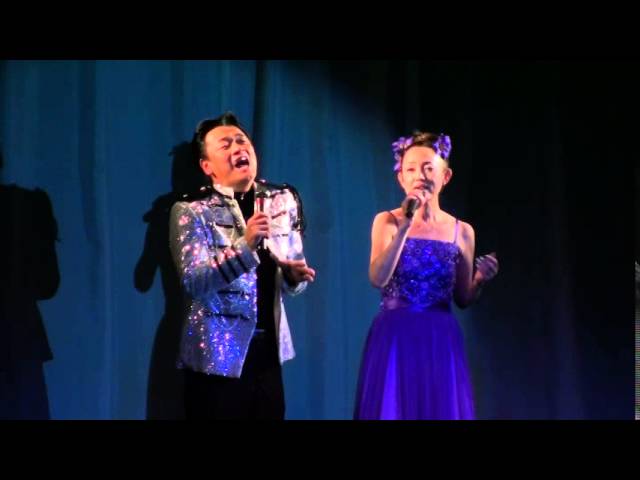
When it comes to duet songs from Gunma Prefecture, this might be the one.
It’s set in Takasaki, and the couple sings about Symphony Road in Takasaki City—a song only locals would know.
It’s the main street lined with office buildings, shops, and the city hall.
The “Harp Fountain” is a small park with a harp monument…
it’s casually promoting Takasaki City, isn’t it?
Love in TakasakiMihara Tomoe

This is a song written and composed by Takasaki-based musician Koji Ogawa to help raise Gunma’s profile.
Since it’s a local song, it’s filled with place names unique to the area—like around the Takasaki Castle ruins and neighborhoods packed with restaurants.
The melody has a mood kayō (vintage pop-ballad) vibe, but it’s actually a love song.