

![[Winter] Let’s make them together! A roundup of handmade kites](https://i.ytimg.com/vi_webp/ugmQbA-lJ1k/maxresdefault.webp)
[Winter] Let’s make them together! A roundup of handmade kites

During the long New Year’s holiday, many parents are probably thinking, “If we’ve got the time, why not get moving and play with the kids?” In that case, how about trying a traditional game! In this article, we’ve put together ideas for making homemade kites.
We introduce not only the classic kites beloved in Japan for generations, but also ones you can make with just a plastic bag or A4 paper, and even three-dimensional kites.
Watching a kite you made yourself soar freely across the sky is such a great feeling! It’s the perfect winter activity and a lucky, festive recreation.
[Winter] Let's make it together! Handmade Kite Roundup (1–10)
box kite
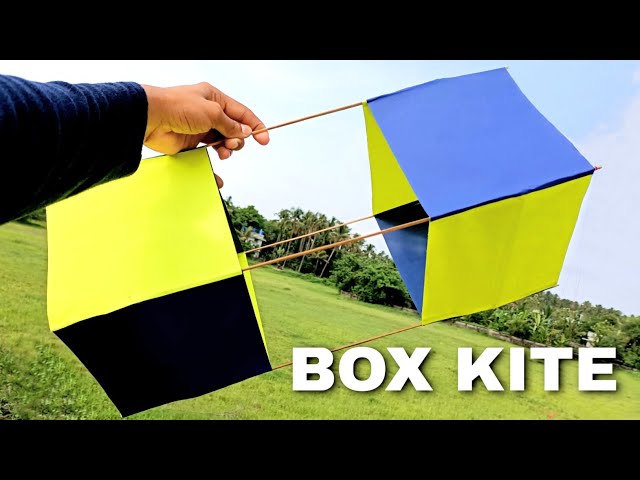
The box kite, which you assemble into a square box shape, is stable and easy to fly once it’s in the sky.
Prepare long bamboo skewers, construction paper, kite string, and adhesive, and let’s make it.
Use the bamboo skewers to build the kite’s frame.
Join the parts together with adhesive where they meet.
Using bright-colored construction paper on the outside makes it easier to see where the kite is in the sky, which is recommended.
Apply the construction paper straight and evenly so it doesn’t wrinkle, as this helps the kite stay stable and fly more easily.

Baramon Kite

The Baramon kite, a traditional craft from the Goto Islands in Nagasaki Prefecture, is named after a dialect word meaning “vigorous,” and it features a painting of a warrior confronting a demon.
You carve bamboo to make the kite’s frame; the key is to cut the bamboo to the needed lengths while shaving its body into a semicircular (kamaboko) shape.
After making the head, torso, and arms, assemble the other parts in order.
Once you’ve glued paper onto the frame, sketch the design and carefully add color.
Feel free to choose any color combinations you like.
Finally, attach the hummer and the tail to complete the kite.
When attaching the hummer, set it in a bow shape.
Try making this very cool traditional Japanese Baramon kite!
quad-line kite
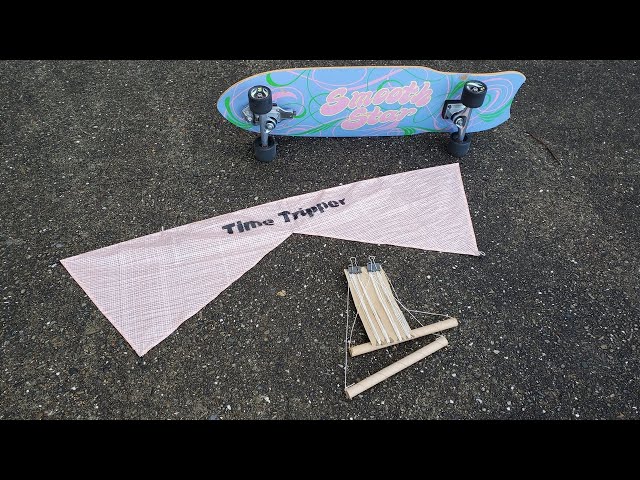
On a windy day, we recommend flying a quad-line kite.
Start with a simple move: launching it straight up into the sky.
Prepare a picnic sheet, scissors, a felt-tip pen, glue, kite string, carbon shafts, paper roll cores, and clips, and let’s get making.
Trace the pattern onto the picnic sheet and cut it out, leaving a seam allowance as you cut—that’s the key point.
Assemble the frame using carbon shafts.
Punch holes in both ends of two roll cores, thread the kite string through, then attach the string to the body.
Secure the string, and you’re done.
Try flying it while carefully controlling it with your hands.
curve yard

Here’s how to make a Karubyaa, a traditional Okinawan kite.
First, cross the vertical spar and the horizontal spar.
It’s important to fix the horizontal spar near the top of the vertical spar.
Stretch thread along both ends of the horizontal spar to apply tension, place the frame on the paper, and secure it firmly with cellophane tape or similar.
Run thread across the point where the spars cross and along the lower part of the vertical spar, adding tension there as well.
Then attach the decorations.
Add your own creative touches and make a Karubyaa that’s uniquely yours.

decorative kite

Decorative kites are a recommended handmade craft you can make using origami about 15 cm long.
They’re easy to make: apply glue to a bamboo skewer, attach the origami while securing it with shoji paper, and then add kite string to finish.
Prepare another bamboo skewer and piece of origami to make a small kite as well; using them together makes it even more festive.
During the long New Year’s holidays, take advantage of the extra time and try making decorative kites.
When everyone flies these vibrant kites together, it naturally lifts your spirits!

gadfly kite

The abudako is one of Japan’s traditional kites, modeled after the horsefly (a member of the Tabanidae family).
It flies well even in strong winds and is known for the buzzing “bun-bun” sound it makes as it ascends.
Abudako are mainly made using soot-bamboo, Japanese cypress (hinoki), and washi paper.
The choice between soot-bamboo and cypress varies by season: soot-bamboo is used in winter, and cypress in summer.
Brown washi is used for the lower body and white washi for the head, with designs painted in ink.
There are two head designs, “Ikari” (anchor) and “Nabekaburi” (pot-helmet), so try making the head with whichever design you prefer.

Three connected kites made from A4 paper

Here’s an idea for a three-part kite made with bamboo skewers, A4 paper, and kite string.
First, cut all three A4 sheets into squares.
Cut the bamboo skewers to the length of the square’s diagonal, and cut the kite string to about 1.5 times the length of the bamboo skewer.
Wrap the string around the end of the bamboo skewer three times and secure it with tape, then, as if making a bow, tie the other end of the string to the opposite end of the skewer and secure it.
Prepare six skewers with string attached like this, and attach them in pairs in an “X” shape so that they span the diagonals of the squares.
Be sure to bring the string to the side opposite the skewers before attaching.
Use the remaining A4 paper to make tails and glue one to each kite, then connect the three kites with kite string to finish.