

A handmade PythagoraSwitch video. A collection of my DIY Pythagora devices.

PythagoraSwitch is an educational program for young children broadcast on NHK E-Tele.
Alongside introducing content themed around rules and phenomena found in everyday life, the show features a popular segment called the Pythagora Device, which helps nurture children’s rich thinking skills.
Some people may be looking for homemade videos of Pythagora Devices packed with complex contraptions.
So in this article, we’ve gathered DIY PythagoraSwitch videos that use a variety of items.
From creations that use familiar household objects to works brimming with numerous gimmicks, be sure to check out these PythagoraSwitch videos that offer plenty to enjoy.
- Kids and adults alike will be captivated! A collection of DIY marble run ideas
- A handmade PythagoraSwitch video. A collection of my DIY Pythagora devices.
- It's fun to spin! A collection of DIY toy ideas
- Handmade games: DIY craft ideas you can make and play
- [Let’s Make and Play!] Handmade Ideas for a Target Shooting Game
- Simple yet amazing crafts: craft ideas that elementary school students will want to make
- Moving! Spinning! Flying! Fun handmade toys made with rubber bands
- Handmade ideas to create and play the traditional Japanese game “Daruma Otoshi”!
- [DIY] A Collection of Handmade Moving Toy Craft Ideas
- [For Kids] Today’s Handmade Craft Ideas
- [Handmade Toys] Fun to Make! A Collection of Pull-Along Toy Ideas
- [For Kids] DIY Snowman Craft Ideas!
- DIY Hula Hoop Ideas for Kids
Handmade PythagoraSwitch videos. A compilation of my DIY Pythagora devices (11–20)
Wandering Paper Cup
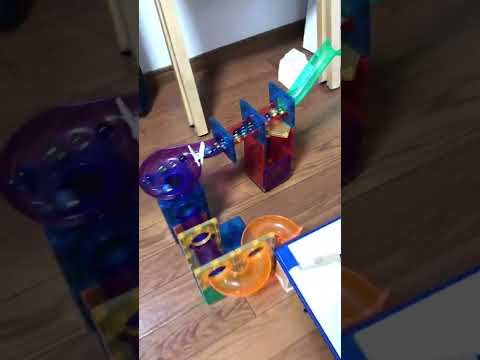
This is a PythagoraSwitch-style machine that begins with a cascade of marbles and showcases various motions like domino effects and centrifugal force.
There are many highlights—such as a single marble overflowing from the mass and rolling onto the course, or being swung left and right before returning to the track—but the paper cup near the end deserves special attention.
A marble drops from the course into the paper cup, and the subsequent incline causes the marble to move around together with the cup.
Because the cup constrains the marble compared to when it’s rolling on its own, judging how it will move becomes crucial.
If you put thought into the cup’s design, it could further accentuate that distinctive, wandering motion.

In conclusion
A Rube Goldberg machine that, once you press the start button or set a ball rolling, proceeds all the way to the goal without any further intervention. Many of them incorporate the laws of physics, and you’ve probably discovered numerous contraptions with intriguing mechanisms. From devices themed around everyday items or stationery to ones packed with a variety of gimmicks, they’re great references when you make your own PythagoraSwitch-style machine.