

Recommended for piano recitals! A collection of bright, upbeat pieces

When it comes to piano recitals, don’t you often find yourself unsure which piece to play?
Even if you have a vague image like “I want to play a piece with a certain mood,” it can be hard to come up with specific titles.
Many famous classical pieces in minor keys are cool and impressive, but they tend to sound a bit dark, don’t they?
So in this article, I’ll introduce a wide selection of bright, upbeat pieces that are perfect for a piano recital.
From well-known favorites to hidden gems that sound great on stage, I’ve picked pieces across a broad range.
Try choosing one with a difficulty level that suits your playing.
- [For Elementary School Students] Brilliant, Showy Masterpieces That Sound Impressive at Piano Recitals
- [For Intermediate Players] Challenge Yourself! Recommended Masterpieces That Shine at Piano Recitals
- [For Adults] Recommended for Piano Recitals! A Curated Selection of Impressively Sounding Masterpieces
- [For Advanced Players] A Curated Selection of Classical Masterpieces to Tackle at Piano Recitals
- [Piano Recital] Recommended for Middle Schoolers! A Comprehensive Introduction to Classical Masterpieces
- [Intermediate Level] Cool Piano Pieces You Can Play [Great for Recitals Too]
- [Piano Recital] Recommended for Boys! A Curated Selection of Cool, Impressive, and Popular Pieces
- Recommended for junior high school students! A selection of pop songs perfect for piano recitals
- For Beginners: Easy to Play and Sounds Impressive! Pieces That Shine at Piano Recitals
- [For Piano Recitals] Simple yet Cool Classical Pieces
- [Beginner] Recommended Piano Pieces to Play at a Recital
- [Piano Recital] Carefully Selected Classical Pieces Recommended for Upper Elementary School Students
- [Piano Recital] Carefully Selected Classical Pieces Recommended for Upper Elementary School Students
Recommended for piano recitals! A collection of bright pieces (1–10)
Trumpet SerenadeFritz Spindler

This piece is by Fritz Spindler, a pianist and composer active in 19th-century Germany.
He left around 400 works, more than 300 of which are piano pieces, showing his strong devotion to piano music.
This work is characterized by a light, lively style that evokes the sound of the trumpet on the piano.
Its bright, energetic, fanfare-like melody is memorable and uplifting.
It’s friendly for piano beginners and is a popular choice often performed at recitals.
Highly recommended for those seeking a cheerful piece or wanting to enjoy a light, buoyant performance.
Piano Sonata No. 20 in G majorLudwig van Beethoven

We present a piano piece composed by the great master of classical music, Beethoven, specifically for beginners.
Written around 1795, its first edition was titled “Deux Sonates Faciles” (Two Easy Sonatas), and it is characterized by a concise, approachable style in two movements.
The first movement features a dignified tonic chord and a triplet motive, while the second movement is notable for a graceful, minuet-like melody.
Although relatively easy to perform, the piece showcases Beethoven’s compositional technique and aesthetic sensibility.
It is an excellent choice for those who have just started learning the piano or are newly interested in classical music.
With its bright, warm atmosphere, it is sure to captivate audiences at recitals.
12 Variations on “Ah! vous dirai-je, Maman” in C major, K.265 (Twinkle, Twinkle, Little Star Variations) by MozartWolfgang Amadeus Mozart

Composed by the great master of classical music, Mozart, this work is characterized by its bright and accessible melodies.
Written around 1781, it consists of twelve variations on a French children’s song.
Despite its simplicity, the piece is crafted with technical sophistication that showcases Mozart’s genius.
Rich in rhythmic and harmonic variety, it never fails to keep listeners engaged.
It’s a perfect choice for a piano recital and is sure to captivate the audience.
This piece is recommended for pianists of all levels, from beginners to advanced performers.
Recommended for piano recitals! A collection of bright, cheerful pieces (11–20)
Maiden’s PrayerTekla Bądarzewska-Baranowska

A beautifully delicate piano miniature by 19th-century Polish woman composer Tekla Bądarzewska-Baranowska.
Characterized by an elegant melody symbolizing pure prayer, it deeply moves listeners.
Composed in 1851 when she was 18, the piece became beloved as salon music worldwide and achieved great popularity, being published by over 80 publishers.
Despite its simple structure, it has strong performance impact and is popular among piano learners.
Its bright, uplifting atmosphere is especially appealing and makes it a standout choice for recitals.
Song of SpringFelix Mendelssohn

Composed by Mendelssohn, a leading figure of the Romantic era, this piece exudes a refreshing, bright atmosphere.
Included in his celebrated Songs Without Words, it vividly portrays the arrival of spring using only the colors of the piano.
Its light, lively melody and dynamic rhythm evoke the joy of spring and the anticipation of new beginnings.
Written in 1842, it dates from the period when Mendelssohn was devoted to music education in Leipzig.
Technically around an intermediate level and approachable, it’s perfect for a piano recital.
A recommended piece for those who want to feel the breath of spring.
Polonaise No. 6 in A-flat major, Op. 53 (Heroic Polonaise)Frederic Chopin

This is a grand and powerful work by Frédéric Chopin, a composer emblematic of the Romantic era.
Composed in France in 1842, it embodies his patriotism for Poland.
Characterized by chromatic progressions and the volume effects of octaves, it brings out the piano’s expressive power to the fullest.
Known affectionately as the “Heroic” for its bravery, it is beloved by a wide audience and is often used as background music in dramas and anime.
It’s a highly recommended piece not only for those interested in classical music, but also for anyone who wants to fully savor the allure of the piano.
Waterside (from “Piano Collections FINAL FANTASY XII”)Uematsu Nobuo
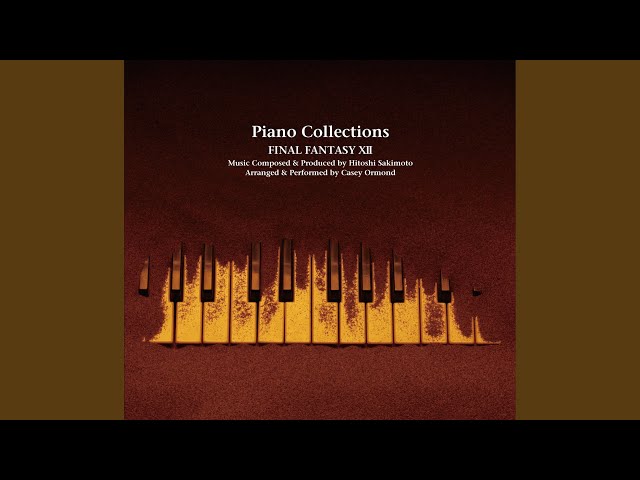
This piano collection series, one of the works by Nobuo Uematsu—renowned as a master of video game music—is beloved by many fans for its blend of tranquility and beauty.
Though instrumental, its graceful melodies offer comfort and healing to listeners, vividly recalling the scenes and emotions from the games.
In recent years, opportunities to perform game music on acoustic instruments have grown, and it is increasingly becoming an important part of performers’ repertoire.
The piece introduced here, with a title and atmosphere reminiscent of Debussy’s impressionism, is arranged with a classical flavor and stands as a distinguished piano work that rewards technical performance.
It’s a very beautiful, uplifting piece—why not give it a try?