

Recommended for high school students! A collection of easy one-day science project ideas

High school students who are struggling to choose a topic for their summer vacation independent research project, this is for you.
If you’re looking for an easy project—like “an experiment that can be done in a short time” or “a research project that looks impressive”—good news! This article introduces independent research ideas packed with the fun of science, focusing on experiments and hands-on builds.
From steam engines to planetariums, these are all projects that will make viewers exclaim, “Wow!” And surprisingly, many are easier to tackle than you’d think.
Find a wonderful project that will become a lasting summer memory!
- [I don't want to be like everyone else!] Recommended independent research topics for high school students
- [Middle School Students] Easy One-Day Science Projects and Crafts Ideas
- For upper-grade boys! Simple yet awesome craft project [Don’t call it lazy]
- [For Adults] Simple yet Impressive Crafts: A Stylish, Eye-Catching Collection
- Simple but awesome! Craft ideas for upper-grade girls
- Stand out with your junior high school independent research! A collection of fun experiment and craft ideas
- DIY science projects that elementary school boys will love: ideas you can make with everyday materials
- For summer vacation homework! Simple and amazing crafts for elementary school students that you’ll want to make after seeing them
- Simple yet amazing crafts: craft ideas that elementary school students will want to make
- Simple and cute summer project crafts! A collection of ideas for girls that will make you want to create
- Recommended for elementary school students! Science fair topics & craft ideas
- Adults will be hooked! A collection of craft ideas using toilet paper rolls
- Recommended for middle school students! A collection of quick science project ideas you can do in a short time.
Recommended for High School Students! A Collection of Easy One-Day Independent Research Ideas (21–30)
underwater soap bubbles
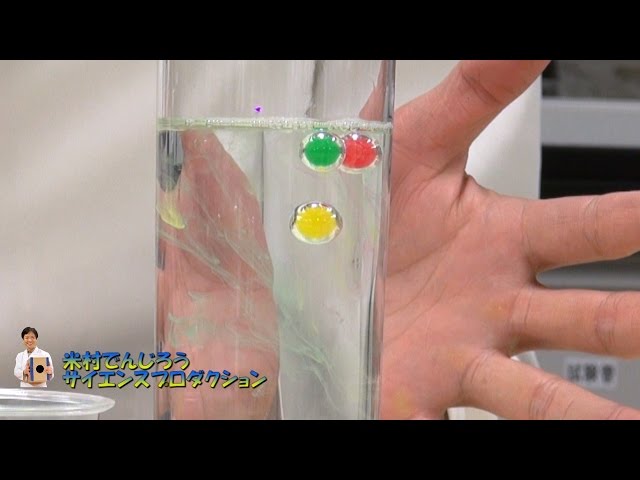
When you think of soap bubbles, you probably picture them floating gently in the air.
But you can actually make soap bubbles underwater, too.
All you need to do is prepare water mixed with dish detergent, then soak it up and let it drop from above.
It’s so simple that you can try it right away.
If you want to add a twist, you can mix paint into the water to make colored bubbles.
How about lining up bubbles of different colors and taking some dreamy, atmospheric photos?

Gel candle making

How about making gel candles using materials you can get at a 100-yen shop? As the name suggests, the wax part has a jiggly, gel-like feel.
Simply put, you just pour the base gel into a container and let it set—but since this is a creative project, make it your own by adding color, shells, or colored sand for a cute finish.
Create a one-of-a-kind candle.
If you have the time, try making lots of them!

Recommended for high school students! A collection of simple one-day science project ideas (31–40)
Try making yogurt from milk

Many high school students eat yogurt regularly, but few have made it themselves, right? So how about a science project where you make yogurt from milk? In fact, making your own yogurt is as simple as mixing store-bought yogurt into milk and letting it sit.
If you want to dig deeper, it might be interesting to investigate the conditions under which it fails.

Making instant-freeze packs

Perfect for hot summer days—let’s make an instant cooling pack! Prepare urea, borax, PVA glue solution, and water.
Urea and borax aren’t common names, but they’re not dangerous and can be purchased at a regular drugstore.
Just put them into a zipper-seal bag that closes tightly and knead.
As you knead, it gradually becomes cool, and once it turns slime-like, it’s ready.

Try making artificial salmon roe

With educational candy kits and the like, you can sometimes make things that look just like salmon roe.
How about a science project where you make such “artificial salmon roe” yourself? Specifically, by using sodium alginate and calcium lactate as ingredients and mixing in something like strawberry-flavored shaved ice syrup, you can create artificial salmon roe that looks just like the real thing.
It would be fun to make them in various colors.
Make carryable water

Did you know you can hold water? Mix sodium alginate into water thoroughly.
Then just drop that water into a calcium lactate solution.
That’s all it takes to make “edible” spheres of water you can hold.
It’s a fun experiment with a jiggly appearance.
Why does this “holdable water” form? It would be great to write a report explaining the mechanism.
Recommended for students who enjoy science experiments.
Static electricity experiment

Speaking of static electricity, it’s that sharp little zap you get in winter, but you may also remember creating static in elementary school by rubbing a plastic sheet on your hair or rubbing a straw with a tissue.
When you do that, your hair sticks to the sheet, or the tissue sticks to the straw, right? You might not have understood how it worked back then, but as a high school student, you should be able to grasp and explain the mechanism clearly.
Try summarizing it in your notebook, and then actually rub various materials together to compare how static electricity occurs and organize the differences you observe.
