

Children’s songs for Hinamatsuri: A collection of songs everyone can sing together for the Doll Festival


When it comes to events that color Japan’s spring, the Hinamatsuri (Girls’ Day) surely comes to mind.As the peach blossoms begin to bloom, many households—especially those with girls—display hina dolls.And songs are an essential part of Hinamatsuri!Starting with that classic tune we’ve all known since childhood, there are actually many songs themed around Hinamatsuri.In this article, we’ll introduce various children’s songs for Hinamatsuri.Please enjoy singing them to capture the seasonal mood—whether at a Hinamatsuri party in a nursery or kindergarten, or as a recreational activity in a care facility!
- [Hinamatsuri Songs] A roundup of classic Girls’ Day tunes and unexpected Hinamatsuri tracks
- Hand-play songs to sing for Hinamatsuri. Songs everyone can enjoy.
- March nursery rhymes & hand play songs! Spring songs you can enjoy with your kids
- Nursery rhymes to sing in spring: a collection of classic songs you'll want to sing with your children
- [For Seniors] Spring Songs You'll Want to Hum: Feel the Season with Nostalgic Classics
- Spring songs from the early Showa era: a collection of kayōkyoku and shōka that evoke spring
- [February Songs] Introducing children's songs, folk songs, nursery rhymes, and hand-play songs about Setsubun and winter!
- [For Seniors] Classic spring songs to sing in April: A heartwarming moment with nostalgic children’s songs and kayōkyoku (Japanese popular songs)
- [2026] Bon Odori songs every child knows! A roundup of fun festival tunes
- December children's songs, folk songs, and nursery rhymes: fun winter hand-play songs
- [Let's Enjoy Japanese Festival Songs!] Songs about festivals. Famous songs related to festivals.
- Nursery rhymes perfect for April: A collection of classic spring songs that capture the season
- A collection of cheerful nursery rhymes—songs that make you feel happy when you sing them.
Children’s songs for Hinamatsuri: A collection of songs everyone can sing together on Hinamatsuri (21–30)
Peach blossoms of the Doll Festival

This is a song that lets you fully feel the festive atmosphere of the Doll’s Festival, with familiar decorations appearing one after another—the essential peach blossoms, hina dolls, folding screens, and bonbori lanterns.
It is sung by children’s song vocalist Yoshiko Takagi, with lyrics by Niji Yume and music by Hirooki Ogawa.
Rather than through sheet music, it has been lovingly passed down via recordings such as CDs, and you can hear it on albums like “Hinamatsuri★Koinobori: Best of Spring Songs,” released in February 2017.
It’s perfect not only for Hinamatsuri parties, but also as background music for events during graduation and school entry season.
As you feel the warm arrival of spring, try humming this song together with your child and enjoy a wonderful Hinamatsuri filled with smiles.
Hinamatsuri is coming soon

This is a Hinamatsuri song we want sung with a sense of eager anticipation.
Through its lyrics and rhythm, you can really feel the children’s excitement.
Even kids who don’t know about Hinamatsuri may become curious as they sing, and find themselves more and more interested in the festival.
It even mentions foods like hina-arare and hishi-mochi—just hearing those names is exciting, isn’t it? With its bouncy rhythm, the children are sure to sing along enthusiastically.

The Five-Musician Band Song
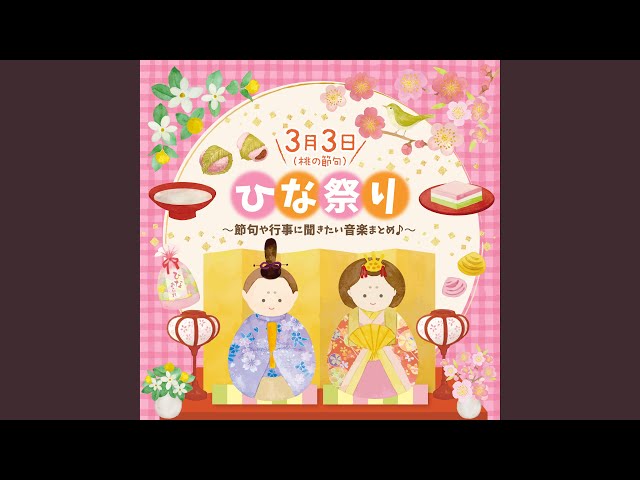
When you think of the Hina Matsuri, the main stars are the hina dolls, but why not also turn your attention to the lively Five Court Musicians who add excitement around them? Composed by Akira Yuyama, this piece is a delightful event song that makes the five-member ensemble—modeled after Noh music accompanists—easy for children to understand.
Its brisk rhythm and harmonious Japanese atmosphere give it a brightness that makes you want to move your body.
Included on the album “Hinamatsuri★Koinobori: Best of Spring Songs,” released in February 2017, the performance by Yoshiko Takagi and Ensemble Zith enhances the excitement of the season.
Although it is not the theme song of any specific TV program, it could be called a de facto tie-in track, beloved as a standard at Hina Matsuri events in nurseries and kindergartens.
It’s short, easy to learn, and may be the perfect way for children to experience Japan’s traditional culture.
March 3rd is Hinamatsuri (Doll Festival/Girls’ Day).Baku-san

When it comes to events in March, Hinamatsuri (Girls’ Day) comes to mind.
If you want everyone to get moving and have fun on that day, we recommend “March 3rd Is Hinamatsuri,” created by Baku, an active nursery teacher and creative play author.
It’s a hand-play song where children strike poses like hishi-mochi and hina-arare in time with the lyrics, packed with elements that naturally bring smiles to their faces.
Use it as a song to liven up seasonal festivities—perfect for Hinamatsuri gatherings where everyone celebrates together, or during recreation time.
Bridal Dollsakushi: Fukiya Niji/sakkyoku: Sugiyama Haseo

This is a children’s song brimming with Taisho-era romantic sentiment, depicting a doll dressed in traditional Japanese bridal attire.
The lyrics were written by Koji Fukiya, who is also known as a lyrical painter, and the music was composed by Haseo Sugiyama.
In contrast to the beautiful attire, the slightly lonely, heartrending melody really sinks into the heart, doesn’t it? The piece came to public attention when its poem and illustration were published in the magazine Reijokai in February 1924, and it was later recorded in the early Showa period, becoming beloved by many.
The song’s distinctive sense of wistfulness may be appreciated even more deeply when heard in adulthood.
It’s a work well known to many grandparents too, so how about singing it softly at a Hinamatsuri gathering of three generations, reminiscing about the old days?
Hina Hina Festival

This is an original play song released on Afro × Makocchan Channel.
Set to a gentle, catchy melody that makes you want to hum along, the song has kids pretend to be hina dolls and perform various actions.
For example, they pretend to be the Imperial Couple and take a tumble, or become the Three Court Ladies and dance—the song pairs each hina doll with a specific movement.
The interjections using the classical phrase “ito ○○” that appear between verses are sure to delight children as well.
It’s a song you can enjoy while playing and learning about hina dolls together with kids!

Cute HinamatsuriBaku-san

When the peach blossoms start to bloom, it’s so exciting to prepare for Hinamatsuri with the children, isn’t it? This work, created by Baku, an active nursery teacher and creative play artist, makes this seasonal event even more fun.
With Baku’s unique perspective—backed by a repertoire of over 500 hand-play songs—the lyrics and movements are crafted to connect naturally.
It’s wonderful that, without complicated explanations, children can feel the atmosphere of the Hina display and the joy of the festival just by moving their hands while singing.
The videos have spread to childcare settings and homes alike, and their easy, copy-at-a-glance format is another reason for their popularity.
Why not try incorporating it into school gatherings or parent–child bonding time at home?