


Bingo game variant rules. Let’s play with fun rules that are different from the usual!

When you think of bingo, you probably picture a party game played with bingo cards and a bingo machine.
It’s an easy game everyone can enjoy, so you often see it at year-end and New Year parties, local events, and wedding after-parties!
However, because it’s a repetitive process—balls come out of the machine and you punch holes in your card—it can surprisingly start to feel a bit stale.
In this article, we’ll introduce some fun variations on the standard bingo rules.
We’ve gathered a variety of twist rules: some that help break the ice when many participants are meeting for the first time, and others that are especially fun when played among close friends.
Use these as inspiration, and enjoy a great time together!
Bingo game variant rules. Let’s play with fun rules different from the usual! (1–10)
Random Bingo

In Random Bingo, you don’t use a bingo machine to draw numbers.
So how do you decide the numbers? You determine them based on answers to questions.
For example, anything works, such as “your phone’s remaining battery percentage,” “the sum of the month and day of your birthday,” or “your shoe size.” You can prepare questions in advance and have participants answer them, or, if it’s at a wedding, you can have the newlyweds answer.
Make sure the questions can always be answered with numbers.

Theme Bingo
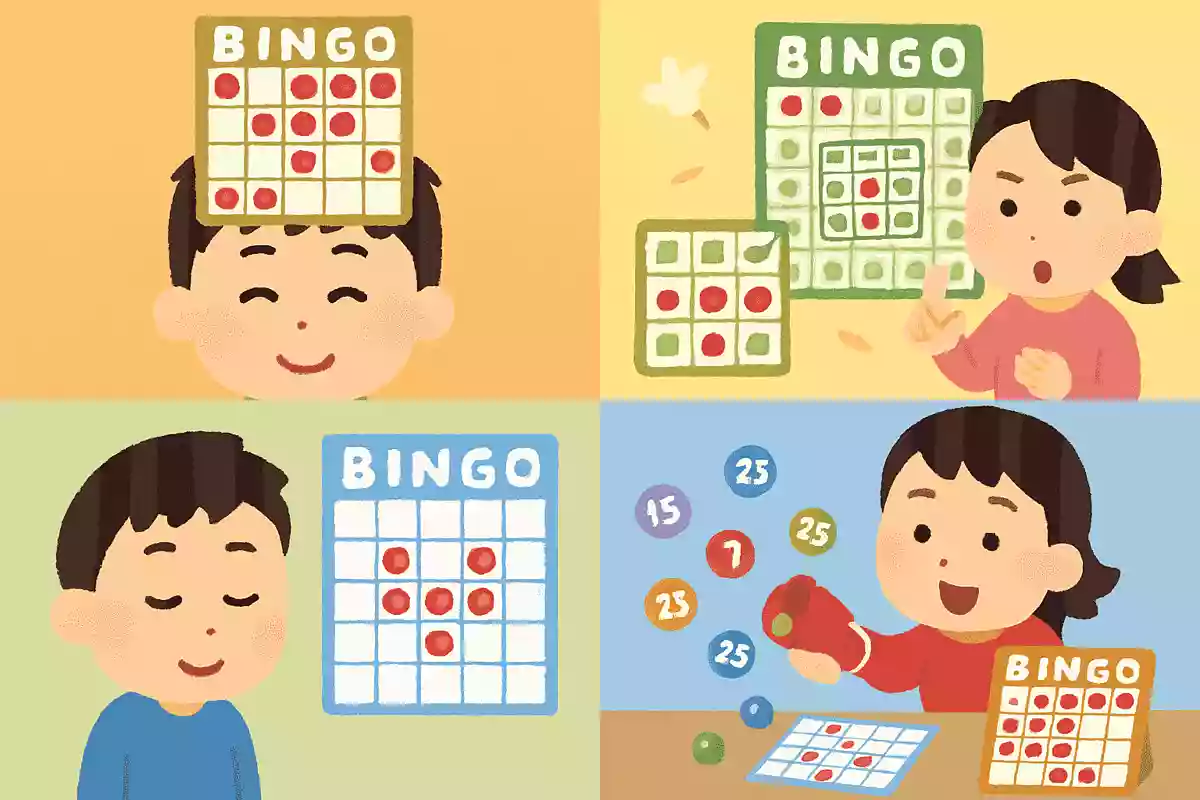
We’d like to introduce “Prompt Bingo,” an activity that can be used as brain training for older adults! First, choose nine prompts from a larger list and write them on a bingo card.
Once participants decide the order of play, they take turns drawing one slip of paper from a box filled with the prompts and announcing it.
In this bingo, you don’t just mark a circle when your prompt is drawn—you can only mark it after you successfully answer the prompt.
Each prompt also has a point value based on its difficulty, so the winner isn’t just the first to get bingo; the top spot is decided by the total points from completed bingos.
Try creating a variety of prompts, such as physical activities, math problems, trivia, and more!
Image Bingo

Image Bingo is a game where you pick one person to imagine and write down things that person would be likely to say on a bingo card.
It helps to decide on a theme—such as “food,” “home appliances,” or “anime works”—so choose one first and then fill out the card.
The key to this bingo is how well you know the person you’re imagining.
Recall their daily words and actions, and try to predict the kinds of answers they’d give.
Once the card is ready, have them answer each item one by one and aim for bingo.
Quiz Bingo

How about playing “Quiz Bingo,” a game that lets you enjoy both quizzes and bingo? In this game, you prepare quiz questions in advance and create bingo cards using the answers.
Hand out the cards and a list of the quiz questions to the participants, and the game begins! Participants take turns choosing one quiz at a time and reading it out.
If they have the answer on their card, they punch a hole and aim for bingo.
Since players must compare the cards with the quiz list and choose while checking which answers appear on their own cards, their knowledge is really put to the test.
Icebreaker Bingo
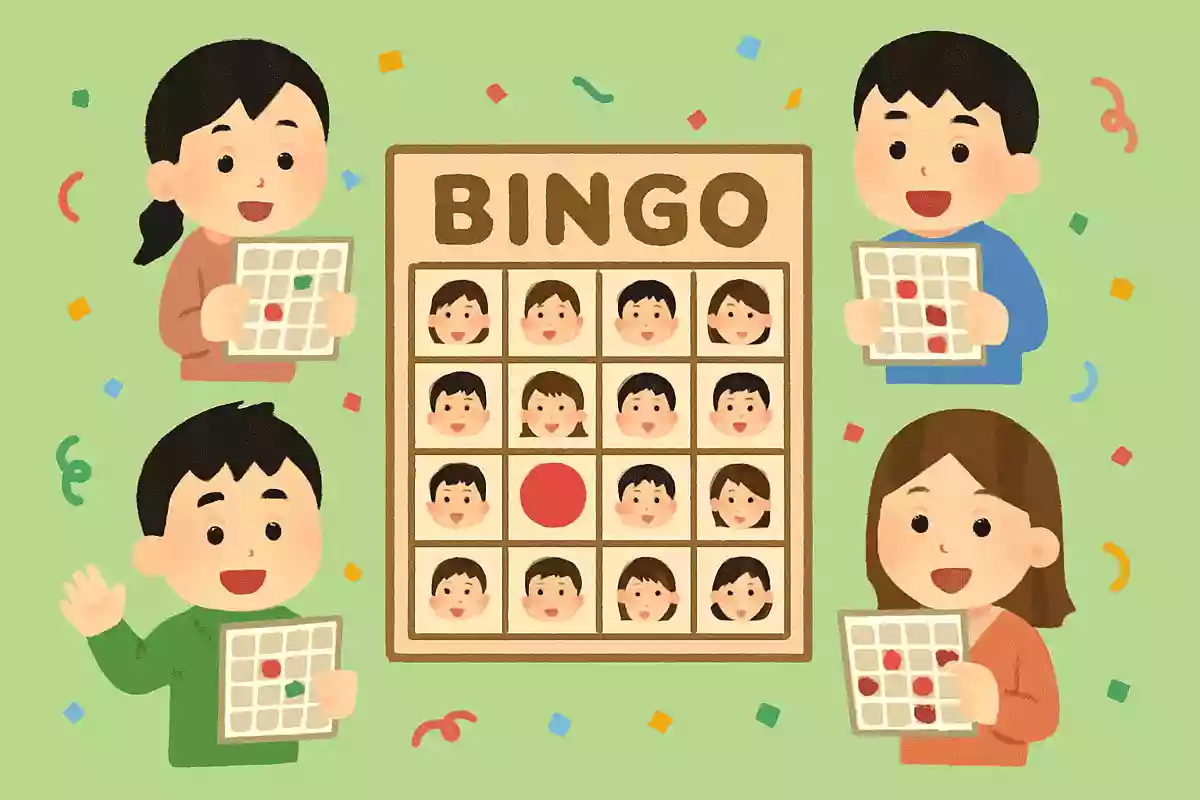
When you want to help a new class or team get to know each other, I recommend this Self-Introduction Bingo.
First, choose prompts divided into columns—like “favorite food,” “favorite anime,” and “favorite game”—and have everyone fill in their answers on a bingo card.
Regular bingo uses numbers, but in Self-Introduction Bingo, these answers take the place of numbers.
Participants take turns sharing one answer at a time; if you have the same answer on your card, mark it and aim for bingo.
Using your own answer to make a bingo is not allowed.
Name Bingo

Speaking of bingo, it’s the game where you punch holes in your card when a called number matches, aiming to line up a row vertically, horizontally, or diagonally, right? In this Name Bingo, you replace the numbers with names.
Instead of numbers, write the names of the participants present on your card.
The rest works just like regular bingo: if a called name is on your card, punch a hole.
It’s a great game when there are many first-time participants or when the group is too large for everyone to introduce themselves.
When someone’s name is called, have them stand up and say a few words based on a theme—like their favorite food.
Catchphrase Bingo

Catchphrase Bingo is a game where you can enjoy a conversation, too.
First, pair up the participants and split roles into a guesser and a speaker.
The guesser fills in a bingo card by predicting the catchphrases or habitual expressions the speaker is likely to say.
Once that’s done, choose a topic and start the conversation.
If a predicted catchphrase comes up during the talk, mark it on the card and aim for bingo.
The difficulty changes depending on how well you know the other person, so it’s recommended to play with family or friends you know well.