

[Intermediate] Recommended Piano Duets | A Curated Selection of Cool and Dazzling Pieces


Piano duet pieces performed with four hands simultaneously are all dazzling and cool! When choosing a piece to present at a recital, many people may wonder, “What kind of piece will make a big impression?” or feel stuck because “They all seem difficult, and I can’t decide…”.
So this time, from among luxurious and brilliant duet pieces, we’re introducing recommended works at the intermediate level! They all sound grand, but since the parts are shared between two players and there are many intermediate-level arrangements, these pieces are easy to try without feeling overwhelmed.
We hope this helps you choose your next duet piece.
- [Piano Duets] Guaranteed to get the crowd excited! A roundup of recommended pieces
- [Intermediate Level] Cool Piano Pieces You Can Play [Great for Recitals Too]
- [Advanced] Piano Duet Works | Exquisite Masterpieces to Savor the Rich, Weighty Sonorities of Four Hands
- [Piano Duets] Perfect for recitals! A carefully curated selection of brilliant, crowd-pleasing works
- [For Intermediate Players] Challenge Yourself! Recommended Masterpieces That Shine at Piano Recitals
- [Intermediate Level] A curated selection of piano masterpieces featuring strikingly brilliant melodies!
- [Beginner] Recommended Piano Duets | A curated selection of pieces enjoyable for both adults and children
- [For Adults] Recommended for Piano Recitals! A Curated Selection of Impressively Sounding Masterpieces
- [For Elementary School Students] Brilliant, Showy Masterpieces That Sound Impressive at Piano Recitals
- Piano Masterpieces: Surprisingly Easy Despite Sounding Difficult!? A Curated Selection Perfect for Recitals
- [Piano Recital] Perfect Pieces for Middle Schoolers! A Curated Selection of Impressive, Audience-Pleasing Works
- For Advanced Players: Showstopping Classics to Play at a Piano Recital
- [Piano Recital] Recommended for Boys! A Curated Selection of Cool, Impressive, and Popular Pieces
[Intermediate] Recommended Piano Duets | Carefully Selected Cool & Dazzling Works (71–80)
Little Suite: IV. BalletClaude Debussy

Composed between 1888 and 1889, this work for piano four hands captivates with its brilliant, flamboyant atmosphere.
Its lively rhythms and bright melodies evoke the elegant ballroom scenes enjoyed by the aristocracy of the Rococo era.
Though rhythmically energetic and full of vitality, the piece’s graceful expression is heightened by a clear awareness of rests and a steady tempo.
Later arranged for orchestra by Henri Büsser under the supervision of Claude Debussy, it gained new allure.
This work, which fully showcases the appeal of piano duet playing, is perfect for performance with close musical partners who can listen closely to each other, as it demands well-matched ensemble.
Dragon Quest V “Wedding Waltz”sugiyama kouichi

The nationally popular game Dragon Quest, which invites players on a hero’s adventure, features the “Wedding Waltz,” now arranged for piano four hands.
Supervised by composer Koichi Sugiyama, it is included in the piano collection Dragon Quest V: Hand of the Heavenly Bride.
The piece plays during a pivotal scene in the game and leaves a strong impression on those who have played it.
It’s no exaggeration to say this piece represents Dragon Quest V.
Stylistically, it’s a typical Viennese waltz of the 19th century, giving it a very classical feel.
It’s a brilliant, fully realized composition that could easily be mistaken for standard classical repertoire if one didn’t know the game, and it would fit naturally in a piano recital.
It’s best performed with a bright, bridal image in mind.

agitato!Seizuka Shinya

Agitato!, composed by Shinya Kiyozuka—hugely popular and active in the media—and brought into the spotlight through his perfectly synchronized performance with office-worker pianist Rato Takai, is a piece that makes your excitement soar as you play.
It weaves in arrangements of masterpieces such as Franz Liszt’s Grandes études de Paganini No.
6, Rimsky-Korsakov’s Flight of the Bumblebee, and Wolfgang Amadeus Mozart’s Turkish March.
It’s a luxurious work that lets you savor both classical elements and a rock flavor.

Theme of Lupin the ThirdŌno Yūji
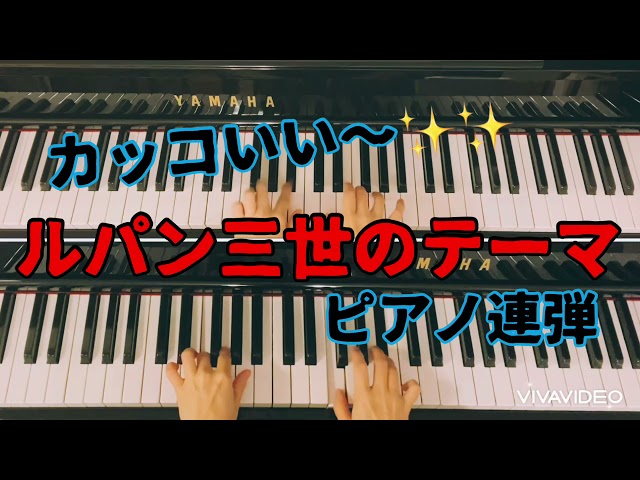
When people talk about songs that would be cool to play, many probably think of “Theme from Lupin the Third.” Composed by Yuji Ohno, this main theme has appeared in many arrangements throughout the series, and each version continues to captivate fans.
Every episode of the anime Lupin the Third remains engaging thanks to its charming characters, and the music draws you deeper into Lupin’s world.
Why not consider “Theme from Lupin the Third” as a candidate for a piano duet at a recital?
Suite “Dolly,” Op. 56: No. 2, Mi-a-ouGabriel Fauré

Gabriel Fauré’s masterpiece, the suite Dolly.
Composed to celebrate the birthday of the Bardac family’s daughter, Hélène, it is now beloved as a staple of piano recitals.
This time, I’d like to introduce the second piece, “Mi-a-ou.” The highlight of this work is its brilliant melody, worthy of a suite’s finale.
Its energetic structure brings out the full impact of four-hand performance.
Be sure to check it out.

Italian PolkaSergei Rachmaninov

This piece is packed with the unique charm of piano four-hands, woven from brilliant tone colors and exquisitely nuanced breathing.
Marked by a cheerful polka rhythm and a friendly, memorable melody, it was composed for intimate performances with family and friends.
The lively interplay between primo and secondo creates a vibrant resonance that lifts the listener’s spirits.
Hallmarks of Romantic-era harmony appear throughout, and despite its brevity, the work conveys rich musicality.
Frequently used as background music in films and television, this light, spirited piece is perfect for piano enthusiasts who enjoy duet playing.
It is a gem I wholeheartedly recommend to anyone wishing to deepen bonds with loved ones through music.
“Grand Ritornello” from The Eccentric BeautyÉric Satie

A four-hand piano piece sprinkled with satirical humor beneath its elegance.
Its light, dance-like rhythms and memorable, recurring melodies evoke a glimpse into Parisian high society.
Premiered in 1920, the work breathed fresh air into the musical world with a novel approach unconstrained by traditional forms.
The melodic lines—glittering yet tinged with irony—showcase Erik Satie’s unmistakable individuality.
Recommended for those who wish to explore the rich sonority and expressive possibilities unique to piano four-hands, as well as listeners seeking a charm distinct from conventional classical music.