

A classic of Japanese blues. Japanese blues that lets you get drunk on the sound and vocals.

What songs come to mind when you think of the blues?
Originally, it was music born from African peoples who had immigrated to America, beginning with songs that expressed the sorrow and laments of the poor.
Compared to jazz, which is centered on instruments, I think the blues has a special appeal in that you can enjoy it mainly with guitar and vocals.
Japanese blues is very rich in flavor and is perfect for listening to at a relaxed pace!
That groove that makes you drunk on the sound and the singers’ emotive expressiveness—blues moves the heart in every era.
- Classic and popular blues songs to sing at karaoke
- Ranking of popular blues songs
- A collection of enka songs with “Blues” in the title: masterpieces that sing of sorrow
- The Appeal of Japanese Blues Rock: A Collection of Classic Japanese Blues Rock Albums
- Blues masterpieces—from prewar blues to blues rock
- Masterpiece Japanese Blues Albums: Must-Listen Recommendations
- The soul’s cry woven into Japanese elegies: unraveling supreme masterpieces that resonate with the heart.
- Today's recommended ballads: A carefully curated selection of heartwarming, gem-like masterpieces!
- A Japanese blues band. The roots music of contemporary pop.
- [Tear-Jerking] Classic and Recommended Love Ballads
- A classic Japanese song that sings of sorrow
- [Western Music] Classic Blues Rock Songs: A Summary of Recommended Popular Tracks
- [2026] A Collection of Classic Japanese Ballads with a Jazz Flavor
A classic of Japanese blues. Japanese blues to get lost in the sound and vocals (31–40)
Wandering BluesWada Akiko
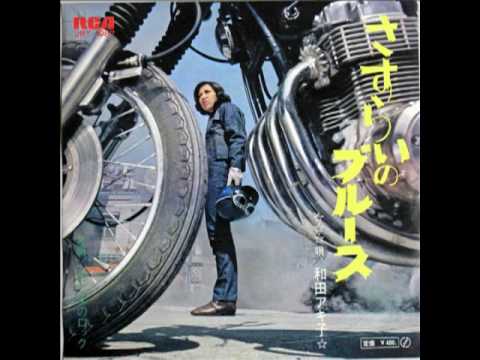
This is a single released by Akiko Wada in July 1970.
It appeared on the Oricon weekly chart 22 times, peaking at No.
28.
It’s a song that sings about a woman’s way of life.
The lyrics were written by Rei Nakanishi, and the music was composed by Kunihiko Suzuki, who is also a pianist.
A street corner where even lovers get wetNakamura Masatoshi

Released in 1982, this song was written by Keisuke Kuwata and is overflowing with his poignant blues sensibility.
And the performer is Masatoshi Nakamura.
Speaking of him, he’s synonymous with Showa-era coming-of-age dramas.
Evolving from his wildly popular youth into a mature actor, he received this adult blues number from Kuwata at just the right moment—what impeccable timing.
Set on Yokohama’s Bashamichi, the lyrics evoke an ineffable sense of melancholy that anyone can feel.
Though this masterpiece was sometimes labeled mood kayō, it is, after all, quintessential Japanese kayō blues.

Dummy Rock and BluesGLIM SPANKY

A track included as the first song on GLIM SPANKY’s debut mini-album, “MUSIC FREAK.” Its impact and heavyweight sound blend powerfully with Remi Matsuo’s husky vocals—electrifying.
The rhythm is simple yet satisfying, and the vibe is downright bluesy.
It’s so rich and intense that it could practically make a meal go down with “DUMMY ROCK AND BLUES” as a side… Well, a meal would be nice, but maybe a favorite drink is more fitting.
This is a number that burns away your daily worries, anxieties, and lingering frustrations.

Farewell, youthDrop’s

This is the second single released in 2014 by Drop’s, a girls’ band formed in Sapporo.
I think the husky vocals of Miho Nakano really enhance the charm of the song.
It has a somewhat bluesy feel, doesn’t it? Since it was written around the time of their high school graduation, it brings to mind nostalgic memories and the sparkle and beauty of youth that anyone can relate to—enough to bring tears to your eyes.
It’s a nostalgic track that’s perfect for a calm listen from dusk into the night.
Blues of the DawnItsuki Hiroshi

“Yoake no Blues” is a local song about romance in the bustling entertainment district of Nibancho in Matsuyama, Ehime Prefecture.
Thanks to this song, he was appointed a tourism ambassador for Matsuyama City.
Hiroshi Itsuki’s sultry vocals are absolutely enchanting—so wonderful and suave! With a pop-leaning accessibility, it’s a track people of any generation can enjoy.
In the music video, Hiroshi Itsuki himself shows off a guitar solo, which is really cool, so be sure to check that out too!
A classic of Japanese blues. Japanese blues to get lost in the sound and vocals (41–50)
Tokyo BluesAwaya Noriko

This is a song released in 1939 by Noriko Awaya, the Queen of Blues and a pioneer of Japanese chanson.
You can really feel the era—in a good way—in the sounds and atmosphere that you can’t experience today.
Words that now feel retro were surely considered urbane back then.
Awaya’s overwhelming aura and emotionally rich delivery are so cool, and they bring out an even stronger sense of the blues.
Perhaps it also carried hopes for the development of Tokyo and Japan.
It’s a piece that conjures everyday scenes alongside hopes for the future.
crowdImawano Kiyoshirō

Singer-songwriter Kiyoshiro Imawano, beloved by many for his unconventional personality and distinctive musicality.
Though he’s a singer who represents rock and punk, he also released songs rooted in the blues, which could be called a close relative of those genres.
Among them, the one I especially recommend is “Zattō” (Crowd).
Surprisingly, Imawano’s uniquely colored voice pairs exceptionally well with the blues.
It’s a perfect pick for those who want to hear blues that carries a refined coolness while holding a subtle, wistful touch.
