

[Warabe-uta] Beloved Classic Songs Passed Down Through Generations


Nursery rhymes that have been passed down in Japan since long ago.
There are many types of nursery rhymes, including drawing songs, counting songs, and play songs.
Many of you probably sang and played games like Kagome Kagome and Hana Ichi Monme at least once when you were children.
In this article, we introduce popular nursery rhymes.
If you want to remember the nursery rhymes you sang as a child or enjoy them with your kids, be sure to give them a listen!
- Nostalgic Children’s Songs, Folk Songs, and Nursery Rhymes: The Heart of Japan Passed Down Through Song
- Japanese counting songs: nostalgic temari (handball) songs and children’s folk songs
- [Hand Play] Popular with kids! A collection of trendy hand-play songs and nostalgic traditional children’s songs
- Lullabies: children's songs, folk songs, and nursery rhymes. Nostalgic songs for putting children to sleep.
- Snake Song: Children's song, nursery rhyme, and hand-play song
- Beanbag song: a playable children's folk song
- Collection of winter nursery rhymes, folk songs, and children's songs. Includes fun winter hand-play songs too.
- Ranking of Popular Children's Songs [2026]
- Actually scary nursery rhymes. Children's songs that give you the chills once you understand their meaning
- [Minna no Uta] Beloved Across Generations: Nostalgic Classics and Popular Songs
- Nursery rhymes, folk songs, and children's songs about animals
- Folk songs, children’s songs, and nursery rhymes of Kumamoto: the enduring spirit of our hometown passed down through song.
- [February Songs] Introducing children's songs, folk songs, nursery rhymes, and hand-play songs about Setsubun and winter!
[Warabe-uta] Beloved Nostalgic Classics Passed Down in Song (1–10)
Pretty good.warabeuta

This is a delightful piece that rhythmically combines movements of the hands and feet with singing.
If you move your hands and feet to the rhythm created by the call-and-response of “naka” (inside) and “soto” (outside), both body and heart naturally start to bounce.
Playing in a circle fosters children’s cooperation and sense of unity, spreading smiles—one of the work’s key charms.
It has long been loved in nurseries and kindergartens across ages, and in April 2020 it was selected for the “Top 100 Traditional Play Activities” by the Japan National Association of Nursery Teachers.
It’s a highly recommended song for those who want to interact with children and enjoy rhythm play.
Denderaryubawarabeuta
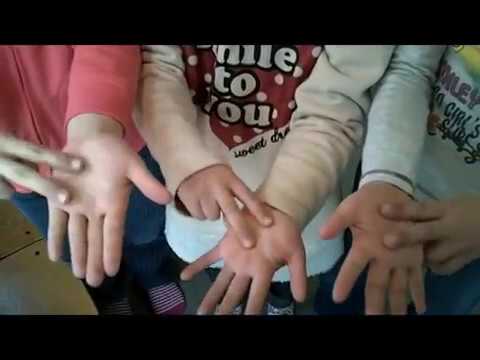
Denderaryūba is a slightly complex and entertaining hand game.
With a mysterious sound that feels like a regional dialect, this piece is a traditional children’s song that has been passed down in Nagasaki Prefecture.
To the chant-like lyrics, you rhythmically change combinations of your knuckles, thumb, and index finger on the palm of your other hand.
Start at a slow pace, and once you can move smoothly, gradually increase the speed.
If you can play it through without mistakes, it’s sure to feel very satisfying.

Oonami Konami

Positioned as a staple song for long-rope jumping and Eurhythmics, this piece is enjoyed along with movements that express the motion of waves by swinging the rope widely from side to side.
By moving their bodies while singing, children naturally develop a sense of rhythm and cooperation.
It is also used in settings for children’s music education and emotional development, and is included in Kyoiku Geijutsusha’s elementary school music textbook “Ongaku for Elementary Students 1.” Many people may remember happily doing group long-rope jumping to this tune while humming it as children.
The lyrics seem to vary by region, so if you’re curious, be sure to check them out.
[Warabe-uta] Beloved nostalgic songs passed down through generations (11–20)
Keep crossing the bridge one after another.

A song with simple lyrics and a rhythmic melody, sprinkled with elements that spark excitement and imagination as a fox appears.
It is included in many nursery rhyme collections, and picture books based on this song have also been published.
This piece is used for group play in kindergartens and nursery schools, where activities like holding hands to pass through a gate or cross a bridge help foster children’s cooperation and sense of rhythm.
Please experience this heartwarming song that you can sing and play together with someone special.
Horsetail shoots are poking up.

A masterpiece of children’s song that lets you feel the breath of nature.
Within its simple wordplay, it deftly weaves in the moment when plants sprout, offering the delight of a stroll through spring fields and hills.
More than lofty musical artistry, it’s the easy singability that has kept it beloved for many years.
It’s also enjoyed with hand motions and is widely used in early childhood education settings.
This work beautifully expresses the Japanese sense of the seasons and a heartfelt reverence for nature, making it enjoyable across generations, from children to adults.
Why not sing it together with family and friends, feeling the arrival of a nature-rich spring?
Inside-out pots!

It’s a children’s hand-holding song game.
In time with the song, players do half turns and end up back-to-back, making sure not to let go of each other’s hands.
Then, following the song, they return to the original position at the end.
It’s fun with pairs, of course, but the larger the group, the more complicatedly everyone gets tangled up, which will likely make the kids even more excited.
Many people will notice that the melody is very similar to Kagome Kagome.
In fact, it’s said that Kagome Kagome and Nabe Nabe Soko Nuke may have been made from the same original song.

Which child is a good child?warabeuta

When children get together to play, do you ever wonder how to decide who’s “it” or who goes next? That’s exactly when this traditional children’s rhyme comes in handy.
You point to each child in turn in time with the rhythm, and the one chosen at the end becomes the next role—or gets a big hug—so everyone can enjoy both the thrill and the comfort it brings! It was also included on the album “NHK Nihongo de Asobo: Warabe-uta,” released in February 2007, and became widely known after being featured in segments of an educational TV program.
In dazzlingly green May, try forming a circle at a park on your walk or indoors, and enjoy the pleasant rhythm together with friends or as a parent and child.