

[2026] Japanese jazz singer. A jazz vocalist representing Japan’s domestic jazz scene.

There are many Japanese jazz musicians who are recognized worldwide, but there may be surprisingly few people who can immediately name a representative Japanese jazz singer.
The history of jazz singers in Japan actually goes back to before World War II.
After the war, a string of hit songs based on jazz emerged, and many stars beloved by the public were born.
With that history in mind, this article spotlights Japanese jazz singers from a broad perspective!
From legendary superstars with a foundation in jazz to pure jazz vocalists, and even those unexpected artists who actually sang jazz—we’ll bring you a richly varied selection!
- Male singers with great voices: a collection of cool, seductive vocals
- [2026] A Collection of Classic Japanese Ballads with a Jazz Flavor
- [Overwhelming Vocal Ability] A Compilation of Popular Female Singers
- A Japanese female singer with excellent singing ability; an outstanding vocalist.
- Ranking of Popular Jazz Songs
- [2026] Masterpieces of jazz vocals: recommended albums you should listen to at least once
- Great for karaoke too! Jazz classics you’ll want to sing at least once
- A male singer with exceptional vocal skills: a powerhouse performer who captivates with volume, technique, and expressiveness.
- Captivating female jazz singers who illuminate the history of jazz. Recommended jazz vocals from around the world.
- Recommended Japanese jazz bands — from classic legends to rising young groups
- [Powerful] A roundup of Japanese pop singers with incredible vocal power
- 【2026】Difficult Enka Songs to Sing — Women Singers Edition
- [Women Artists Only] Tear-Jerking Masterpieces Recommended for Gen Z
[2026] Japanese jazz singers: Jazz vocals representing Japan’s domestic jazz scene (ages 31–40)
Que Sera, Sera (Whatever will be, will be)Pegī Hayama
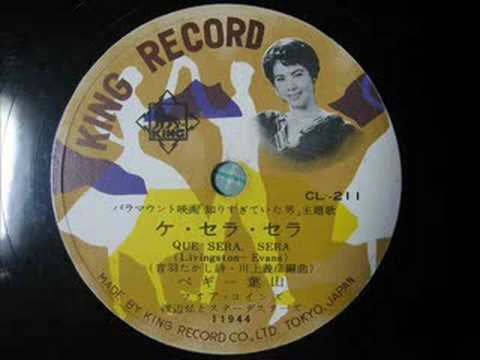
Speaking of Peggy Hayama, she is a nationally beloved singer who performed and also wrote the Japanese lyrics for “Do-Re-Mi,” a song everyone in Japan has hummed at least once.
She served as the 7th president and later honorary president of the Japan Singers Association, making immense contributions to Japan’s music scene.
Born in Yotsuya, Tokyo, in 1933, Hayama was familiar with singing from an early age and studied vocal music with the aim of entering a music university.
While attending Aoyama Gakuin University, however, she shifted to popular music and jazz.
While singing at U.S.
occupation forces’ camps, she was discovered by the famed Tee-Kamayatsu and went on to perform as the featured singer for the highly popular big band Hiroshi Watanabe and the Star Dusters.
She later made her solo debut and released many hit songs, becoming a household favorite not only in jazz and popular music but also in the world of kayōkyoku and as a television personality.
Hayama, who remained active throughout her life, left a voice that can truly be called eternal—indispensable to the history of postwar Japanese popular music.

SmileMatsuda Seiko

It’s not all that unusual for major singers who made their name outside jazz to try their hand at it, and in recent years the eternal idol Seiko Matsuda has released full-fledged jazz albums as well.
These are not mere one-off projects; they’re filled with the genuine commitment of an artist with a career spanning over 40 years.
Released in 2017, SEIKO JAZZ features heavyweight figures from the jazz world on the recordings and stands as a superb jazz album that lets you fully savor “jazz singer” Seiko Matsuda’s voice as she masterfully interprets standard numbers.
It won the Planning Award at the 59th Japan Record Awards.
The album was also released in the U.S.
through the prestigious jazz label Verve and received high acclaim.
In 2019, she released a follow-up, SEIKO JAZZ 2, so be sure to listen to them together!
So Many StarsSuzuki Shigeko

At the time of her debut, Shigeko Suzuki drew attention as a vocalist who graduated from the University of Tokyo’s Faculty of Law.
She began studying piano at age three, and after entering elementary school, received English conversation lessons from her mother.
Supported by her keen ear and language skills, her husky yet delicate singing voice captivates fans and won’t let go.
She is also known for becoming the first Japanese vocalist to perform at the prestigious jazz club Blue Note New York upon her album debut in 1995.

Drinks for twoUiriamusu Hiroko

Not only have her released works received high acclaim, they have also achieved commercial success.
Hiroko Williams continues to excel as one of Japan’s representative jazz singers since the 2000s.
A native of Shizuoka Prefecture, she was influenced during her time as an office worker by legendary jazz singers such as Anita O’Day and Julie London, and moved to the UK on her own.
After returning to Japan, she began her career in earnest as a jazz singer, and her self-produced album “a time for Ballads,” recorded in Los Angeles, garnered significant attention.
Her assured prowess as a singer was praised by renowned Japanese composer Katsuhisa Hattori, who described it as “like a Rolls-Royce with the finest engine cruising elegantly at 100 km/h.” Since then, she has continued to release numerous self-produced recordings with a meticulous commitment to sound quality, and is recognized as a top artist in the contemporary jazz scene.
Rosalia of the MountainSurī Gureisesu

When it comes to postwar Japanese female chorus groups, the Three Graces are indispensable.
Formed in 1958 under Masao Kojima—a jazz musician who helped launch big names like Dark Ducks and The Four Bon-Bons—the trio scored a major hit the following year with the Russian folk song “Yama no Rosalia” (Rosalia of the Mountain), which led to appearances on the NHK Kohaku Uta Gassen in 1962 and 1963.
They paused their activities in 1967 to prioritize family life, but reunited over two decades later in 1989, releasing the Suntory Wine commercial image song “Omoidasite Ukulele” that same year.
Since then, they have remained active, performing numerous commercial jingles and TV themes and even participating in jazz festivals in the United States.
They are also the voices behind the beloved national anime song “Sally the Witch”! Be sure to check out their many wonderful classics—borne of their jazz sensibilities and Japan’s pride in chorus music—on a best-of collection.